SiC-PU Nanocomposites

Patent Title: POLYURETHANE/UREA SILICON CARBIDE NANOCOMPOSITE

 Number/Link: WO2017/027231

Applicant/Assignee: 3M

Publication date: 16-feb-2017

Gist”: Surface modified SiC particles are dispersed in and covalently bound to a polyurethane matrix

Why it is interesting: Silicon carbide (carborundum) particles with an average particle size of about 500 nm are NCO-functionalized by reacting with a surface modfifying agent, e.g 2-triethoxysilylpropylisocyanate. The modified particles are then dispersed and covalently reacted into a polyurethane/polyurea matrix in an amount of 50-55% (w/w) on the composition. The composites can be made into highly erosion resistant films, for use on the outer surface of aircraft.

3-triethoxysilylpropylisocyanate
3-triethoxysilylpropylisocyanate

Classic PU Patent of the Month: Microencapsulation (1963)

Patent Title: ENCAPSULATION BY INTERFACIAL POLYCONDENSATION

 Number/Link:  US3577515

Applicant/Assignee: Pennwalt Corp.

Publication date: 4-05-1971

Gist”: Interfacial polycondensation on the surface of emulsified droplets.

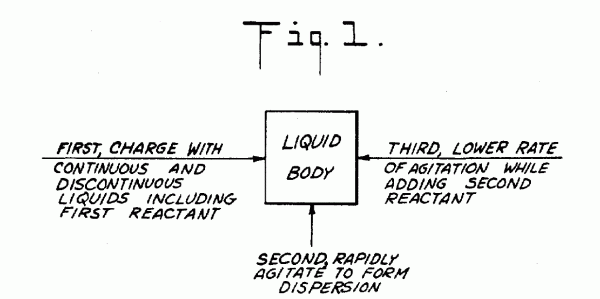
Why it is interesting: Micro-sized droplets are encapsulated with a polymeric film or ‘skin’ formed by an interfacial polycondensation reaction. The idea is both very clever and simple: one reaction component is dissolved in a liquid which is then dispersed in another -immiscible- liquid. The second reaction component is then added to the continuous phase resulting in a polycondensation reaction at the surface of the droplets, encapsulating these with a polymeric film. For example a solution of a polyisocyanates in an organic solvent can be dispersed in water (to a desired droplet size) after which a water soluble diol or diamine is added resulting in a polyurethane or polyurea film encapsulating the solvent droplets. Microcapsules are now common and used in may applications like cosmetics, phase change materials, e-paper, self-healing coatings etc.

Figure 1 illustrating the process

Figure illustrating the process

Carbon-Black Reinforced Polyurethane Tires

Patent Title: TIRE WITH CARBON BLACK REINFORCED POLYURETHANE 

 Number/Link: US20160060420

Applicant/Assignee: Goodyear

Publication date: 3-03-2016

Gist”: Dried, pulverized C-black is used in cast elastomer

Why it is interesting: According to this invention cast polyurethanes with properties useful for tire production can be made by incorporating 2-4% (w/w) of carbon black, pulverized to an average particle size of 5-10 μm. The carbon black is dispersed in the polyol component together with molecular sieves to absorb the water inherently present in carbon black.  It is said that removing the water allows the carbon black to react with an excess of isocyanate present, thereby greatly improving its reinforcing characteristics. Although not mentioned in the text I assume that the tires are intended for low-speed vehicles only.

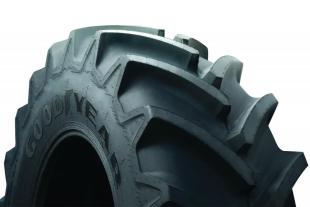
GoodYear Tire

GoodYear Tire

  • Pages

  • Categories

  • Enter your email address to follow this blog and receive notifications of new posts by email.

    Join 259 other subscribers
  • Follow Innovation in PU on Twitter