Hydrolysable Ureas

Patent Title: DYNAMIC UREA BONDS WITH FAST HYDROLYTIC KINETICS FOR POLYMERS

Number/Link: WO2017/155958

Applicant/Assignee: Univ. Illinois

Publication Date: 14 September 2017

“Gist”: Hindered urea bonds with fast hydrolysis kinetics are prepared from aromatic-sbstituted diamines and diisocyanates

Why it is interesting: Polyurethanes containing thermally reversible hindered urea bonds (HUBs) have been discussed before in this blog. In the current case the HUBs are prepared from aromatic (e.g aryl-) substituted amines and are said to show fast, pH-independent, hydrolysis kinetics. The HUBs can be built into linear or crosslinked polyurethanes or other polymers like polyamides, polycarbonates etc.  The resulting materials are useful for medical applications like drug delivery, water-degradable packaging, self-healing materials and the like.
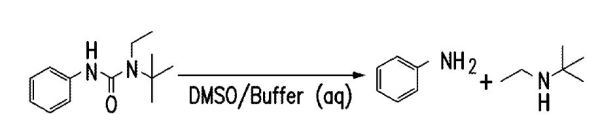
HUB hysdrolysis

Hydrolysis reaction of phenyl-N-tetrabutyl-N-ethyl urea
 

Rigid Thermoplastic Polyurethanes

Patent Title: ISOCYANATE-MODIFIED RIGID THERMOPLASTIC POLYMER COMPOSITIONS

 Number/Link: WO2017/146948  WO2017/146949

Applicant/Assignee: Eastman Chemical

Publication date: 31 august 2017

Gist”: A “rigid”, high Tg polyester diol is extended with 4,4′ MDI

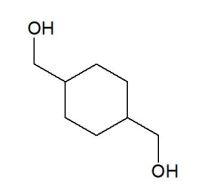
Why it is interesting: Rigid, high modulus TPUs have been known for a long time – see e.g. Upjohn’s classic patent on ‘Isoplast’ from 1981. These materials are high hardblock TPUs made from diisocyanates, chain extenders with only a small amount of high molecular weight diol as an impact modifier. According to the current invention however, rigid TPUs can be made using less than 40% (w/w) of diisocyanate, a high Tg polyester diol and optionally some chain extender.  The polyester is prepared from ‘rigid’ diols like isosorbide or 1,4-cyclohexanedimethanol together with a ‘rigid’ diacid like terephthalic acid, such that the diol has a MW of more than 400 Dalton and a Tg of more than 40°C. The diisocyanate is pref. 4,4-MDI. The rigid TPUs have a Tg of more than 145°C and a tensile modulus of 1 GPa or higher. They are said to be less moisture sensitive than conventional rigid TPUs.

1,4-cyclohexanedimethanol

Viscoelastic Polyurethane Elastomers

Title:  IMPACT PROTECTION FOAM

Number/Link: US2017/0233519

Applicant/Assignee: Dow

Publication Date: 17 august 2017

“Gist”: Viscoelastic foams are prepared from MDI, castor oil and a hydrophilic polyether polyol.

Why it is interesting: According to this invention energy absorbing foams with relatively low density and a low hardness and resilience in the temperature range from about -10 to +40°C, can be produced by reacting a blend of hydrophilic and hydrophobic polyols containing castor oil, about 0.5 pbw water and some catalyst and chain extender with MDI.  The examples show foams of about 500 kg/m³ with hardness below shore 50A and ball rebound below 15% at both -10 and +23°C. The foams are said to be useful for impact-protective garments.

Castor oil

Castor oil component

  • Pages

  • Categories

  • Enter your email address to follow this blog and receive notifications of new posts by email.

    Join 259 other subscribers
  • Follow Innovation in PU on Twitter