TPU from Biorenewable Isocyanate

Patent Title: BIO-BASED DIISOCYANATE AND CHAIN EXTENDERS IN CRYSTALLINE SEGMENTED THERMOPLASTIC POLYESTER URETHANES

 Number/Link: WO2016041076

Applicant/Assignee: Trent University

Publication date: 24-03-2016

Gist”:  TPU with highly crystalline hard segment is based on 1,7 heptamethylenediisocyanate

Why it is interesting: According to this application, polyester TPUs with crystalline hard segments can be produced using 1,7-heptamethylenediisocyanate. The HPMDI is reacted with a 2000MW poly(ethyleneadipate) diol and a short chain diol as chain extender. The  TPUs show a high hard-segment crystallinity, resulting in improved phase separation and in a (semi-)crystalline softphase which has a significant reinforcement effect. The TPUs are thermally stable up to 250°C and show a toughness and strength comparable to conventional TPUs. HPMDI can reportedly be made from natural oils using the Curtius rearrangement – but no reference is given.
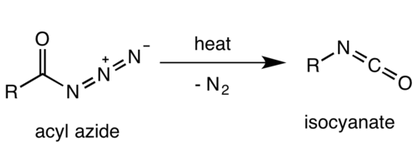
Curtius Rearrangment
Curtius Rearrangment

Carbon-Black Reinforced Polyurethane Tires

Patent Title: TIRE WITH CARBON BLACK REINFORCED POLYURETHANE 

 Number/Link: US20160060420

Applicant/Assignee: Goodyear

Publication date: 3-03-2016

Gist”: Dried, pulverized C-black is used in cast elastomer

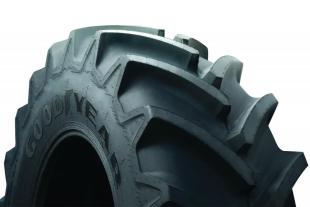
Why it is interesting: According to this invention cast polyurethanes with properties useful for tire production can be made by incorporating 2-4% (w/w) of carbon black, pulverized to an average particle size of 5-10 μm. The carbon black is dispersed in the polyol component together with molecular sieves to absorb the water inherently present in carbon black.  It is said that removing the water allows the carbon black to react with an excess of isocyanate present, thereby greatly improving its reinforcing characteristics. Although not mentioned in the text I assume that the tires are intended for low-speed vehicles only.

GoodYear Tire

GoodYear Tire

Polyurethane Elastomers from Modified Polybutadienols

Patent Title: POLYESTER-MODIFIED POLYBUTADIENOLS FOR PRODUCING POLYURETHANE ELASTOMERS AND THERMOPLASTIC POLYURETHANES

 Number/Link: WO2016/026807  (German)

Applicant/Assignee: BASF

Publication date: 25-02-2016

Gist”: Polybutadiene polyols are capped with caprolactone

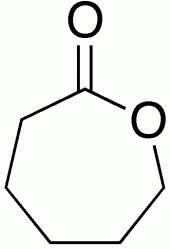
Why it is interesting: Liquid hydroxy-terminated polybutadienes have been available for quite a while and their use in polyurethane elastomers and TPUs is known.  However, because of their immiscibility with isocyanates, polyols and most chain extenders they are notoriously difficult to process, resulting in elastomers that often show poor or inconsistent properties. According to this invention the problem can be solved by capping the polybutadienols with a few moles of cyclic ester, preferably with ε-caprolactone. The capped polyols are miscible with e.g. MDI and butanediol and the resulting elastomers show much improved properties compared to both polybutanedienol- and polycaprolactone- based elastomers.

Caprolactone

Epsilon-caprolactone

ε

  • Pages

  • Categories

  • Enter your email address to follow this blog and receive notifications of new posts by email.

    Join 259 other subscribers
  • Follow Innovation in PU on Twitter