Classic PU Patent of the Month: Upjohn’s “Isoplast®” (1981)

Title: Polyurethane prepared by reaction of an organic polyisocyanate, a chain extender and an isocyanate-reactive material of m.w. 500-20,000 characterized by the use of only 2-25 percent by weight of the latter material

 Number/Link: US4376834

Applicant/Assignee: Upjohn

Publication date: 15-03-1983

Gist”: Very high hardblock TPU from MDI and chain extenders.

Why it is interesting: “Isoplast” is a so-called engineering thermoplastic useful in niche applications where high impact strength and high chemical resistance are required. The material can be clear or reinforced and can also be used in fiber-reinforced composites.  Currently the trademark is owned by Lubrizol who acquired it from Dow who in turn bought it from Upjohn in the 1980s.  Isoplast is made from 4,4′ MDI and a mixture of chain extenders selected from MEG,DEG, neopentyl glycol, 1,4-cyclohexanedimethanol etc. The choice of chain extenders controls the crystallinity/glassiness of the polymer.  A few percent of high mole weight polyol may be added to improve impact resistance. A very interesting material with interesting melt-flow characteristics because of its depolymerization and repolymerization behaviour during processing.

Screw from reinforced Isoplast
Screw from reinforced Isoplast

Flexible- and Viscoelastic Foams from CO2-Based Polyols

Title: HIGH STRENGTH POLYURETHANE FOAM COMPOSITIONS AND METHODS

 Number/Link: WO2014/074706

Applicant/Assignee: Novomer

Publication date: 15-05-2014

Gist”: The mechanical properties of flexible foams can be improved by replacing up to 50% of the polyol with CO2-based polycarbonate polyols.

Why it is interesting: Novomer (http://www.novomer.com) is a ‘sustainable chemistry company’ which produces aliphatic polycarbonate polyols from CO2 and epoxides. In this 215 page patent application they claim that hardness and mechanical properties viz. tensile- and tear strength of flexible and VE foams are improved by replacing between 2 and 50% of the polyol by their polycarbonate polyol. Other properties are supposedly not affected much, although resilience (e.g.) clearly drops for HR foams.
While the first claim may be technically new, it is – in my opinion- not patentable because not surprising to “a person skilled in the art”.

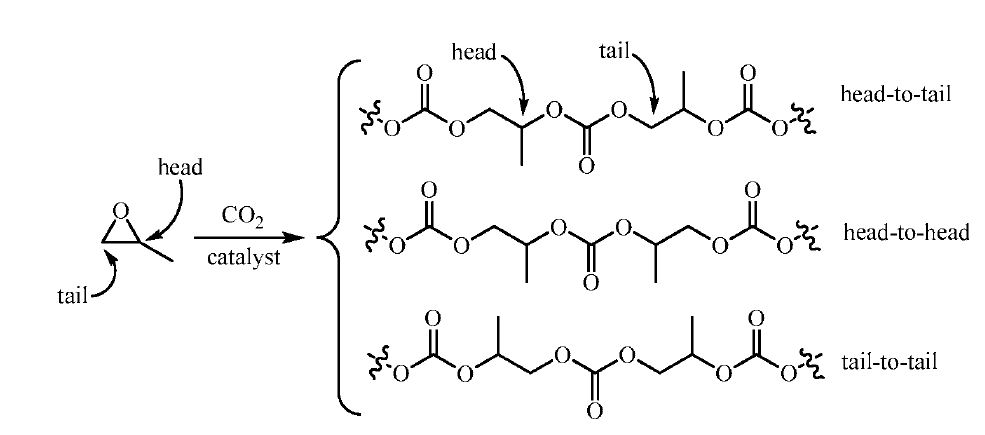
Reaction of CO2 and PO showing various 'head-to-tail' orientations

Reaction of CO2 and PO showing various ‘head-to-tail’ orientations

A New Type of Polyurethane Memory Foam

Title: VISCOELASTIC POLYURETHANE FOAM

 Number/Link:WO 2014/058857

Applicant/Assignee: BASF

Publication date: 17-04-2014

Gist”: Using TDI, two high MW and high EO polyether triols, hydrolizable PDMS and DELA results in a flexible foam with a low Tg ánd a low resilience.

Why it is interesting: While viscoelastic or “memory” foams are popular in the furniture industry they are currently not used in e.g. car seats because of their limited use temperature. Typically these foams become too stiff at lowish temperatures and often too soft and resilient at higher temperatures. The current invention is about viscoelastic foams which are useful for transport applications because they show constant properties over a wide temperature range. This is accomplished by reacting TDI with a (about) 4000 MW,  75% EO triol, an EO-capped 6500 MW, 75% EO triol, quite some diethanolamine (DELA), and quite some (2.5 pdw in the examples)  hydrolyzable polydimethylsiloxane copolymer (PDMS), together with water and catalysts. The foams show two Tg’s one at about -20°C and a minor one at about -55°C (probably due to a seperate PDMS phase) which keeps the foams resilient at low temperatures. The -20°C polyether phase is probably mixed with the DELA-TDI phase resulting in a wide transition reaching to over 0°C. This results in a resilience of  about 30% which is quite high for a typical ‘memory’ foam.

Polyurethane "memory foam"

Polyurethane “memory foam”

  • Pages

  • Categories

  • Enter your email address to follow this blog and receive notifications of new posts by email.

    Join 259 other subscribers
  • Follow Innovation in PU on Twitter