Nanocomposites from PIB-Based Polyurethane and Clay

Title: POLYISOBUTYLENE-BASED POLYURETHANES CONTAINING ORGANICALLY MODIFIED MONTMORILLONITE

 Number/Link: WO/2014/018509

Applicant/Assignee: UNIVERSITY OF AKRON

Publication date: 30-01-2014

Gist”: A small amount of montmorillonite, modified with a quaternary ammonium compound containing an amine group, is incorporated in a polyisobutylene-based TPU.

Why it is interesting: Montmorillonite-type clay is “exfoliated” using a quat. ammonium compound which has an alkyl subsituent containing a primary amine group. The salt group will electrostatically interact with the clay while the amine group will react with isocyanate when used in a polyurethane formulation, thus incorporating the clay into the polymer structure. In an example a (T)PU is made from HMDI, 1,6-hexanediol and a mixture of a 4000MW polyisobutylene diol and a 1000MW PTMO diol. A montmorillonite was exfoliated using trimethyl-1-propylamine ammonium iodide (I¯N+(CH3)3CH2CH2CH2-NH2)  and incorporated in the PU to make the nanocomposite. In an amount of 0.5% (w/w) the clay increases stiffness, mechanical- and creep properties of the PU.  However at higher amounts (2%,5%..) these properties actually deteriorate.
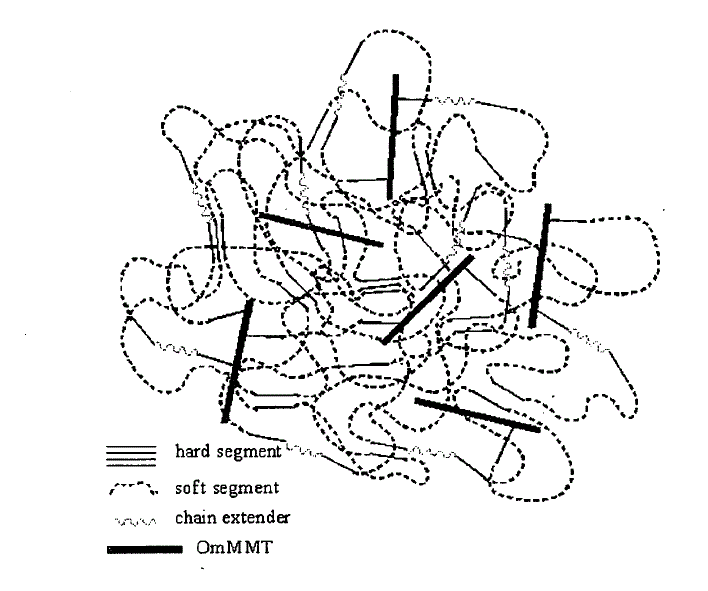
Polymer morphology model according to the invention.  (omMMT = organically modified montmorrilonite)

Polymer morphology model according to the invention. (omMMT = organically modified montmorillonite)

Polyurethane Foam Containing Iron Particles for Improved Oil Absorption

Title: ABSORBENT MATERIAL

 Number/Link: WO2014/008554

Applicant/Assignee: Advanced Simplicity Technologies

Publication date: 16-01-2014

Gist”: Incorporation of iron particles improves the oil-absorbing capacity of PU foams.

Why it is interesting: The mineral-oil absorbing capacity of PU foam is well known and documented (see e.g. WO/1995/031402  and WO/1999/005066 ).  Current invention claims that the oil absorbing capacity of the foam can be greatly improved by incorporating inorganic particles, esp. metallic iron or silica. The particle size of the particles is chosen such as to protrude the foam cell walls so that they are exposed inside the foam pores (pref. 50 to 200μm). In an example an MDI-based  foam containing 70% (w/w) of iron powder was shown to absorb about 10g of oil per gram of foam.

Oils Spill at Sea

Oils Spill at Sea

Improved Nanoporous Insulation Materials

Title: AEROGEL-CONTAINING POLYURETHANE COMPOSITE MATERIAL

 Number/Link: WO2013182506 (German)

Applicant/Assignee: BASF

Publication date: 12-12-2013

Gist”: An aqueous dispersion based on an isocyanate and an isocyanate-reactive vinyl polymer is used to bind aerogel particles into an insulation material.

Why it is interesting: Binding (silica) aerogel (or xerogel or cryogel) particles into insulation panels using aqueous polyurethane binders is known.  See e.g. my previous posts on the subject here, here and here. According to this invention both the insulation and processing properties of existing systems can be improved by using an aqueous dispersion of a vinyl polymer containing isocyanate-reactive side groups, together with an emulsifiable isocyanate. The polyvinyl is preferably water-soluble, the side groups being -OH, -SH, -NH2 or -COOH,  a (preferred) example being poyvinylamine with a molecular weight from 10,000 to 500,000. The isocyanate used is preferably a modified HDI or IPDI.  In the examples materials are shown with densities of about 120 kg/m³ and a thermal conductivity of about 16 mW/m.K.

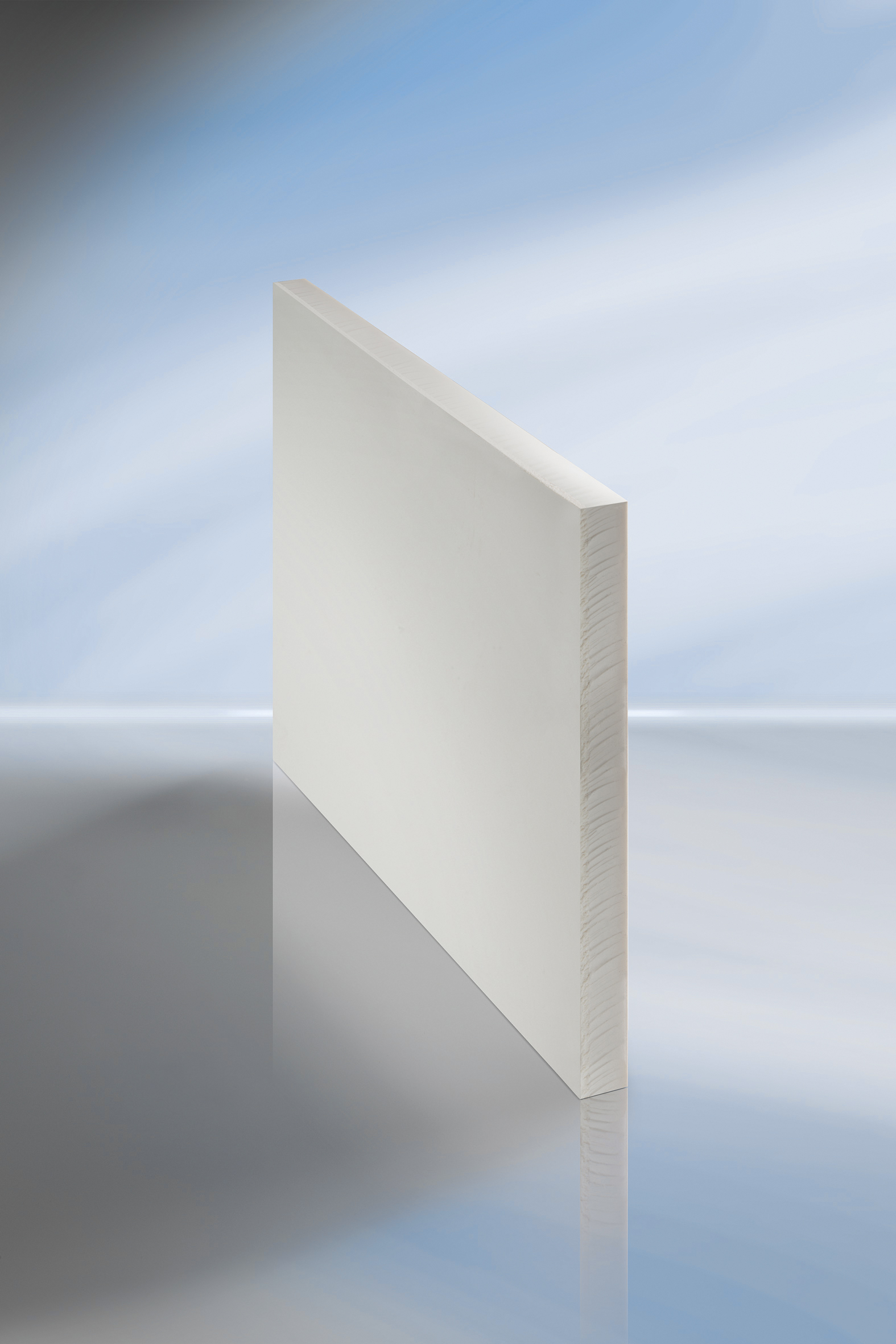
SLENTITE (TM) aerogel-PU insulation panel by BASF

SLENTITE (TM) aerogel-PU insulation panel by BASF

  • Pages

  • Categories

  • Enter your email address to follow this blog and receive notifications of new posts by email.

    Join 259 other subscribers
  • Follow Innovation in PU on Twitter