Polycarbonate PU Foams with Reduced VOC Emissions

Title: POLYURETHANE FOAMS BASED ON POLYETHER CARBONATE POLYOLS

Number/Link: WO2017/085201 (German)

Applicant/Assignee: Covestro

Publication Date: 26-may-2017

“Gist”: Use of urea reduces the formation of propylenecarbonate from polycarbonate polyols

Why it is interesting: Covestry is betting heavily on polyethercarbonate polyols for use in polyurethane foams, using the carbon-negative footprint as a selling point. The use of polyethercarbonate polyols in PU foams can, however, result in the formation of propylenecarbonate resulting from a retro reaction promoted by conventional amine catalysts. Propylenecarbonate will contribute to the total VOC emissions of foams and other materials. According to this invention, the retro reaction can -surprisingly- be prevented or reduced by using urea or urea-derivatives in the foam formulation. In the examples urea and dimethylaminopropylurea are used together with a tin catalyst,  polyethercarbonate polyols and TDI to produce flexible foams with reduced propylenecarbonate content.

Propylenecarbonate



TPU with Moisture-Controlled Flexibility

Title: THERMOPLASTIC POLYURETHANE MATERIALS FOR FORMING MEDICAL DEVICES

Number/Link: WO2017/066381

Applicant/Assignee: Becton Dickinson

Publication Date: 20 april 2017

“Gist”: High hardblock TPU, based on side-chain branched chain extenders, softens in water

Why it is interesting: The invention is related to thermoplastic polyurethanes for medical applications especially for intravenous catheters. These catheters need to have a high stiffness when inserted but need to become flexible once in place to prevent injuries. This is accomplished with TPUs based on MDI, PTMEG and either 2,2-dimethyl-1,3-propanediol (neopentylglycol) or 2-methyl-1,3-propanediol (MPdiol) and having a hardblock content of 50 to 75%. The examples show indeed an increased stiffness at ambient conditions and a larger softening when soaked in saline solution compared to TPU produced with a linear chain extender. It is however not mentioned which linear chain extender was used.

Neopentylglycol

High Resiliency Polyurethane Foams

Title: HIGH RESILIENCY POLYURETHANE FOAMS MADE WITH HIGH FUNCTIONALITY, HIGH EQUIVALENT WEIGHT POLYOLS WITH MAINLY SECONDARY HYDROXYL GROUPS

Number/Link: WO2017/062150

Applicant/Assignee: Dow

Publication Date: 13 April 2017

“Gist”: Use of high functionality polyols increases the resilience of flex foams

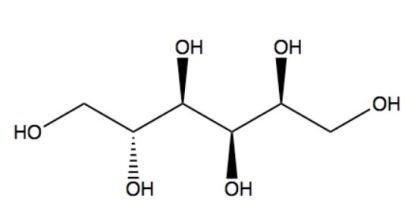
Why it is interesting:  According to this invention the resilience of flexible PU foams can be increased by using, as part of the polyol composition, a random EO/PO polyether polyol which has an equivalent weight of at least 1500, a functionality of  at least 5, a secondary hydroxyl group content of at least 70%, an unsaturation value of at most 0.01 meq/g and an EO content between 5 and 30%.  In the examples, sorbitol initiated polyols are used in both MDI and TDI-based systems, resulting in ball rebound values of up to 60% at densities of about 30 kg/m³.  As I have shown in the past (US5521226) the same (or arguably an even stronger) effect on resilience can be obtained with other high functionality polyols, indicating that the unsaturation value, primary OH content, EO content and equivalent weight are probably not relevant to the resilience increase.

Sorbitol

  • Pages

  • Categories

  • Enter your email address to follow this blog and receive notifications of new posts by email.

    Join 259 other subscribers
  • Follow Innovation in PU on Twitter