Polyurethane for Filament Winding

Patent Title: FILAMENT WINDING PROCESSES USING POLYURETHANE RESINS AND SYSTEMS FOR MAKING COMPOSITES

 Number/Link: W2016183073

Applicant/Assignee: Covestro

Publication date: 17-11-2016

Gist”: Compositions comprising polymeric MDI, amine-initated polyethers and natural oil polyols are useful for filament winding

Why it is interesting: Filament winding is a process for the production of hollow composite structures whereby resin-impregnated fibers are wound on a mandrel and then cured. Typically the fibers are impregnated with polyesters or epoxies.  Polyurethane compositions are difficult to use in this process because of reactivity and moisture sensitivity. According to this invention an isocyanate reactive composition comprising at least 50% high functionality amine-initiated polyether polyols and up to 50% of a hydrophobic OH-functional vegetable oil, can be advantageously used for PU filament winding. In the examples blends of 3 and 4-functional amine-initated polyether polyols with mole weight of about 250, castor oil, or OH-functional soy-oil, are used together with a high 2,4′ polymeric MDI.
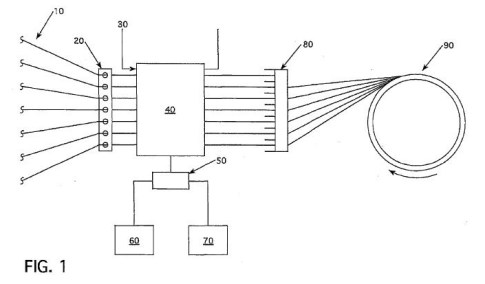
Filanent winding process
Filanent winding process

Classic PU Patent of the Month: Microencapsulation (1963)

Patent Title: ENCAPSULATION BY INTERFACIAL POLYCONDENSATION

 Number/Link:  US3577515

Applicant/Assignee: Pennwalt Corp.

Publication date: 4-05-1971

Gist”: Interfacial polycondensation on the surface of emulsified droplets.

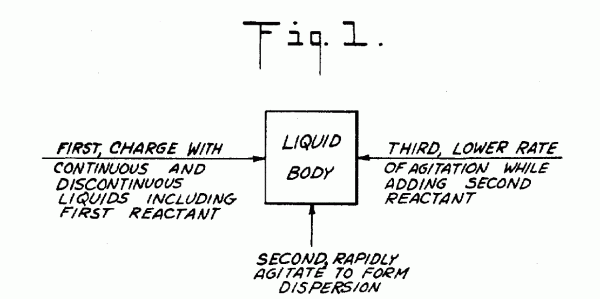
Why it is interesting: Micro-sized droplets are encapsulated with a polymeric film or ‘skin’ formed by an interfacial polycondensation reaction. The idea is both very clever and simple: one reaction component is dissolved in a liquid which is then dispersed in another -immiscible- liquid. The second reaction component is then added to the continuous phase resulting in a polycondensation reaction at the surface of the droplets, encapsulating these with a polymeric film. For example a solution of a polyisocyanates in an organic solvent can be dispersed in water (to a desired droplet size) after which a water soluble diol or diamine is added resulting in a polyurethane or polyurea film encapsulating the solvent droplets. Microcapsules are now common and used in may applications like cosmetics, phase change materials, e-paper, self-healing coatings etc.

Figure 1 illustrating the process

Figure illustrating the process

PET-Lignin Polyols

Patent Title: HIGH RECYCLE CONTENT POLYOLS FROM THERMOPLASTIC POLYESTERS AND LIGNIN OR TANNIN

 Number/Link: WO2016/118411

Applicant/Assignee: Resinate Materials Group

Publication date: 28-07-2016

Gist”: PET is glycolized and then reacted with lignin or tannin

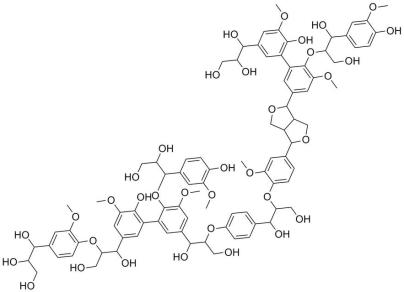
Why it is interesting: This application is about ‘sustainable’ aromatic polyester polyols partly based on recycled materials and partly on biorenewable materials. According to the invention the polyols can be prepared by first glycolizing (waste) PET and subsequently reacting the mixture with lignin at 110-210°C while removing volatile condensation products.  The resulting polyols (pref) show a OH value between 40 and 400 mg KOH/g, a fn of 2-2.2 and a viscosity at 25°C of 500 to 3000 cP. In the examples polyols with up to 25 wt% lignin are shown. The polyols are said to be useful e.g. in 2K PU coating compositions.

Part of a lignin structure

Part of a lignin structure

  • Pages

  • Categories

  • Enter your email address to follow this blog and receive notifications of new posts by email.

    Join 259 other subscribers
  • Follow Innovation in PU on Twitter