Carbon-Black Reinforced Polyurethane Tires

Patent Title: TIRE WITH CARBON BLACK REINFORCED POLYURETHANE 

 Number/Link: US20160060420

Applicant/Assignee: Goodyear

Publication date: 3-03-2016

Gist”: Dried, pulverized C-black is used in cast elastomer

Why it is interesting: According to this invention cast polyurethanes with properties useful for tire production can be made by incorporating 2-4% (w/w) of carbon black, pulverized to an average particle size of 5-10 μm. The carbon black is dispersed in the polyol component together with molecular sieves to absorb the water inherently present in carbon black.  It is said that removing the water allows the carbon black to react with an excess of isocyanate present, thereby greatly improving its reinforcing characteristics. Although not mentioned in the text I assume that the tires are intended for low-speed vehicles only.
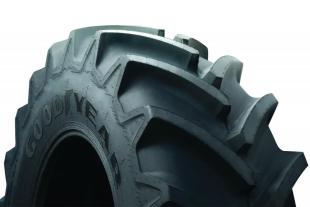
GoodYear Tire

GoodYear Tire

1K Dual Cure Polyurethane Adhesive

Patent Title: DUAL CURE 1K PU ADHESIVE FORMULATIONS USING MATRIX ENCAPSULATED POLYAMINES

 Number/Link: W02016022346

Applicant/Assignee: Dow

Publication date: 11-02-2016

Gist”: Encapsulated polyamines are added to a moisture curing adhesive

Why it is interesting: One component (1K) PU adhesives are either NCO-ended prepolymers cured by atmospheric moisture, or OH-ended prepolymers containing encapuslated or blocked isocyanates and which are cured by heat.  According to this invention a 1K adhesive curable by both moisture and heat can be made by incorporating an encapuslated polyamine into a 1K mositure curing prepolymer. The amine is solid at room temperature (e.g. 1,12-dodecanediamine) and is mixed with a (semi-)crystalline termoplastic with a well defined melting point, e.g. a polyacrylate or polyolefine before being added to the adhesive. Dual cure 1K adhesives allow for heat-curing the adhesive at critical spots to providing stability to an assembly.  The adhesives are said to be especially useful for the automotive industry.

1,12-dodecanediamine

1,12-dodecanediamine


Hybrid Hotmelt Adhesive with Low Free Isocyanate

Title: POLYURETHANE HOT-MELT ADHESIVE HAVING A LOW CONTENT OF DIISOCYANATE MONOMERS AND GOOD CROSS-LINKING SPEED

 Number/Link: WO2015/135833 (German)

Applicant/Assignee: Sika

Publication date: 17-09-2015

Gist”: Use of mercaptosilane to reduce free monomeric diisocyanate

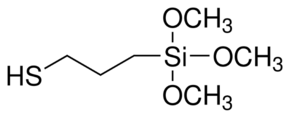
Why it is interesting: Reduction of the amount of free monomeric diisocyanate in adhesives, coatings, OCF systems etc. remains a hot topic in industrial polyurethane research, mostly because of changing legislation. For example, in the EU the amount of free MDI needs to be below 1% in order to avoid “R-40” (suspect carcinogen) labeling. A number of strategies to reduce free isocyanate have been tried in the past (and mentioned in this blog). Examples are distillation, the use of asymmetric diisocyanates and the use of monols. According to this invention the amount of free monomeric isocyanate in a hotmelt formulation can be reduced by adding a mercaptosilane like e.g. mercaptopropyltrimethoxysilane.  The mercaptosilane is said to react preferentially with the monomeric isocyanate.  Only a relatively small amount of mercaptosilane is used such that the main curing mechanism is still the isocyanate-water reaction.

Mercaptopropyltrimethoxysilane

Mercaptopropyltrimethoxysilane


  • Pages

  • Categories

  • Enter your email address to follow this blog and receive notifications of new posts by email.

    Join 259 other subscribers
  • Follow Innovation in PU on Twitter