TPU from POM-Polyether Polyols

Title: THERMOPLASTIC POLYURETHANES, PRODUCTION AND USE THEREOF

 Number/Link: WO2015/155084  (German)

Applicant/Assignee: Bayer

Publication date: 15-10-2015

Gist”: Paraformaldehyde-PO polyols are used to make TPU

Why it is interesting: Polyoxymethylene (POM) is a highly crystalline ‘engineering thermoplastic’ often used in blends together with TPU. In this invention POM is not blended but used to make a POM-polyether ‘block’ diol which is then used to make TPU. The diol is prepared by using paraformaldehyde as a starter which is reacted with PO (and optionally CO2) using DMC catalysis. The POM-block acts as a ‘hard block’ and use of the diol allows for an improved control of Tg, melt viscosity, hardness, chemical resistance etc. of the TPU.  In the examples TPU is made from a 2000 MW parafomaldehyde/PO-CO2 block copolymer  together with 4,4’MDI and BDO.
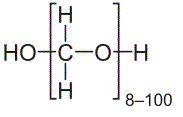
Paraformaldehyde
Paraformaldehyde

Hybrid Hotmelt Adhesive with Low Free Isocyanate

Title: POLYURETHANE HOT-MELT ADHESIVE HAVING A LOW CONTENT OF DIISOCYANATE MONOMERS AND GOOD CROSS-LINKING SPEED

 Number/Link: WO2015/135833 (German)

Applicant/Assignee: Sika

Publication date: 17-09-2015

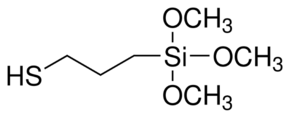
Gist”: Use of mercaptosilane to reduce free monomeric diisocyanate

Why it is interesting: Reduction of the amount of free monomeric diisocyanate in adhesives, coatings, OCF systems etc. remains a hot topic in industrial polyurethane research, mostly because of changing legislation. For example, in the EU the amount of free MDI needs to be below 1% in order to avoid “R-40” (suspect carcinogen) labeling. A number of strategies to reduce free isocyanate have been tried in the past (and mentioned in this blog). Examples are distillation, the use of asymmetric diisocyanates and the use of monols. According to this invention the amount of free monomeric isocyanate in a hotmelt formulation can be reduced by adding a mercaptosilane like e.g. mercaptopropyltrimethoxysilane.  The mercaptosilane is said to react preferentially with the monomeric isocyanate.  Only a relatively small amount of mercaptosilane is used such that the main curing mechanism is still the isocyanate-water reaction.

Mercaptopropyltrimethoxysilane

Mercaptopropyltrimethoxysilane


TPU for 3D Printing

Title: METHODS OF USING THERMOPLASTIC POLYURETHANES IN FUSED DEPOSITION MODELING AND SYSTEMS AND ARTICLES THEREOF .

 Number/Link: WO2015/109141

Applicant/Assignee: Lubrizol

Publication date: 23-07-2015

Gist”: TPU with specific crystallization temperature and modulus retention can be used for fused deposition modeling

Why it is interesting: Additive manufacturing in all its forms has been a steadily growing trend over the last few years.  Many different materials have been used in these processes, but the use of thermoplastic polyurethane has proven to be difficult because of its low crystallization rate, broad melting range and challenging melt-viscosity control.  According to this application TPU can be used for fused deposition modeling (“3D printing” by extruding molten thermoplastics) when it has a crystallization temperature of about 115°C and retains its shear modulus well with temperature.  Examples of such TPUs have a high harblock content (about 50%) and a molar ratio of chain extender to polyol of 2 to about 4,  and are prepared from 4,4′-MDI, butandiol and 2000 MW PTMEG polyether or butylene-adipate polyester diols.

Fused Deposition Modeling

Fused Deposition Modeling

  • Pages

  • Categories

  • Enter your email address to follow this blog and receive notifications of new posts by email.

    Join 259 other subscribers
  • Follow Innovation in PU on Twitter