Formic Acid Blown EPIC Foams

Patent Title: ISOCYANATE-BASED TEMPERATURE-RESISTANT FOAMS WITH HIGH FLAME RESISTANCE

 Number/Link: WO2016/131874

Applicant/Assignee: BASF, Covestro

Publication date: 25-08-2016

Gist”:  One shot rigid isocyanate-epoxy foams blown with formic acid

Why it is interesting: This is the first in a series of (at least) 3 patent applications apparently resulting from a cooperation between BASF and Covestro on epoxy-isocyanate (“EPIC”) foams.  The other applications are WO2016/131878 and WO2016/131880 published on the same date. More publications may follow.
The current invention is about temperature-resistant foams with reportedly very high mechanical properties prepared form a one-shot system comprising a (pref.) high functional MDI, a (pref.) bisphenol-A or bisphenol-F polyglycidylether, at least one reactive amine catalyst and a blowing agent comprising formic acid. The ratio of iso to epoxy groups is (pref.) 3:1 to 15:1. The resulting materials are post-cured at 200°C. The foams contain no, or very little, urethane or urea groups and are said to be especially useful in laminates a.o.  In the examples foams with densities of 25-35 kg/m³ with a thermal conductivity as low as 20 mW/mK are shown.
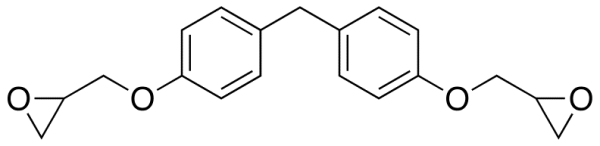
Bisphenol-F diglycidylether
Bisphenol-F diglycidylether

Insulating Wood-Aerogel Composites

Title: REINFORCED ORGANIC NATURAL FIBER COMPOSITES

 Number/Link: WO2015/144267

Applicant/Assignee: Huntsman

Publication date: 1-10-2015

Gist”: Aerogel particles are incorporated in composite wood boards

Why it is interesting: Composite wood products (OSB, MDF..) are  well known and popular construction materials which are produced by compressing wood fibers (or flakes and the like) together with a binder like e.g. a polymeric MDI. Typically these materials show thermal conductivity values of about 50 mW/m.K at densities of around 200 kg/m³.  According to this invention these insulation values can be significantly improved by incorporating (a large amount of) hydrophobic nanoporous particles and binding the composite with an in-water emulsified isocyanate. In the examples silica aerogel particles and wood fibers are mixed an bonded with an emulsifiable MDI. The amount of particles ranges from about 25 to 50% (w/w) resulting in composites with densities below 200 kg/m³ and insulation values of about 20 to 30 mW/mK.

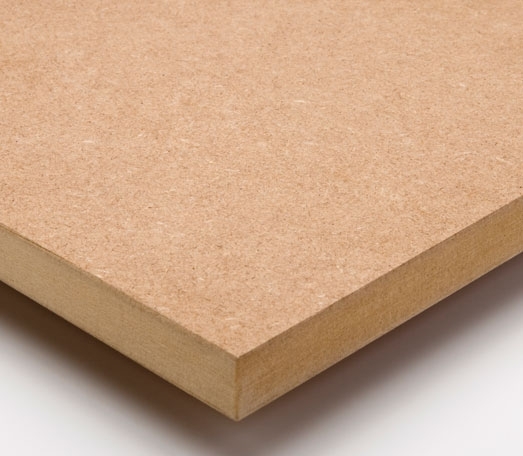
Medium density fibreboard (MDF).

Medium density fibreboard (MDF).

Aerogels from Urethane-Acrylate Star Monomers

Title: FLEXIBLE TO RIGID NANOPOROUS POLYURETHANE-ACRYLATE (PUAC) TYPE MATERIALS FOR STRUCTURAL AND THERMAL INSULATION APPLICATIONS

 Number/Link:US2015/0266983

Applicant/Assignee: University of Missouri

Publication date: 24-09-2015

Gist”: A trifunctional acrylate-ended urethane monomer is polymerized in solvent and supercritically dried

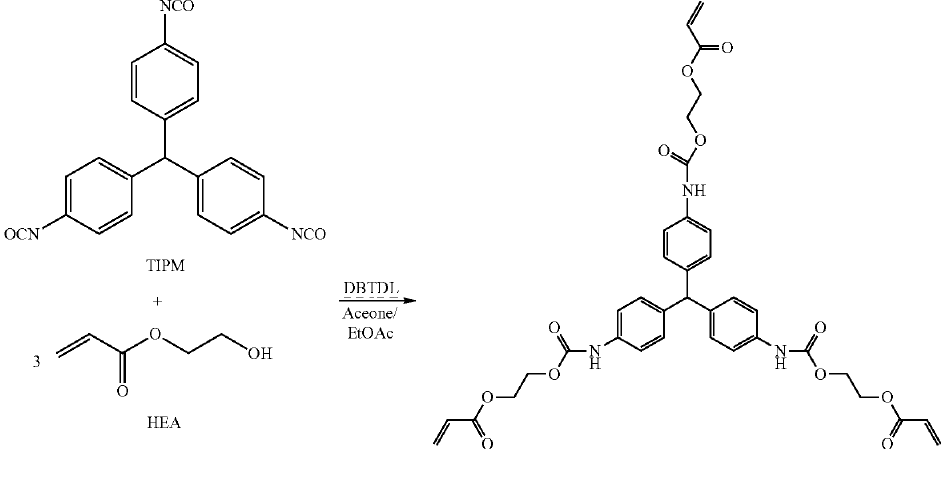
Why it is interesting: Research related to nanoporous materials has been gaining significant momentum in recent years and both inorganic (usually silica-based) and organic (e.g resorcinol-formaldehyde or polyurethane -based) aerogels are increasingly being used especially for thermal insulation applications. The current invention relates to hybrid PU-AC aerogels prepared from acrylate functional “star” monomers. The monomers are made by reacting a tris(isocyanatoaryl)methane with one or more hydroxyacrylates in a suitable solvent.  The monomer is then radically polymerized and the resulting ‘wet’ gel is supercritically dried into an aerogel. In the examples tris(4-isocyanatophenyl)methane is reacted with 2-hydroxyethylacrylate in ethyl acetate. The monomer solution is polymerized by heating with a radical initiator and the resulting gel is then dried using acetone and supercritical CO2.  The resulting aerogels have a density ranging from about 135 to 650 kg/m³ with a porosity bewteen 90 and 50% (v/v).  The lower density aerogels are flexible and have a thermal conductivity of about 40 mW/m.K.

Star monomer according to the invention

Star monomer according to the invention

  • Pages

  • Categories

  • Enter your email address to follow this blog and receive notifications of new posts by email.

    Join 259 other subscribers
  • Follow Innovation in PU on Twitter