SiC-PU Nanocomposites

Patent Title: POLYURETHANE/UREA SILICON CARBIDE NANOCOMPOSITE

 Number/Link: WO2017/027231

Applicant/Assignee: 3M

Publication date: 16-feb-2017

Gist”: Surface modified SiC particles are dispersed in and covalently bound to a polyurethane matrix

Why it is interesting: Silicon carbide (carborundum) particles with an average particle size of about 500 nm are NCO-functionalized by reacting with a surface modfifying agent, e.g 2-triethoxysilylpropylisocyanate. The modified particles are then dispersed and covalently reacted into a polyurethane/polyurea matrix in an amount of 50-55% (w/w) on the composition. The composites can be made into highly erosion resistant films, for use on the outer surface of aircraft.

3-triethoxysilylpropylisocyanate
3-triethoxysilylpropylisocyanate

Aerogels from Isocyanates and Epoxies

Patent Title: ORGANIC AEROGELS BASED ON ISOCYANATE AND CYCLIC ETHER POLYMER NETWORKS

 Number/Link: WO2017016755

Applicant/Assignee: Henkel

Publication date: 2-feb-2017

Gist”: Isocyanate and epoxy are reacted in solvent and supercritically dried

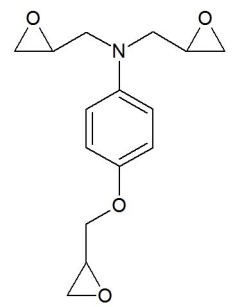
Why it is interesting: While most ‘conventional’ aerogels are based on silica, organic aerogels, especially isocyanate-based aerogels, are also well known: polyurethane-, polyurea-, polyamide-, polyimide-, polycarbodiimide- and polyisocyanurate aerogels have all been reported. This invention adds another type of aerogel based on the reaction of isocyanates and cyclic ethers, esp. oxetanes and oxiranes. The isocyanate with a functionality of (pref.) 2 to 3, (e.g. 4,4′-MDI or methylidynetri-p-phenyletriisocyanate) is reacted with a cyclic ether  of (pref.) functionality of 2 to 3, (e.g. N,N-diglycidyl-4-glycidyloxianiline) in a suitable solvent (e.g. DMAc). After washing, the gel is dried with supercritical carbon dioxide. The materials are useful for thermal insulation and are said to have better mechanical properties compared to other organic aerogels.

N,N-Diglycidyl-4-glycidyloxyaniline

N,N-Diglycidyl-4-glycidyloxyaniline


TPU-Silicone TPVs

Patent Title: THERMOPLASTIC POLYURETHANE COMPOSITE MATERIAL COMPOSITION, THERMOPLASTIC POLYURETHANE COMPOSITE MATERIAL AND MANUFACTURING METHOD THEREOF, SHOE MATERIAL AND WEARABLE APPARATUS

 Number/Link: US2017 /0015825

Applicant/Assignee: Evermore Chem. Ind.

Publication date: 19-jan-2017

Gist”: A blend of TPU and unsaturated silicone gum is dynamically vulcanized

Why it is interesting: A thermoplastic polyurethane is blended (in a kneader) with 1 to 5% w/w of double-unsaturated silicone rubber gum. The blend is then dynamically vulcanized by extruding (and pelletizing) it together with a peroxide curing agent like e.g. 1,3-bis-(t-butylperoxyisopropyl)benzene. The resulting thermoplastic is said to have improved slip resistance without reducing the TPU properties like abrasion resitance and is therefore said to be especially useful for the production of shoe-soles. It is ‘contemplated’ that the resulting material is a semi-IPN, but (i.m.o.) it is more likely that a seperate crosslinked silicone  phase -and therefore a thermoplastic vulcanizate (TPV)- is formed.

perox

1,3-bis-(t-butylperoxyisopropyl)benzene

  • Pages

  • Categories

  • Enter your email address to follow this blog and receive notifications of new posts by email.

    Join 259 other subscribers
  • Follow Innovation in PU on Twitter