Improved Nanoporous Insulation Materials

Title: AEROGEL-CONTAINING POLYURETHANE COMPOSITE MATERIAL

 Number/Link: WO2013182506 (German)

Applicant/Assignee: BASF

Publication date: 12-12-2013

Gist”: An aqueous dispersion based on an isocyanate and an isocyanate-reactive vinyl polymer is used to bind aerogel particles into an insulation material.

Why it is interesting: Binding (silica) aerogel (or xerogel or cryogel) particles into insulation panels using aqueous polyurethane binders is known.  See e.g. my previous posts on the subject here, here and here. According to this invention both the insulation and processing properties of existing systems can be improved by using an aqueous dispersion of a vinyl polymer containing isocyanate-reactive side groups, together with an emulsifiable isocyanate. The polyvinyl is preferably water-soluble, the side groups being -OH, -SH, -NH2 or -COOH,  a (preferred) example being poyvinylamine with a molecular weight from 10,000 to 500,000. The isocyanate used is preferably a modified HDI or IPDI.  In the examples materials are shown with densities of about 120 kg/m³ and a thermal conductivity of about 16 mW/m.K.
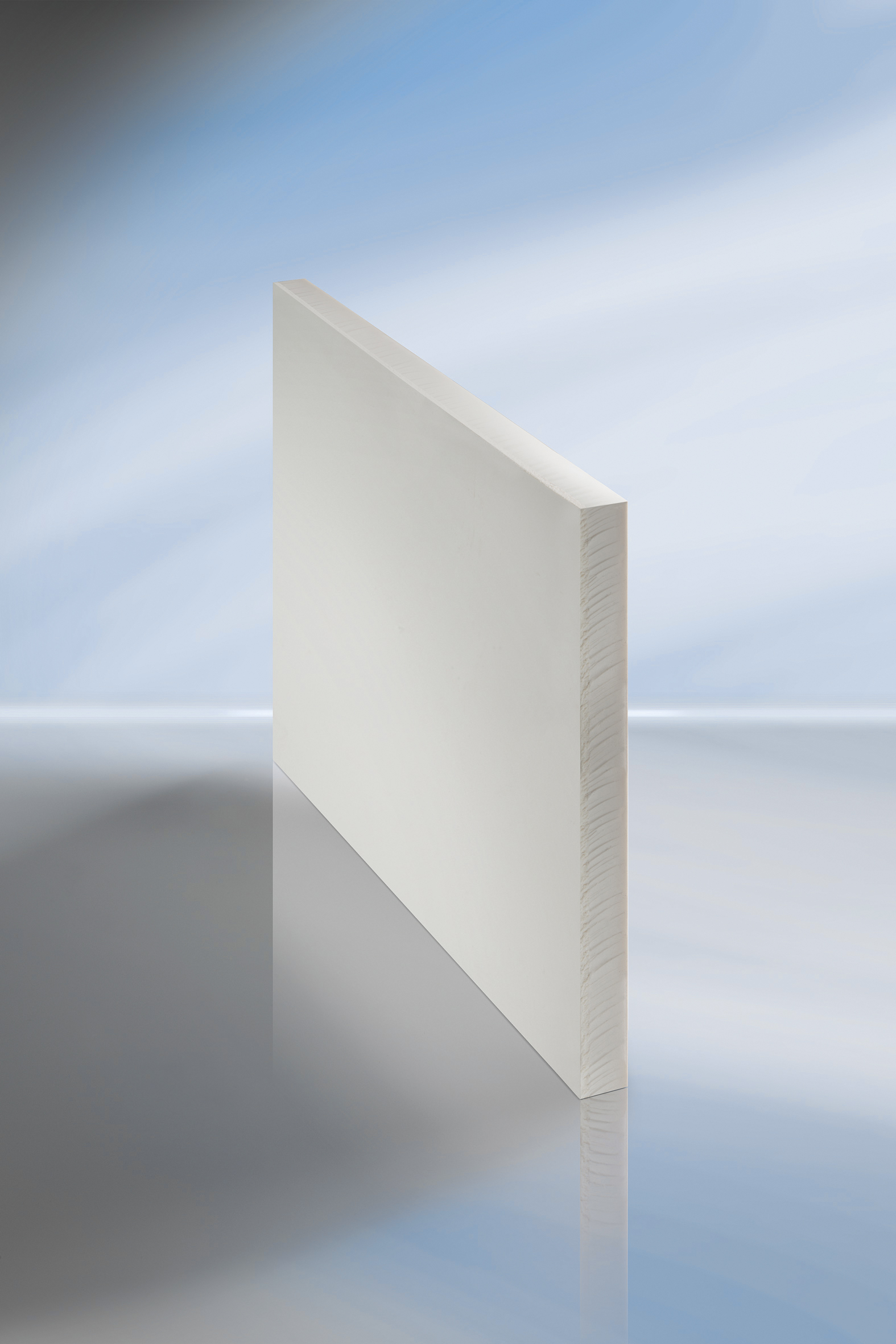
SLENTITE (TM) aerogel-PU insulation panel by BASF
SLENTITE (TM) aerogel-PU insulation panel by BASF

A Simple Way to Make Nonflammable Flexible Foams

Title: METHOD FOR PRODUCING FLAME-PROTECTED POLYURETHANE FOAMS HAVING LOW BULK DENSITIES

 Number/Link: WO2013174745  (German)

Applicant/Assignee: Bayer

Publication date: 28-11-2013

Gist”: Low density flex foam is impregnated with water glass

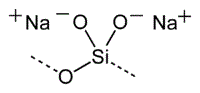
Why it is interesting: A flexible slabstock foam with a density of about 15 kg/m³ or less is submerged in a solution of amorphous water-slouble silicate, preferably a  Na-silicate, then compressed in a roller mill and dried.  The resulting foam has a (much) higher density but also a much improved flame resistance.  In an example an 11.6 kg/m³ TDI slab foam resulted in a 27.3 kg/m³ density foam after impregnation and drying.  A simple and workable idea but I doubt if it is patentable.

Sodium silicate

Sodium silicate

Hybrid Polyurethane-Epoxy Pultrusion System

Title: REINFORCED PULTRUDED POLYURETHANE AND PRODUCTION THEREOF

 Number/Link: US2013/0309924

Applicant/Assignee: Bayer

Publication date: 21-11-2013 (priority PCT/DE)

Gist”: A pultrusion matrix material is formulated from of an immiscible polyol blend together with one or more epoxides and MDI

Why it is interesting: Pultrusion matrix systems need a decent pot-life and, after curing, a high glass transition temperature and modulus. According to the invention this can be achieved by using an immiscible polyol mixture prepared from a) a relatively high MW PO polyol (e.g. PPG4000) and b) a blend of low MW polyols and chain extenders/crosslinkers, where the amount of a) is about 10-30% on the total polyol. This polyol system together with an epoxide (e.g. bisphenol A or the triglycidylether of trimethylolpropane) an  isocyanate (e.g polymeric MDI) and optional additives results in a system useful for a pultrusion process. The examples show a pot-life of about 30 minutes and a Tg of about 150°C. The immiscible high MW PO polyol probably forms a seperate phase, thus increasing the Tg of the hard phase.

Diagram of the Putrusion Process (Wikipedia)

Diagram of the Putrusion Process (Wikipedia)

  • Pages

  • Categories

  • Enter your email address to follow this blog and receive notifications of new posts by email.

    Join 259 other subscribers
  • Follow Innovation in PU on Twitter