Incorporating “Phase Change Gels” into Flexible Foams for Improved Thermal Comfort

Title: Thermal Storage Gelatinous Triblock Copolymer Elastomer Particles in Polyurethane Flexible Foams

 Number/Link: US2013/295371

Applicant/Assignee: PETERSON CHEMICAL TECHNOLOGY

Publication date: 07-11-2013

Gist”:  Particles of  “phase change gels” prepared from plasticized styrenic TPEs and conventional PCMs are incorporated into polyurethane or latex flexible foams

Why it is interesting: A conventional phase change material (PCM) selected from alkanes, PEGs, hydrated salts ect. with a transition temperature between 20 and 35°C is melt-blended with a plasticized styrenic triblock copolymer like SBS, SIS, SEBS etc. to form a “phase change gel”. The gel is then comminuted and added to a flexible foam forming composition in an amount of about 30 pphp. The resulting foams have an increased thermal conductivity which together with the temperature buffering properties of the PCM improves thermal comfort. The flexible foams are useful in application such as matresses, pillows, automotive cushioning, shoe inserts, medical foams and the like. In my opinion especially useful for viscoleastic (“memory”) foams which are known to suffer from thermal discomfort problems.

Effect of "gel PCM" on heating rate of flexible foam according to the invention.

Effect of “gel PCM” on heating rate of flexible foam according to the invention.
Very Tough Polyurethane Elastomers Based on a Novel Type of Polyester Polyol

Title: POLYESTER POLYOL FOR USE IN POLYURETHANE

 Number/Link: WO2013/156450

Applicant/Assignee: Purac Biochem

Publication date: 24-10-2013

Gist”: Tough polyurethane elastomers can be prepared from polyester polyols based on dimer acid and lactide oligomers.

Why it is interesting: The invention claims a new type of ABA polyester polyol where A is a hydrophilic lactide oligomer and B is a hydrophobic dimer diacid initiator. The lactide ologimers can be produced by ring-opening polymerization of cyclic lactide and preferably contain between 4 and 16 lactoyl units.  The dimer diacid is prepared by dimerizing unsaturated C12 to C22 fatty acids, preferably linoleic or linolenic acid. The molecular weight of the polyester polyol is preferably between 1000 and 3500 dalton. Solid polyurethane elastomers prepared from this type of polyols reportedly have much improved toughness and other mechanical properties.

Example of a Dimer Acid

Example of a Dimer Acid

Polyurethane Prepregs prepared with Isosorbide

Title: STORAGE-STABLE POLYURETHANE-PREPREGS AND FIBRE COMPOSITE COMPONENTS PRODUCED THEREFROM

 Number/Link: WO2013/139704

Applicant/Assignee: Bayer

Publication date: 26-09-2013

Gist”: Polyurethane matrix materials for prepregs with very good storage stability are prepared from an NCO prepolymer together with isosorbide and delayed action catalysts.

Why it is interesting: Resins for “prepregs” (pre-impregnated fibre composites) need to have a low viscosity upon impregnation, a good storage stability and a fast ‘curing’ reaction preferably at a relatively low temperature.  According to this invention all these properties can be met by using a 8-16% NCO prepolymer made from a polyester polyol and  MDI, together with a dianhydrohexitol (preferably isosorbide) as chain extender and a delayed action catalyst (e.g. a blocked amine) which is activated between 50 and 100°C. The resulting prepregs have a storage stability at room temperature of several weeks. Final Tg is said to be 130°C, which is not very high but should suffice for many applications.

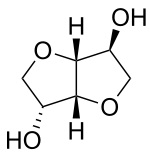
Isosorbide

Isosorbide

  • Pages

  • Categories

  • Enter your email address to follow this blog and receive notifications of new posts by email.

    Join 259 other subscribers
  • Follow Innovation in PU on Twitter