Polyurethane for Filament Winding

Patent Title: FILAMENT WINDING PROCESSES USING POLYURETHANE RESINS AND SYSTEMS FOR MAKING COMPOSITES

 Number/Link: W2016183073

Applicant/Assignee: Covestro

Publication date: 17-11-2016

Gist”: Compositions comprising polymeric MDI, amine-initated polyethers and natural oil polyols are useful for filament winding

Why it is interesting: Filament winding is a process for the production of hollow composite structures whereby resin-impregnated fibers are wound on a mandrel and then cured. Typically the fibers are impregnated with polyesters or epoxies.  Polyurethane compositions are difficult to use in this process because of reactivity and moisture sensitivity. According to this invention an isocyanate reactive composition comprising at least 50% high functionality amine-initiated polyether polyols and up to 50% of a hydrophobic OH-functional vegetable oil, can be advantageously used for PU filament winding. In the examples blends of 3 and 4-functional amine-initated polyether polyols with mole weight of about 250, castor oil, or OH-functional soy-oil, are used together with a high 2,4′ polymeric MDI.
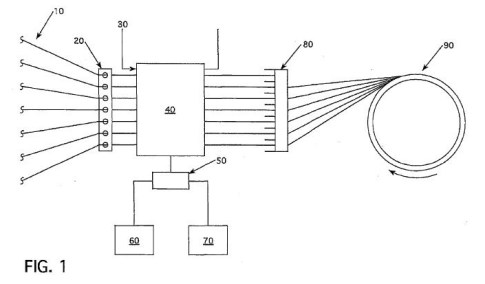
Filanent winding process
Filanent winding process

Non-Isocyanate Polyurethanes from Sucrose-Fatty Acid Esters

Patent Title: BIOBASED CYCLIC CARBONATE FUNCTIONAL RESINS AND POLYURETHANE THERMOSETS THEREFROM

 Number/Link: US2016/0312060

Applicant/Assignee: NDSU

Publication date: 27-10-2016

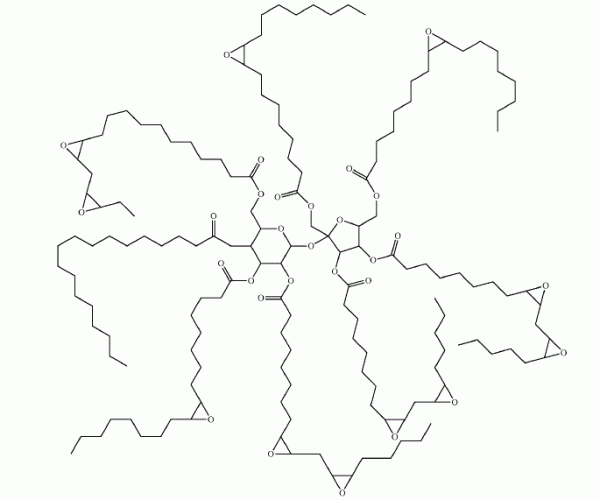
Gist”: Epoxidized sucrose-fatty acid esters are reacted with CO2, then with polyamines

Why it is interesting:  Esters of unsaturated fatty acids and sucrose have been known since the 1960s and are useful in e.g. coatings.  Highly subsituted sucrose esters with an average of 7.7 fatty acid chains per molecule, a molecular weight of about 2400 and a relatively low viscosity of 300-400 mPa.s are commercially available. According to this invention, epoxidized sucrose-fatty acid esters can be further reacted with carbon dioxide resulting in a resin with a ‘pluraility’ of cyclocarbonate groups. Curing with polyamines results in highly crosslinked poly(hydroxyurethanes) useful for coatings, composites and adhesives.

Epoxidized sucrose-fatty acid ester

Epoxidized sucrose-fatty acid ester


Formic Acid Blown EPIC Foams

Patent Title: ISOCYANATE-BASED TEMPERATURE-RESISTANT FOAMS WITH HIGH FLAME RESISTANCE

 Number/Link: WO2016/131874

Applicant/Assignee: BASF, Covestro

Publication date: 25-08-2016

Gist”:  One shot rigid isocyanate-epoxy foams blown with formic acid

Why it is interesting: This is the first in a series of (at least) 3 patent applications apparently resulting from a cooperation between BASF and Covestro on epoxy-isocyanate (“EPIC”) foams.  The other applications are WO2016/131878 and WO2016/131880 published on the same date. More publications may follow.
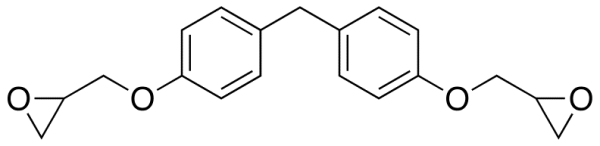
The current invention is about temperature-resistant foams with reportedly very high mechanical properties prepared form a one-shot system comprising a (pref.) high functional MDI, a (pref.) bisphenol-A or bisphenol-F polyglycidylether, at least one reactive amine catalyst and a blowing agent comprising formic acid. The ratio of iso to epoxy groups is (pref.) 3:1 to 15:1. The resulting materials are post-cured at 200°C. The foams contain no, or very little, urethane or urea groups and are said to be especially useful in laminates a.o.  In the examples foams with densities of 25-35 kg/m³ with a thermal conductivity as low as 20 mW/mK are shown.

Bisphenol-F diglycidylether

Bisphenol-F diglycidylether

  • Pages

  • Categories

  • Enter your email address to follow this blog and receive notifications of new posts by email.

    Join 259 other subscribers
  • Follow Innovation in PU on Twitter