Six (6) Dow Patents on ‘Conventional’ PIPA Polyols

Title: POLYISOCYANATE POLYADDITION POLYOL MANUFACTURING PROCESS USING STABILIZERS  (and 5 more)

 Number/Link: WO2015038825 WO2015038826 WO2015038827 WO2015038828 WO2015038829 WO2015038830

Applicant/Assignee: Dow

Publication date: 19-03-2015

Gist”: PIPA polyols based on conventional polyols and their applications

Why it is interesting: Polyisocyanate polyaddition or PIPA polyols are a type of polymer polyol consisting of a base polyol and dispersed polyurethane particles. These polyols are prepared by dispersing and reacting in situ an isocyanate and a low molecular weight polyol (e.g. triethanolamine) in a ‘base’ polyol. The reaction is balanced such, that a controlled amount of grafting of the base polyol onto the PU particles results, which stabilizes the dispersion. The need for grafting is the reason why PIPA polyols are always based on EO-tipped (high primary OH) polyols, limiting their use mainly to the production high resilience (HR) foams. The current inventions by Dow devise ways to make PIPA polyols in ‘conventional’ (i.e. low primary OH) polyols either by the use of specific stabilizers (in the WO..25 application) or by pre-reacting part of the iso with the base-polyol before adding the low MW polyol (in the WO..26 application). The WO..27 to WO..29 applications are concerned with the use of these ‘conventional’ PIPA polyols to prepare conventional-, viscoleastic- and combustion modified flexible foams respectively.  W0..30 is concerned with thixotropic PIPA polyols based on urethane-modified isocyanurates.

Flexible foam blocks
Flexible foam blocks


Classic PU Patent of the Month: Polyurethane-Polyurea RIM Elastomers (Bayer 1976)

Title: VERFAHREN ZUR HERSTELLUNG VON ELASTISCHEN FORMKOERPERN

 Number/Link: DE262295 (German)

Applicant/Assignee: Bayer

Publication date: 24-11-1977

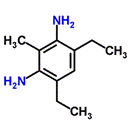
Gist”: Use of DETDA  in one shot PU-PUA RIM.

Why it is interesting: This is the invention that for the first time allowed the production of large reaction injection moulded (RIM) polyurea articles with a very short demould time. Apart from advances in mixing head design which allowed for fast and accurate mixing and advances in mould design, polyurea RIM was made possible by the development of specific diamine chain extenders.  Bayer found that aromatic diamines containing one alkyl group in o-postion to a first amino group and two alkyl groups in o-position to a second amine group, where at least two of the alkyl groups contain 2 or more carbon atoms, have the correct reactivity for a one shot RIM process when used together with conventional polyether polyols, MDI and catalysts. A preferred example of such a diamine is diethyltoluenediamine (DETDA). The use of DETDA in one shot RIM allowed for the production of  parts up to 10 kg with a demould time of 30 seconds.

DETDA

DETDA

TPU with Crystalline Chain Ends

Title: ARTICLES MADE FROM THERMOPLASTIC POLYURETHANES WITH CRYSTALLINE CHAIN ENDS

 Number/Link: WO2014/189993

Applicant/Assignee: Lubrizol

Publication date: 27-11-2014

Gist”: TPU with improved processability by using crystallizing chain stoppers.

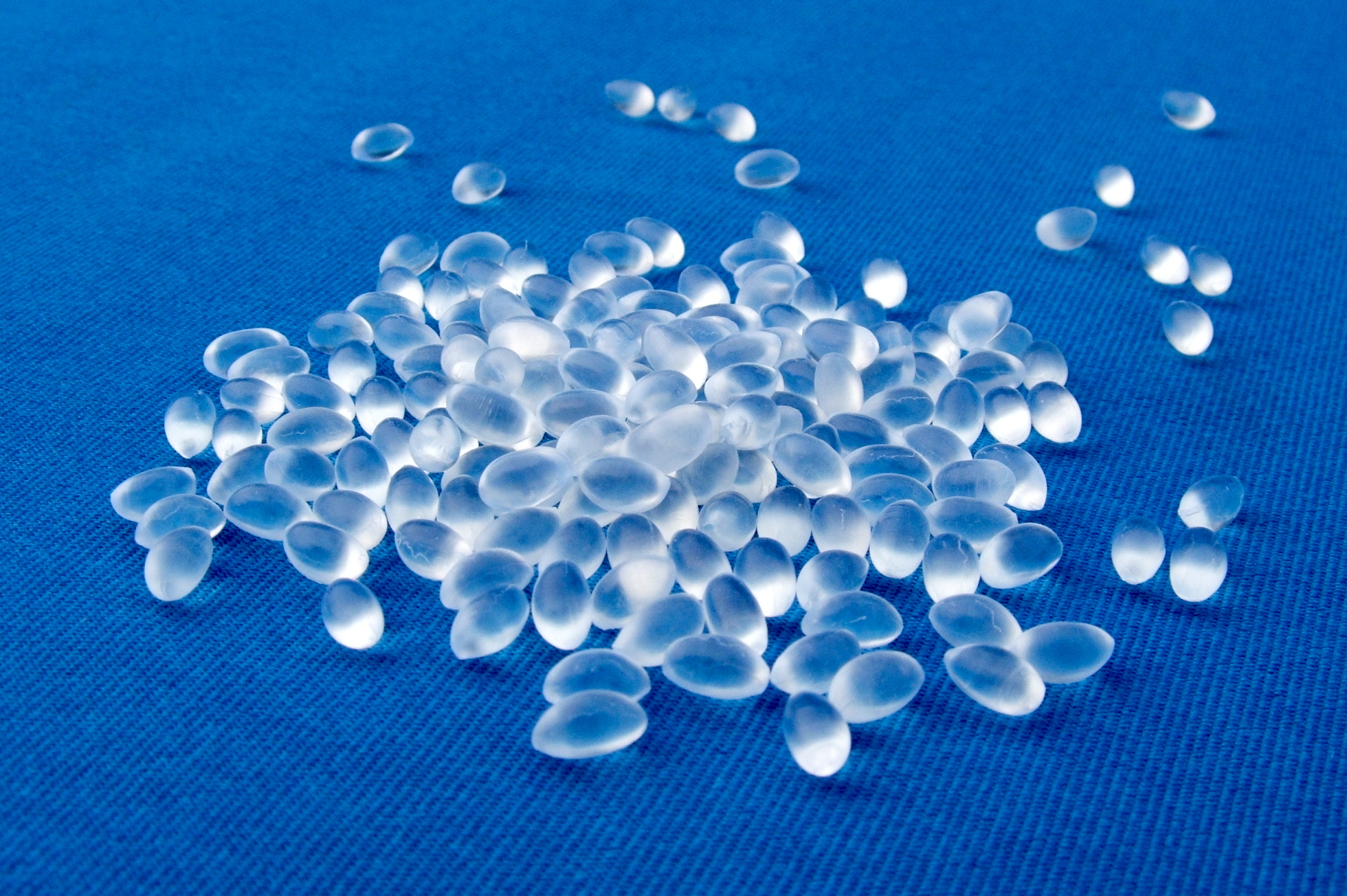
Why it is interesting: While thermoplastic polyurethanes are very interesting engineering materials with an attractive combination of properties, their main drawback is the often very narrow processing window. Especially soft TPUs are both difficult to produce and process. According to this invention TPUs, including soft TPUs, with greatly improved processing properties can be produced by incorporating crystallizing chain stoppers. In the examples straight chain hydrocarbon monols with 33 and 63 carbons are used as chain stoppers in an amount of about 1 to 10% w/w on the total composition.

TPU pellets

TPU pellets

  • Pages

  • Categories

  • Enter your email address to follow this blog and receive notifications of new posts by email.

    Join 259 other subscribers
  • Follow Innovation in PU on Twitter