Crosslinking TPU with Isocyanates.

Title: POLYURETHANE ON THE BASIS OF SOFT THERMOPLASTIC POLYURETHANE

 Number/Link: US2014/0094571

Applicant/Assignee: BASF

Publication date: 3-04-2014 (priority PCT/DE)

Gist”: A soft TPU is crosslinked using isocyanate dissolved in another TPU.

Why it is interesting: Crosslinking thermoplastic polyurethane parts to improve certain mechanical- and creep properties is known. In this case the crosslinking agent is an isocyanate with a functionality larger than 2, preferably an MDI prepolymer.  The isocyanate is dissolved in another TPU by melt blending in a twin-screw extruder at a temperature below 160°C and pelletizing. Pellets of a soft, polyester-based, TPU with a hardblock content less than 5% are mixed with the isocyanate-containing pellets, injection moulded and post-cured to crosslink the moulded part.
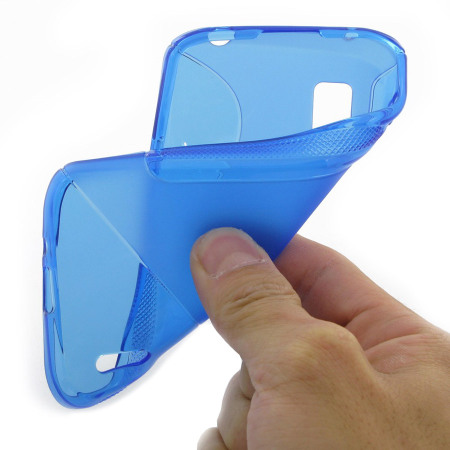
A TPU phone case.

TPU phone case.

Prepregs from Glass Fiber and Reactive Polyurethane Powder

Title: PREPREGS AND MOLDINGS PRODUCED THEREFROM

 Number/Link: US2014065911

Applicant/Assignee: Evonik

Publication date: 6-03-2014

Gist”: A reactive polyurethane powder is prepared from a mixture of a  solid polyester polyol and a solid dimerised IPDI and subsequently used to make glass fiber prepregs.

Why it is interesting:  A polyurethane powder is made from (pref.) a mixture of  a solid (at room temperature) polyster polyol and a solid, blocked isocyanate.  The isocyanate is preferably an “internally” blocked IPDI.  Internally blocked meaning that the isocyanate contains uretidinedione groups.  The powder is scattered over a fibrous support and heated to over melting temperature but below curing temperature to make the prepreg.  Prepregs made with PU powder instead of the conventional resins have the advantage of being non-sticky, non-toxic and of having a very high storage stability (45 days in the examples).

Prepreg production with reactive PU powder

Prepreg production with reactive PU powder

Classic PU Patent of the Month: The First Polyether Foams (1951)

Title: Verfahren zur Herstellung von Kunststoffen

 Number/Link: DE974371 (German)

Applicant/Assignee: Bayer AG

Publication date: 12-08-1960

Gist”: A prepolymer from a polyether polyol and an excess of isocyanate is reacted with water to produce an elastomeric  foam.

Why it is interesting: This patent specifies the first polyether prepolymers and polyether  foams as invented by Otto Bayer and co-workers.  In the examples an all-EO, 4000 MW triol, prepared from trimethylolpropane and  ethylene oxide is reacted with a surplus of TDI resulting in a 3.2% NCO prepolymer.  This prepolymer is reacted with water to form either elastomeric films or elastomeric (flexible) foams. There are only two claims, the first covering  polyether prepolymers, the second covering both “one-shot” and “full prepolymer” water-blown polyether foams:

PATENTANSPRÜCHE:

1. Verfahren zur Herstellung von Kunststoffen,
dadurch gekennzeichnet, daβ Polyglykolather mit
einem Molekulargewicht von mindestens 500 und
mindestens zwei endstandigen Hydroxylgruppen
mit einem Übersehuβ über die berechnete Menge
an polyfunktionellen aliphatischen oder aromatischen
Isocyanaten und die erhaltenen Polyglykolätherisocyanate
mit Verbindungen mit reaktionsfahigem Wasserstoff
umgesetzt werden.

2. Ausführungsform des Verfahrens nach Anspruch
1, insbesondere zur Herstellung von Schaumstoffen,
dadurch gekennzeichnet, daβ als Verbindung
mit reaktionsfahigem Wasserstoff Wasser verwendet
wird und die Umsetzung mit Wasser gleichzeitig
mit der oder anschlieβend an die Umsetzung
der Polyglykolather und polyfunktionellen
Isocyanate erfolgt.

Dr. Otto Bayer

Dr. Otto Bayer

  • Pages

  • Categories

  • Enter your email address to follow this blog and receive notifications of new posts by email.

    Join 259 other subscribers
  • Follow Innovation in PU on Twitter