Polyurethane-Acrylate Plastisol

Patent Title: ACRYLIC-URETHANE IPN PLASTISOL

 Number/Link: US2016/0152857

Applicant/Assignee: Polyone

Publication date: 2-06-2016

Gist”: Plastisols from blocked-iso grafted acrylate in plasticizer

Why it is interesting:
Conventional plastisols are suspensions of PVC particles in a (usuallly phthalate-) plasticizer. The suspension can be cured by heating, which results in a plasticized elastomer.  Plastisols are used for coatings of e.g. car underbodies and for ‘screen printing’ of textiles. According to this invention a non-PVC plastisol can be produced by dispersing core-shell acrylate polymer particles (Mn between 300,000 and 1,000,000) with blocked isocyanate groups grafted to the backbone into a plasticizer, preferably into dioctylphthalate, together with a latent amine crosslinker like adipic dihydrazide. No information is given about the blocking agent but the plastisol is said to cure at 130-170°C and be especially suited for textile printing.

Adipic dihydrazide

Adipic dihydrazide

Hybrid Polyurethane-Peptide Dispersion

Patent Title: AQUEOUS PEPTIDE-STABILIZED POLYURETHANE DISPERSIONS

 Number/Link: W02016058909

Applicant/Assignee: Henkel; Max Planck Ges.

Publication date: 21-04-2016

Gist”: An NCO-ended prepolymer is reacted with a peptide mixture in water at correct pH

Why it is interesting: According to this invention a low-VOC, surfactant- free, stable dispersion can be prepared by reacting an isocyanate-ended preopolymer with an aqueous solution of peptides. The prepolymer is prepared from a polyether-, polyester- or PDMS diol and a surplus of (preferably) aliphatic isocyanate. The peptide mixture is obtained by hydrolysis or enzymatic cleaving of naturally occuring proteins and is dispersed in water at a pH well above the highest isoelectric point present in the mixture. This will ensure reaction of the isocyanate with the peptides instead of water.
Polymer-protein hybrids are interesting because they allow for unique properties not attainable with synthetic polymers alone, such as a selective and specific interaction with other biomolecules and a controlled response to external stimuli like pH and temperature.

Example of a tetrapeptide: Val-Gly-Ser-Ala. (Wikipedia)

Example of a tetrapeptide: Val-Gly-Ser-Ala. (Wikipedia)


Carbon-Black Reinforced Polyurethane Tires

Patent Title: TIRE WITH CARBON BLACK REINFORCED POLYURETHANE 

 Number/Link: US20160060420

Applicant/Assignee: Goodyear

Publication date: 3-03-2016

Gist”: Dried, pulverized C-black is used in cast elastomer

Why it is interesting: According to this invention cast polyurethanes with properties useful for tire production can be made by incorporating 2-4% (w/w) of carbon black, pulverized to an average particle size of 5-10 μm. The carbon black is dispersed in the polyol component together with molecular sieves to absorb the water inherently present in carbon black.  It is said that removing the water allows the carbon black to react with an excess of isocyanate present, thereby greatly improving its reinforcing characteristics. Although not mentioned in the text I assume that the tires are intended for low-speed vehicles only.

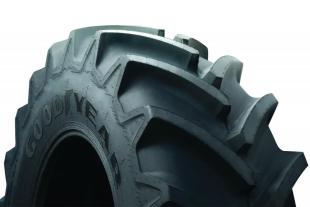
GoodYear Tire

GoodYear Tire

  • Pages

  • Categories

  • Enter your email address to follow this blog and receive notifications of new posts by email.

    Join 259 other subscribers
  • Follow Innovation in PU on Twitter