TPU/PU-Acrylate Semi-IPNs

Patent Title: THERMALLY STABLE MICROSTRUCTURED SEMI-IPN LAYER

 Number/Link: WO2016/191118

Applicant/Assignee: 3M

Publication date: 1-dec-2016

Gist”:  TPU and PU-acrylate oligomers are blended and radiation-cured

Why it is interesting: According to this invention semi-interpenetrating polymer networks (IPNs) that are prepared from thermoplastic polyurethane (or urethane/urea) and acrylate-functional polyurethane oligomers are highly heat-stable and abrasion resistant and can be used for the production of microstructured surfaces.  Microstructured (‘riblet’) surfaces with dimples or ridges of a few to a few hundred microns deep are used as drag reducing coatings on planes, ships and in aeronautics. In the examples 90% of a commercial TPU is blended and co-extruded with 10% of a commercial aliphatic urethane acrylate oligomer.  The extruded film was then laminated on on a microreplicated liner, radiation cured and removed from the liner to produce the riblet surface.
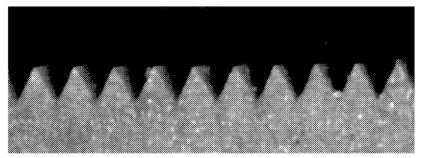
Microstructured layer according to the invention
Microstructured layer according to the invention

Classic PU Patent of the Month: Microencapsulation (1963)

Patent Title: ENCAPSULATION BY INTERFACIAL POLYCONDENSATION

 Number/Link:  US3577515

Applicant/Assignee: Pennwalt Corp.

Publication date: 4-05-1971

Gist”: Interfacial polycondensation on the surface of emulsified droplets.

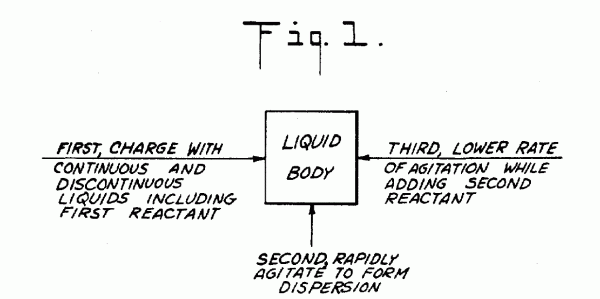
Why it is interesting: Micro-sized droplets are encapsulated with a polymeric film or ‘skin’ formed by an interfacial polycondensation reaction. The idea is both very clever and simple: one reaction component is dissolved in a liquid which is then dispersed in another -immiscible- liquid. The second reaction component is then added to the continuous phase resulting in a polycondensation reaction at the surface of the droplets, encapsulating these with a polymeric film. For example a solution of a polyisocyanates in an organic solvent can be dispersed in water (to a desired droplet size) after which a water soluble diol or diamine is added resulting in a polyurethane or polyurea film encapsulating the solvent droplets. Microcapsules are now common and used in may applications like cosmetics, phase change materials, e-paper, self-healing coatings etc.

Figure 1 illustrating the process

Figure illustrating the process

Hybrid PU-Peptide PUDs

Patent Title: AQUEOUS PEPTIDE-FUNCTIONALIZED POLYURETHANE DISPERSIONS

 Number/Link: WO2016/135162

Applicant/Assignee: Henkel; Max-Panck Ges.

Publication date: 1-09-2016

Gist”: A maleimide-capped prepolymer is reacted with the -SH groups in a peptide

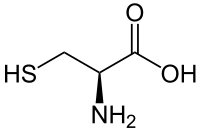
Why it is interesting: Polyurethane-protein hybrids are interesting novel materials which potentially have a number of unique properties unattainable with conventional synthetic polymers. In a previous case discussed in this blog an NCO-ended polyurethane prepolymer was reacted with a peptide in water to make a PU-peptide dispersion.  This type of grafting, however, is not very specific because the isocyanate will react mostly with the free amino groups of lysine, which is usually  ‘abundant’ in a typical peptide. According to this invention the grafting can be made very specific by first end-capping the NCO prepolymer with maleimide groups and dispersing in water. The dispersion is then reacted with a peptide solution at pH7. In these circumstances the maleimide will react selectively with the free thiol group of cysteine, of which usually very few are present in a typical peptide because most thiol groups are engaged in S-S disulfide bridges.  Preferably a peptide consisting of 10-200 amino acids is used, with preferably only one free thiol group. By selective grafting the properties of the peptide can be conserved.  The PU-peptide dispersions are claimed to be especially useful for metal adhesives.

L-cysteine

L-cysteine


  • Pages

  • Categories

  • Enter your email address to follow this blog and receive notifications of new posts by email.

    Join 259 other subscribers
  • Follow Innovation in PU on Twitter