TPU with Moisture-Controlled Flexibility

Title: THERMOPLASTIC POLYURETHANE MATERIALS FOR FORMING MEDICAL DEVICES

Number/Link: WO2017/066381

Applicant/Assignee: Becton Dickinson

Publication Date: 20 april 2017

“Gist”: High hardblock TPU, based on side-chain branched chain extenders, softens in water

Why it is interesting: The invention is related to thermoplastic polyurethanes for medical applications especially for intravenous catheters. These catheters need to have a high stiffness when inserted but need to become flexible once in place to prevent injuries. This is accomplished with TPUs based on MDI, PTMEG and either 2,2-dimethyl-1,3-propanediol (neopentylglycol) or 2-methyl-1,3-propanediol (MPdiol) and having a hardblock content of 50 to 75%. The examples show indeed an increased stiffness at ambient conditions and a larger softening when soaked in saline solution compared to TPU produced with a linear chain extender. It is however not mentioned which linear chain extender was used.

Neopentylglycol

Low Density Foamed TPU

Patent Title: FOAMED THERMOPLASTIC POLYURETHANE AND MICROWAVE MOLDED ARTICLE THEREOF

 Number/Link: US2017/0073490

Applicant/Assignee: Sunko Ink; Tayin R&D

Publication date: 16-mar-2017

Gist”: Blown TPU pellets are subjected to a second foaming process using microwaves

Why it is interesting: Thermoplastic polyurethane is extruded together with an excess of blowing agent using a single screw extruder and a pelletizer. The foamed pellets are then put in a mould together with water and subjected to microwave radiation which causes the pellets to expand and sinter into a moulded part. In the examples expandable microspheres are used as blowing agent in amounts of 5 to 25 php of TPU. The pellets are irradiated for 20 to 180 s at a power of up to 5000 W. Moulded densities as low as 170 kg/m³ are achieved.

SEM picture of moulded TPU according to the invention


TPU with Reduced Blooming

Patent Title: POLYOLS WITH REDUCED CYCLIC OLIGOMER CONTENT AND THERMOPLASTIC POLYURETHANE COMPOSITIONS THEREOF

 Number/Link: WO2017040505

Applicant/Assignee: Lubrizol

Publication date: 9-mar-2017

Gist”: Enzymes are used to remove cyclo-oligomers from polyster polyols

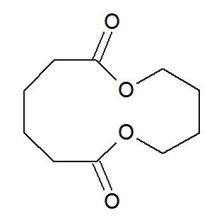
Why it is interesting: It is known that the “blooming” of polyester TPUs (i.e. the fomation of a white surface haze) is caused by the migration of cyclic polyester oligomers to the surface of the TPU. Conventionally these unreactive cyclo-oligomers are removed by e.g extraction, or their formation is prevented by careful choice of diol and diacid as mentioned before in this blog. According to this invention the cyclic polyesters can be removed by treating the polyol with an enzyme. Enzymes of the lipase or cutinase type are immobilized by attachement to an inert and insoluble material and then heated together with the polyol at 70 to 90ºC to ‘cut’ the polyester rings. After treatment of the polyol the immobilized enzyme can be filtrated.

A cyclic diester

  • Pages

  • Categories

  • Enter your email address to follow this blog and receive notifications of new posts by email.

    Join 259 other subscribers
  • Follow Innovation in PU on Twitter