Steam-Treated Polyisocyanurate: Take Two

Title: PROCESS FOR MAKING URETHANE-ISOCYANURATES

 Number/Link:WO2015/006391

Applicant/Assignee: Dow

Publication date: 15-01-2015

Gist”: Treating PUR-PIR with hot water at superatmospheric pressure results in a Tg increase.

Why it is interesting: This is exactly the same invention as discussed a while ago on this blog: WO2014/160616 . But, apart from the title, the application has been completely re-written by another agent and filed less then 4 months  after the first one. The only difference in the claims appears to be that the temperature and index ranges are taken a bit wider and that filled polyols and polyester polyols are claimed separately.  Very strange.  Is it possible that they forgot they already filed this?

Isocyanurate group
Isocyanurate group

Polyester TPU with Reduced Blooming

Title: POLYURETHANE BASED ON RENEWABLE RAW MATERIALS

 Number/Link: WO2015/000722

Applicant/Assignee: BASF

Publication date: 8-01-2015

Gist”: Preparing TPU from polyester diols based on a blend of diacids reduces blooming

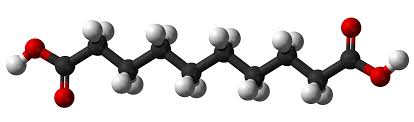
Why it is interesting: This application relates to polyester polyols prepared from a diol and a mixture of  diacids of which “at least one is at least partly” produced from a renewable resource. When these polyester diols are reacted with a diisocyanate and a chain extender, the resulting TPU shows a reduced tendency to “bloom” (i.e. form a white exudate on the surface). In the examples TPUs based on polyester polyols prepared from 1,3-propanediol and either azaleic- or sebacid acid (all from renewable resources) show very strong blooming while a TPU based on a polyester polyol prepared from 1,3-propanediol and a 1:1 blend of azeleic- and sebacic acid  shows very little blooming. While this an interesting effect, it is not clear to me why “at least one of the diacids needs to be at least partly” made from a renewable resource is claimed. The claim appears unrelated to the actual invention.

Sebacic Acid

Sebacic Acid

Bio-Renewable Thermoplastic Polyurethanes

Title: HOMOGENEOUS EXTRUDED ARTICLES MADE FROM THERMOPLASTICALLY PROCESSABLE POLYURETHANES BASED ON POLYESTER DIOLS FORMED FROM SUCCINIC ACID AND 1,3-PROPANEDIOL

 Number/Link: US2014/0256902

Applicant/Assignee: Bayer

Publication date: 11-09-2014 (priority PCT)

Gist”: TPU based on polyester diols prepared from succinic acid and propandiol

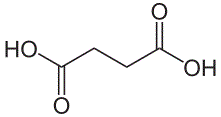
Why it is interesting: The use of biorenewable raw materials is no longer a curiosity in polyurethane production. Especially natural oil-based polyols are currently fashionable in newly developed products.  These ‘NOPs’ are however not very suitable for the production of thermoplastic polyurethanes.  According to the current invention (partly) bio-renewable TPUs can be produced from polyester diols based on succinic acid and 1,3-propanediol. Both these monomers can be produced by fermentation of carbohydrates. 1,3-propanediol is produced on industrial scale by DuPont through fermentation of corn syrup using genetically modified E.Coli bacteria (“Bio-PDO”). In the examples PDO-succinate polyester diols with MW from 1000 to 2000 are used together with 4,4′-MDI and 1,4-butanediol to produce TPUs with shore hardness ranging from 85 to 94A and Tg’s from -18 to +11°C.

Succinic acid or butanedioic acid.

Succinic acid or butanedioic acid.

  • Pages

  • Categories

  • Enter your email address to follow this blog and receive notifications of new posts by email.

    Join 259 other subscribers
  • Follow Innovation in PU on Twitter