Thermal Engine Encapsulation with Polyurethane Foam

Title: THERMAL INSULATION OF AN INTERNAL COMBUSTION ENGINE

 Number/Link: WO2014/195153 (German)

Applicant/Assignee: BASF

Publication date: 11-12-2014

Gist”:  Engine parts are encapsulated in PU foam using moulds.

Why it is interesting: Encapsulating (part of) motor car engines with heat-insulating rigid PU foam is useful because it can reduce fuel consumption and exhaust. When the mass of the foam is increased (e.g. by filling with BaSO4) the encapsulation can also reduce noise levels. BASF has been working on this concept for more than 15 years now (see e.g. DE19935335) and the current application only relates to a process improvement:  an engine part is brought into a closed mould leaving a gap between part and mould which is then filled with PU foam. This is an interesting concept but I wonder if it is actually used in current motor cars.  And if not, why not?

Car with thermally encapsulated engine.
Car with thermally encapsulated engine.
 

Improved Nanoporous Insulation Materials

Title: AEROGEL-CONTAINING POLYURETHANE COMPOSITE MATERIAL

 Number/Link: WO2013182506 (German)

Applicant/Assignee: BASF

Publication date: 12-12-2013

Gist”: An aqueous dispersion based on an isocyanate and an isocyanate-reactive vinyl polymer is used to bind aerogel particles into an insulation material.

Why it is interesting: Binding (silica) aerogel (or xerogel or cryogel) particles into insulation panels using aqueous polyurethane binders is known.  See e.g. my previous posts on the subject here, here and here. According to this invention both the insulation and processing properties of existing systems can be improved by using an aqueous dispersion of a vinyl polymer containing isocyanate-reactive side groups, together with an emulsifiable isocyanate. The polyvinyl is preferably water-soluble, the side groups being -OH, -SH, -NH2 or -COOH,  a (preferred) example being poyvinylamine with a molecular weight from 10,000 to 500,000. The isocyanate used is preferably a modified HDI or IPDI.  In the examples materials are shown with densities of about 120 kg/m³ and a thermal conductivity of about 16 mW/m.K.

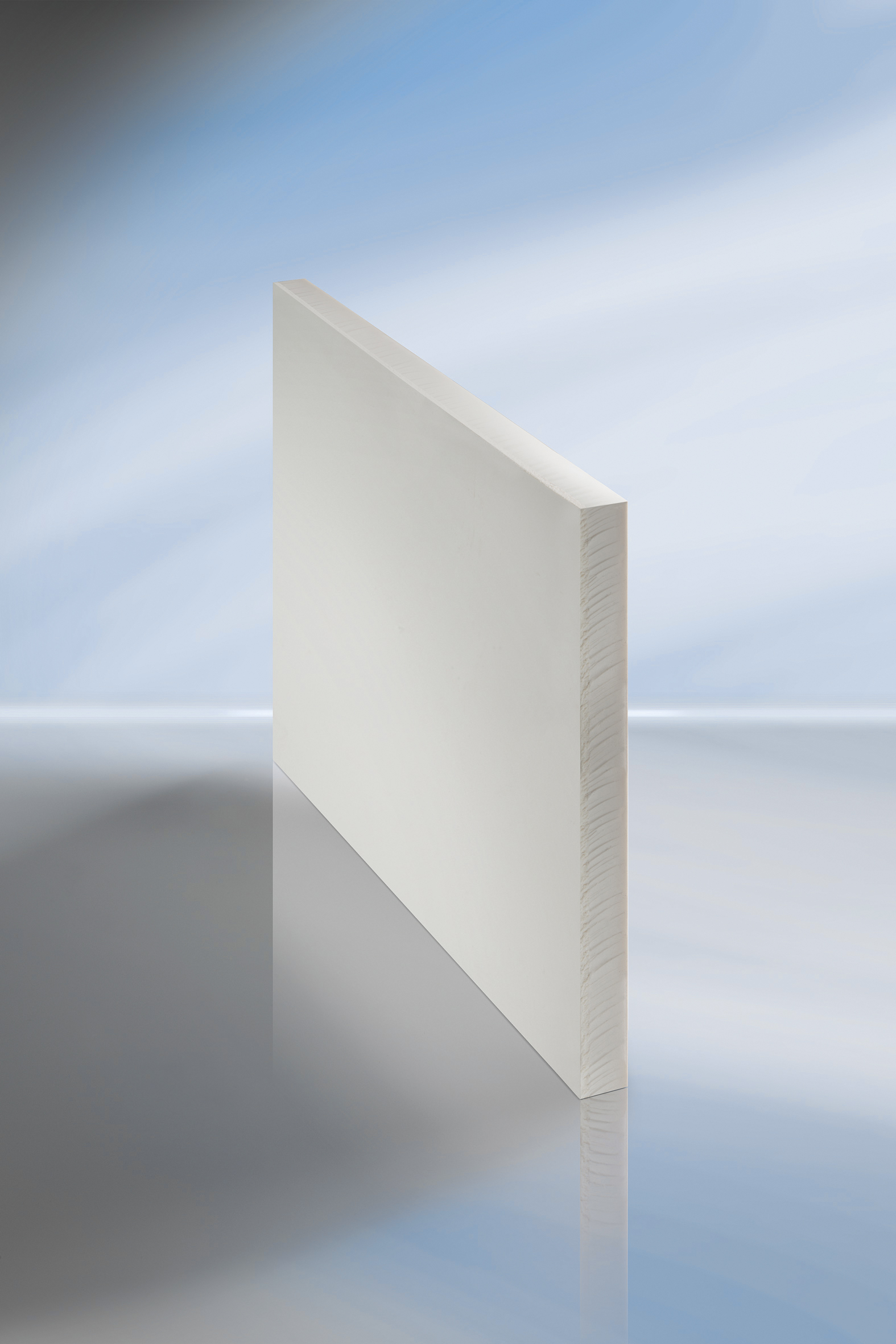
SLENTITE (TM) aerogel-PU insulation panel by BASF

SLENTITE (TM) aerogel-PU insulation panel by BASF

A Simple Way to Make Nonflammable Flexible Foams

Title: METHOD FOR PRODUCING FLAME-PROTECTED POLYURETHANE FOAMS HAVING LOW BULK DENSITIES

 Number/Link: WO2013174745  (German)

Applicant/Assignee: Bayer

Publication date: 28-11-2013

Gist”: Low density flex foam is impregnated with water glass

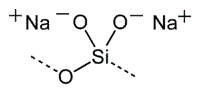
Why it is interesting: A flexible slabstock foam with a density of about 15 kg/m³ or less is submerged in a solution of amorphous water-slouble silicate, preferably a  Na-silicate, then compressed in a roller mill and dried.  The resulting foam has a (much) higher density but also a much improved flame resistance.  In an example an 11.6 kg/m³ TDI slab foam resulted in a 27.3 kg/m³ density foam after impregnation and drying.  A simple and workable idea but I doubt if it is patentable.

Sodium silicate

Sodium silicate

  • Pages

  • Categories

  • Enter your email address to follow this blog and receive notifications of new posts by email.

    Join 259 other subscribers
  • Follow Innovation in PU on Twitter