Hydrophilic PU Foams from Sulfonated Polyols

Patent Title: HYDROPHILIC OPEN CELL FOAMS

 Number/Link: WO2016/044512

Applicant/Assignee: 3M

Publication date: 24-03-2016

Gist”: Use of sulfonated polyols to make hydrophilic foams

Why it is interesting: Hydrophilic polyurethane foams are well known and often made using polyols with a high ethyleneoxide content.  According to this invention, open celled, hydrophilic foams can be made using a polyol blend containing polyols (or polyamines) having charged functional groups. In the examples a polymeric MDI is reacted with a polyol blend of a 3000MW, 8% EO, triol with up to 40% (w/w) of a sulfonated diol. The sulfonated diol is prepared by reacting 0.25 moles of  dimethyl sodium 5-sulfoisophthalate with 1 mole of PEG 600. The foams have properties useful for use as household sponges.
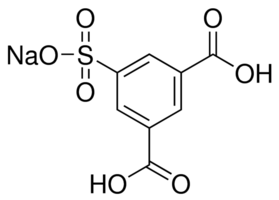
Dimethyl sodium 5-sulfoisophthalate
Dimethyl sodium 5-sulfoisophthalate

TPU from Biorenewable Isocyanate

Patent Title: BIO-BASED DIISOCYANATE AND CHAIN EXTENDERS IN CRYSTALLINE SEGMENTED THERMOPLASTIC POLYESTER URETHANES

 Number/Link: WO2016041076

Applicant/Assignee: Trent University

Publication date: 24-03-2016

Gist”:  TPU with highly crystalline hard segment is based on 1,7 heptamethylenediisocyanate

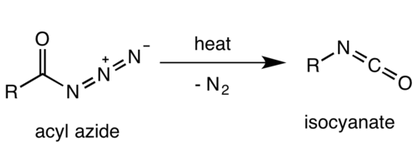
Why it is interesting: According to this application, polyester TPUs with crystalline hard segments can be produced using 1,7-heptamethylenediisocyanate. The HPMDI is reacted with a 2000MW poly(ethyleneadipate) diol and a short chain diol as chain extender. The  TPUs show a high hard-segment crystallinity, resulting in improved phase separation and in a (semi-)crystalline softphase which has a significant reinforcement effect. The TPUs are thermally stable up to 250°C and show a toughness and strength comparable to conventional TPUs. HPMDI can reportedly be made from natural oils using the Curtius rearrangement – but no reference is given.

Curtius Rearrangment

Curtius Rearrangment

Vinyl-Functional UV-Curable Polyurethanes

Patent Title: ALKENYL ETHER POLYOLS

 Number/Link: WO2016038112 (German)

Applicant/Assignee: Henkel

Publication date: 17-03-2016

Gist”: Alkenylether-functional polyols are used in oligomeric PU adhesives.

Why it is interesting: Alkenylether-functional groups are highly reactive and can be cured by UV-initiated cationic polymerization. This has the advantage of being unsensitive to oxigen which allows for so-called “dark cure”, i.e. the continuing polymerization after a first pulse of UV light. According to this invention, vinyl functional polyols are prepared by polymerizing a hydroxyl- or amine functional vinyl ether, e.g. 4-hydroxybutylvinylether (HBVE) or 3-aminopropylvinylether with epoxides or cyclocarbonates. The polyols can then be reacted with isocyanates resulting in UV curable polyurethanes.  In an example HBVE is reacted with 1,4-butanedioldiglycidylether to make the vinyl-functional polyol which is then further reacted with isophorondiisocyanate to make the PU adhesive.

1,4-butandioldiglycidylether

1,4-butandioldiglycidylether

  • Pages

  • Categories

  • Enter your email address to follow this blog and receive notifications of new posts by email.

    Join 259 other subscribers
  • Follow Innovation in PU on Twitter