Making a Better NOP-based Flexible Foam

Title: Additives For Improving Natural Oil Based Polyurethane Foam Peformance

 Number/Link: US2013/0065978

Applicant/Assignee: Air Products

Publication date: 14-03-2013

Gist”: Incorporating a small amount of cyanoguanidine into a NOP-based flexible foam improves airflow and humid ageing.

Why it is interesting: Now that natural oil polyols (NOPs) are becoming mainstream in flexible polyurethane foams (at least in the patent literature), it is to be expected that specific catalysts, surfactants and other additives will be developed for these systems.  Air Products claims to improve air flow and humid ageing properties of NOP-based foams by adding small amounts ( about 0.05 parts per 100 polyol) of solutions (in e.g. DMSO) of guanidine or its derivatives like cyanoguanidine or guanidinehydrochloride salt  to the formulation.  While it is not immediatly clear why this should work, the effect seems to be real.
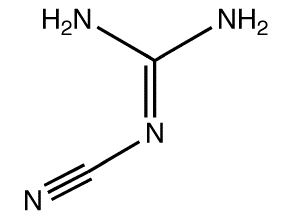
2-cyanoguanidine

2-cyanoguanidine

Polyurethane Foams from Sugar

Title: Sugar-Based Polyurethanes, Methods for Their Preparation, and Methods of Use Thereof

 Number/Link: US2013030067

Applicant/Assignee: Imperial Sugar Co.

Publication date: 31-01-2013

Gist”: Very low density semi-rigid foams are produced from sucrose syrup and MDI.

Why it is interesting: Open celled foams are prepared from sucrose, water, MDI and preferably a  flame retardant at an NCO index from 20-60 (preferred). A number of examples is given of foams with densities 0f 8 kg/m3 (0.5 pcf) which is quite low.  Mechanical an heat insulation properties are probably not very good but the foams are very ‘green’ and cheap. Useful as sprayable acoustic foams?

Sucrose

Sucrose

Tack-Free Polyurethane Gels

Title: SUPPORT STRUCTURES INCLUDING LOW TACK VISCOELASTOMERIC GEL MATERIAL AND METHODS

 Number/Link: US20130011621

Applicant/Assignee: Polymer Concepts Inc.

Publication date: 10-01-2013

Gist”: Tack-free “non-bleeding” polyurethane gels by plasticizing a low-hardblock PU system with oils.

Why it is interesting: Polyurethane gels are often produced from low NCO-index systems, or other systems comprising ‘loose’ chains causing tackiness. Alternatively plasticizers can be used which can exude or ‘bleed’ especially at elevated temperatures.  This case claims a tack-free and non-bleeding gel.  In the example a low hardblock, index 98 system is plasticized by a combination of soy oil and epoxidized soy-oil, together with some 500cS silicon oil. Instead of natural oils a combination with hydrocarbon oil is claimed as well.   If true, this would be an interesting system, but it is hard to believe that the oils will not bleed over time. Especially the hydrocarbons.

Excercise Ball from Tack-Free PU gel

Excercise Ball from Tack-Free PU gel

  • Pages

  • Categories

  • Enter your email address to follow this blog and receive notifications of new posts by email.

    Join 259 other subscribers
  • Follow Innovation in PU on Twitter