Flexible- and Viscoelastic Foams from CO2-Based Polyols

Title: HIGH STRENGTH POLYURETHANE FOAM COMPOSITIONS AND METHODS

 Number/Link: WO2014/074706

Applicant/Assignee: Novomer

Publication date: 15-05-2014

Gist”: The mechanical properties of flexible foams can be improved by replacing up to 50% of the polyol with CO2-based polycarbonate polyols.

Why it is interesting: Novomer (http://www.novomer.com) is a ‘sustainable chemistry company’ which produces aliphatic polycarbonate polyols from CO2 and epoxides. In this 215 page patent application they claim that hardness and mechanical properties viz. tensile- and tear strength of flexible and VE foams are improved by replacing between 2 and 50% of the polyol by their polycarbonate polyol. Other properties are supposedly not affected much, although resilience (e.g.) clearly drops for HR foams.
While the first claim may be technically new, it is – in my opinion- not patentable because not surprising to “a person skilled in the art”.
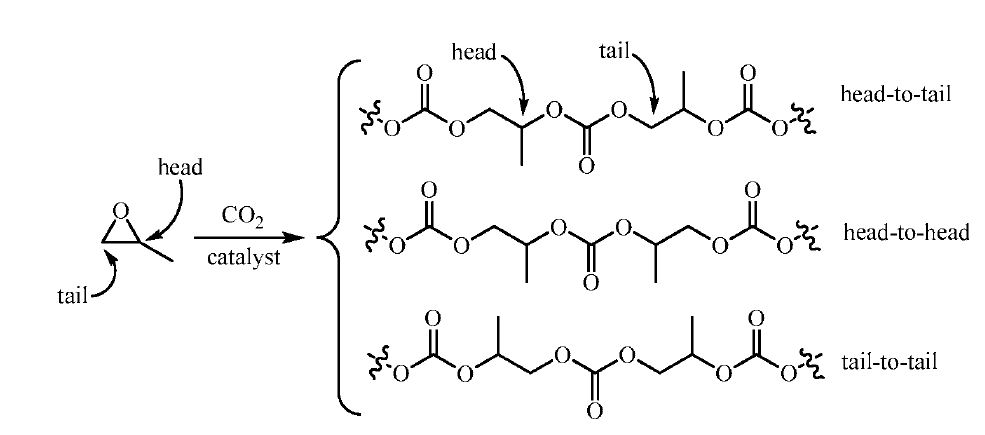
Reaction of CO2 and PO showing various 'head-to-tail' orientations

Reaction of CO2 and PO showing various ‘head-to-tail’ orientations

“Green” Isocyanate: Renewable and Phosgene-Free

Title: POLYISOCYANATES FROM FUSED BICYCLIC POLYOLS AND POLYURETHANES THEREFROM

 Number/Link: WO2014/062631

Applicant/Assignee: IOWA STATE UNIVERSITY

Publication date: 24-04-2014

Gist”: Isocyanates from acyl azides derived from isosorbide

Why it is interesting:  Fused bicyclic polyols are reacted with anhydrides to form polyacids which are converted to acyl halides which in turn are converted to acyl azides.  The acyl azides rearrange to isocyanates (Curtius Rearragment).  For example isosorbide is reacted with succinic anhydride, then with thionylchloride (SOCl2) to form the di-acylchloride and then with sodium azide (NaN3) to form the di-acylazide which rearranges into the di-isocyanate under liberation of nitrogen. The isocyanate can be reacted with more isosorbide to form a polyurethane. Clever chemistry but hard to judge if it is industrially viable.

Completely renewable polyurethane according to the invention . Click to enlarge.


Classic PU Patent of the Month: The First Polyether Foams (1951)

Title: Verfahren zur Herstellung von Kunststoffen

 Number/Link: DE974371 (German)

Applicant/Assignee: Bayer AG

Publication date: 12-08-1960

Gist”: A prepolymer from a polyether polyol and an excess of isocyanate is reacted with water to produce an elastomeric  foam.

Why it is interesting: This patent specifies the first polyether prepolymers and polyether  foams as invented by Otto Bayer and co-workers.  In the examples an all-EO, 4000 MW triol, prepared from trimethylolpropane and  ethylene oxide is reacted with a surplus of TDI resulting in a 3.2% NCO prepolymer.  This prepolymer is reacted with water to form either elastomeric films or elastomeric (flexible) foams. There are only two claims, the first covering  polyether prepolymers, the second covering both “one-shot” and “full prepolymer” water-blown polyether foams:

PATENTANSPRÜCHE:

1. Verfahren zur Herstellung von Kunststoffen,
dadurch gekennzeichnet, daβ Polyglykolather mit
einem Molekulargewicht von mindestens 500 und
mindestens zwei endstandigen Hydroxylgruppen
mit einem Übersehuβ über die berechnete Menge
an polyfunktionellen aliphatischen oder aromatischen
Isocyanaten und die erhaltenen Polyglykolätherisocyanate
mit Verbindungen mit reaktionsfahigem Wasserstoff
umgesetzt werden.

2. Ausführungsform des Verfahrens nach Anspruch
1, insbesondere zur Herstellung von Schaumstoffen,
dadurch gekennzeichnet, daβ als Verbindung
mit reaktionsfahigem Wasserstoff Wasser verwendet
wird und die Umsetzung mit Wasser gleichzeitig
mit der oder anschlieβend an die Umsetzung
der Polyglykolather und polyfunktionellen
Isocyanate erfolgt.

Dr. Otto Bayer

Dr. Otto Bayer

  • Pages

  • Categories

  • Enter your email address to follow this blog and receive notifications of new posts by email.

    Join 259 other subscribers
  • Follow Innovation in PU on Twitter