Formic Acid Blown EPIC Foams

Patent Title: ISOCYANATE-BASED TEMPERATURE-RESISTANT FOAMS WITH HIGH FLAME RESISTANCE

 Number/Link: WO2016/131874

Applicant/Assignee: BASF, Covestro

Publication date: 25-08-2016

Gist”:  One shot rigid isocyanate-epoxy foams blown with formic acid

Why it is interesting: This is the first in a series of (at least) 3 patent applications apparently resulting from a cooperation between BASF and Covestro on epoxy-isocyanate (“EPIC”) foams.  The other applications are WO2016/131878 and WO2016/131880 published on the same date. More publications may follow.
The current invention is about temperature-resistant foams with reportedly very high mechanical properties prepared form a one-shot system comprising a (pref.) high functional MDI, a (pref.) bisphenol-A or bisphenol-F polyglycidylether, at least one reactive amine catalyst and a blowing agent comprising formic acid. The ratio of iso to epoxy groups is (pref.) 3:1 to 15:1. The resulting materials are post-cured at 200°C. The foams contain no, or very little, urethane or urea groups and are said to be especially useful in laminates a.o.  In the examples foams with densities of 25-35 kg/m³ with a thermal conductivity as low as 20 mW/mK are shown.
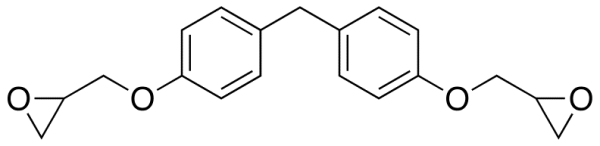
Bisphenol-F diglycidylether
Bisphenol-F diglycidylether

Novel Cellopener for Flexible- and Viscoelastic PU Foams

Patent Title: POLYURETHANE FOAM WITH AQUEOUS POLYMER DISPERSION  & VISCOELASTIC POLYURETHANE FOAM WITH AQUEOUS POLYMER DISPERSION

 Number/Link: WO2016/100306 & WO2016/100263

Applicant/Assignee: Dow

Publication date: 23-06-2016

Gist”: Dispersions of acid modified olefins in water act as cellopeners

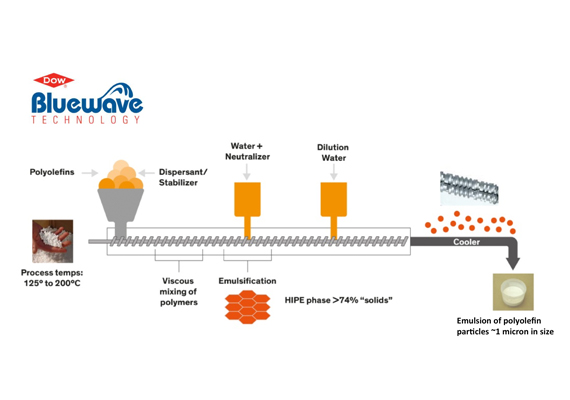
Why it is interesting: According to this invention aqueous dispersions of acid-modified olefins can be used as cellopeners for conventional, high resilience and viscoelastic foams. The examples show that a 40% ‘solids’ dispersion of an acrylic acid – ethylene copolymer in water, used in about 1 to 2% on the total isocyanate-reactive composition has a clearly positive effect on foam air-flow properties. The polymer dispersions can be made according to Dow’s proprietary BLUEWAVE™ extrusion technology.

The BLUEWAVE dispersion process

The BLUEWAVE dispersion process


Flexible PU Foam with Very Low Resilience

Patent Title: LOW-RESILIENCE POLYURETHANE FOAM AND PRODUCTION METHOD THEREOF

 Number/Link: US2016/0024268

Applicant/Assignee: Mitsui

Publication date: 28-01-2016

Gist”: Use of trans-BIC in viscoelastic flex foam

Why it is interesting: According to this invention low resilience flexible foams can be produced by reacting a mixture of two (optionally three) polyether polyols, water, a crosslinker and a catalyst with 1,4-bis(isocyanatomethyl)cyclohexane (BIC) where the BIC consists of (pref) 90% or more of the trans isomer. Higher trans-isomer is said to result in higher airflow and a finer cellstructure. In the examples a high MW all-PO triol and a low MW EO/PO triol with 18% EO tip is used, together with BIC at an NCO index of 70%.  The resulting foams have a high airflow and a (very) low resilience at densities between 50 and 70 kg/m³. While trans-BIC is clearly an interesting aliphatic di-iso, it is not widely available.

trans-1,4-bis(isocyanatomethyl)cyclohexane

trans-1,4-bis(isocyanatomethyl)cyclohexane

  • Pages

  • Categories

  • Enter your email address to follow this blog and receive notifications of new posts by email.

    Join 259 other subscribers
  • Follow Innovation in PU on Twitter