Supercritically Foamed Thermoplastic Polyurethane

Title: LOW DENSITY FOAM, MIDSOLE, FOOTWEAR, AND METHODS FOR MAKING LOW DENSITY FOAM

 Number/Link: WO2015/017088

Applicant/Assignee: Nike

Publication date: 5-02-2015

Gist”: TPU blown with supercritical CO2 and/or N2

Why it is interesting: This case relates to foamed TPU (or EVA) with densities down to 150 kg/m³. The low density is accomplished by the combination of a conventional physical blowing agent and a supercritical fluid, specifically supercritical CO2 or N2 or a combination of these. The conventional blowing agent is incorporated into the polymer pellets before these are added to the extruder while the supercritical fluid is added to the molten polymer through a port in the extruder barrel.  The material is then extruded or injection moulded. Nike have filed two more patents on this technology: WO2015/017089 and WO2015/017090.

Nike shoe with EVA midsole

Nike shoe with foamed thermoplastic midsole
Cross-Linked Melt-Spun Polyurethane Fibers

Title: ISOCYANATE PREPOLYMER COMPOSITION AND CROSSLINKED POLYURETHANE PREPARED THEREFROM

 Number/Link: WO2015/007731

Applicant/Assignee: BASF

Publication date: 22-01-2015

Gist”: Melt spinning a TPU – prepolymer blend.

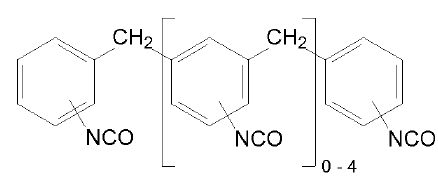
Why it is interesting: Crosslinked polyurethane fibers are produced by melt-spinning a thermoplastic polyurethane which is melt-blended with a specific isocyanate prepolymer composition.  The prepolymer composition is a mixture of a polymeric MDI and the reaction product of a polyester polyol and an excess of 4.4′-MDI. The polyester polyol is prepared from adipic acid together with 2-methyl-1,3-propanediol (MPdiol) and/or trimethylolpropane. The prepolymer composition is characterized by its low viscosity (probably due to the use of the branched polyester).  The crosslinked fibers show an improved tensile set and temperature resistance.

Polymeric MDI

Polymeric MDI

Polyester TPU with Reduced Blooming

Title: POLYURETHANE BASED ON RENEWABLE RAW MATERIALS

 Number/Link: WO2015/000722

Applicant/Assignee: BASF

Publication date: 8-01-2015

Gist”: Preparing TPU from polyester diols based on a blend of diacids reduces blooming

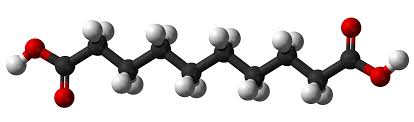
Why it is interesting: This application relates to polyester polyols prepared from a diol and a mixture of  diacids of which “at least one is at least partly” produced from a renewable resource. When these polyester diols are reacted with a diisocyanate and a chain extender, the resulting TPU shows a reduced tendency to “bloom” (i.e. form a white exudate on the surface). In the examples TPUs based on polyester polyols prepared from 1,3-propanediol and either azaleic- or sebacid acid (all from renewable resources) show very strong blooming while a TPU based on a polyester polyol prepared from 1,3-propanediol and a 1:1 blend of azeleic- and sebacic acid  shows very little blooming. While this an interesting effect, it is not clear to me why “at least one of the diacids needs to be at least partly” made from a renewable resource is claimed. The claim appears unrelated to the actual invention.

Sebacic Acid

Sebacic Acid

  • Pages

  • Categories

  • Enter your email address to follow this blog and receive notifications of new posts by email.

    Join 259 other subscribers
  • Follow Innovation in PU on Twitter