Flexible PU Foam with Very Low Resilience

Patent Title: LOW-RESILIENCE POLYURETHANE FOAM AND PRODUCTION METHOD THEREOF

 Number/Link: US2016/0024268

Applicant/Assignee: Mitsui

Publication date: 28-01-2016

Gist”: Use of trans-BIC in viscoelastic flex foam

Why it is interesting: According to this invention low resilience flexible foams can be produced by reacting a mixture of two (optionally three) polyether polyols, water, a crosslinker and a catalyst with 1,4-bis(isocyanatomethyl)cyclohexane (BIC) where the BIC consists of (pref) 90% or more of the trans isomer. Higher trans-isomer is said to result in higher airflow and a finer cellstructure. In the examples a high MW all-PO triol and a low MW EO/PO triol with 18% EO tip is used, together with BIC at an NCO index of 70%.  The resulting foams have a high airflow and a (very) low resilience at densities between 50 and 70 kg/m³. While trans-BIC is clearly an interesting aliphatic di-iso, it is not widely available.

trans-1,4-bis(isocyanatomethyl)cyclohexane

trans-1,4-bis(isocyanatomethyl)cyclohexane

Classic PU Patent of the Month: ICI on “High EO – Pure MDI” Flexible Foams (1991)

Patent Title: Polyurethane Foams

 Number/Link: EP0547765

Applicant/Assignee: ICI

Publication date: 23-06-1993

Gist”: Flexible foams can be based on 4,4’MDI if the polyol contains 50 to 85% EO

Why it is interesting: The first flexible PU foams were all based on toluene diisocyanate and so-called “conventional polyols” (i.e. almost all-propylene oxide polyols). Attempts to replace TDI by the only other commercially viable diisocyanate (4,4′ MDI) failed because of premature phase separation of the highly symmetrical polyurea ‘hard block’, resulting in unstable foaming. The problem was eventually solved by using prepolymers and polymeric MDI, as mentioned before.  More than 10 years later it was shown that it is possible to make flexible foams with 4,4′-MDI if the polyol is polar enough to prevent early phase separation.  This was established by using polyols with high ethylene oxide content. The resulting foams have superior comfort and durability properties compared to both TDI and MDI flexible foams.

4,4'-MDI

4,4′-MDI

Hybrid Hotmelt Adhesive with Low Free Isocyanate

Title: POLYURETHANE HOT-MELT ADHESIVE HAVING A LOW CONTENT OF DIISOCYANATE MONOMERS AND GOOD CROSS-LINKING SPEED

 Number/Link: WO2015/135833 (German)

Applicant/Assignee: Sika

Publication date: 17-09-2015

Gist”: Use of mercaptosilane to reduce free monomeric diisocyanate

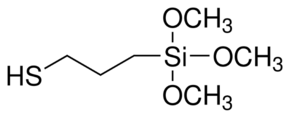
Why it is interesting: Reduction of the amount of free monomeric diisocyanate in adhesives, coatings, OCF systems etc. remains a hot topic in industrial polyurethane research, mostly because of changing legislation. For example, in the EU the amount of free MDI needs to be below 1% in order to avoid “R-40” (suspect carcinogen) labeling. A number of strategies to reduce free isocyanate have been tried in the past (and mentioned in this blog). Examples are distillation, the use of asymmetric diisocyanates and the use of monols. According to this invention the amount of free monomeric isocyanate in a hotmelt formulation can be reduced by adding a mercaptosilane like e.g. mercaptopropyltrimethoxysilane.  The mercaptosilane is said to react preferentially with the monomeric isocyanate.  Only a relatively small amount of mercaptosilane is used such that the main curing mechanism is still the isocyanate-water reaction.

Mercaptopropyltrimethoxysilane

Mercaptopropyltrimethoxysilane


  • Pages

  • Categories

  • Enter your email address to follow this blog and receive notifications of new posts by email.

    Join 259 other subscribers
  • Follow Innovation in PU on Twitter