Fuel Resistant Polyurea

Title: POLYUREA COMPOSITIONS AND METHODS OF USE

 Number/Link: US20140171587

Applicant/Assignee: PRC DESOTO

Publication date: 19-06-2014 (priority PCT)

Gist”: Sulfur-containing polyformal polyols are prepolymerized with aliphatic diisocyanates and then cured with aromatic amines.

Why it is interesting: Sulfur-containing polyformal polyols are prepared from thiodiglycol and paraformaldehyde using acidic catalysis.  The polyols are then reacted with 4,4′-dicylcohexyl diisocyanate (H12MDI) to form a prepolymer which is subsequently cured with an aromatic amine like dimethylthiotoluenediamine. The resulting material is water and fuel resistant and can be used as a sealant in the aerospace industry.

H12MDI-thiodiglycol-polyformal adduct

H12MDI-thiodiglycol-polyformal adduct

Using PU Foams as a Template for Silicone Foams

Title: FOAM-LIKE MATERIALS AND METHODS FOR PRODUCING SAME

 Number/Link:US2014/154491

Applicant/Assignee: Allergan

Publication date: 5-06-2014 (priority PCT/US)

Gist”: A polyurethane foam is impregnated with a curable liquid silicone.  After curing of the silicone the PU is removed.

Why it is interesting: According to this invention open celled polyurethane (or melamine) foam structures can be ‘converted’ into other materials like silicone, polyesters, polyolefins etc. by impregnating them with the the appropriate raw materials, curing and removing the ‘base’ foam. Optionally the ‘converted’ foam structure can be impregnated and cured again until the desired porosity is obtained.  In an example a PU foam was impregnated with a HTV silicone rubber.  After curing, the PU structure was removed using hydrogen peroxide.
While undoubtedly very interesting foam materials can be made in this way, the process seems messy and not very practical.

A 'base foam structure' (left has been impregnated and cured with another polymer (right).

A ‘base’ foam (left) and an impregnated foam (right) according to the invention.


Crosslinking TPU with Isocyanates.

Title: POLYURETHANE ON THE BASIS OF SOFT THERMOPLASTIC POLYURETHANE

 Number/Link: US2014/0094571

Applicant/Assignee: BASF

Publication date: 3-04-2014 (priority PCT/DE)

Gist”: A soft TPU is crosslinked using isocyanate dissolved in another TPU.

Why it is interesting: Crosslinking thermoplastic polyurethane parts to improve certain mechanical- and creep properties is known. In this case the crosslinking agent is an isocyanate with a functionality larger than 2, preferably an MDI prepolymer.  The isocyanate is dissolved in another TPU by melt blending in a twin-screw extruder at a temperature below 160°C and pelletizing. Pellets of a soft, polyester-based, TPU with a hardblock content less than 5% are mixed with the isocyanate-containing pellets, injection moulded and post-cured to crosslink the moulded part.

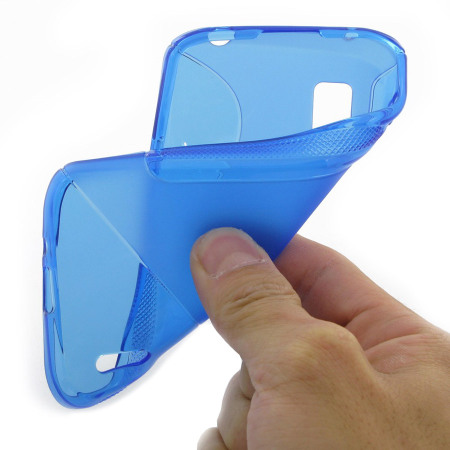
A TPU phone case.

TPU phone case.

  • Pages

  • Categories

  • Enter your email address to follow this blog and receive notifications of new posts by email.

    Join 259 other subscribers
  • Follow Innovation in PU on Twitter