Dianhydrohexitol-Based TPU

Patent Title: METHOD FOR PREPARING THERMOPLASTIC POLYURETHANE PELLET

 Number/Link:  WO2016/055731  (French)

Applicant/Assignee: Roquette Freres

Publication date: 14-04-2016

Gist”: Use of isosorbide as chain extender for TPU preparation

Why it is interesting: According to this invention the use of dianhydrohexitols as chain extender results in thermoplastic polyurethanes with improved overmoulding properties, notably improved colour, abrasion resistance and soft touch. In the examples TPUs prepared from 4,4’MDI, PTMEG 1000 and chain extended with isosorbide are compared to 1,4-butanediol extended TPUs. The isosorbide TPUs are softer with better abrasion resistance and -in my opinion surprisingly- have a somewhat brighter colour.

Isosorbide
Isosorbide


TPU from Biorenewable Isocyanate

Patent Title: BIO-BASED DIISOCYANATE AND CHAIN EXTENDERS IN CRYSTALLINE SEGMENTED THERMOPLASTIC POLYESTER URETHANES

 Number/Link: WO2016041076

Applicant/Assignee: Trent University

Publication date: 24-03-2016

Gist”:  TPU with highly crystalline hard segment is based on 1,7 heptamethylenediisocyanate

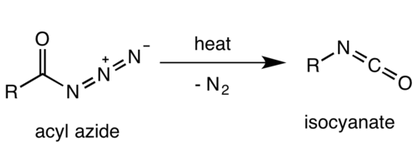
Why it is interesting: According to this application, polyester TPUs with crystalline hard segments can be produced using 1,7-heptamethylenediisocyanate. The HPMDI is reacted with a 2000MW poly(ethyleneadipate) diol and a short chain diol as chain extender. The  TPUs show a high hard-segment crystallinity, resulting in improved phase separation and in a (semi-)crystalline softphase which has a significant reinforcement effect. The TPUs are thermally stable up to 250°C and show a toughness and strength comparable to conventional TPUs. HPMDI can reportedly be made from natural oils using the Curtius rearrangement – but no reference is given.

Curtius Rearrangment

Curtius Rearrangment

PUDs for Superhydrophobic Coatings

Patent Title: Vegetable Oil-Modified, Hydrophobic Polyurethane Dispersions

 Number/Link: US20160009852

Applicant/Assignee: Rust-Oleum

Publication date: 14-01-2016

Gist”: PUDs containing saturated monoglycerids

Why it is interesting: Aqueous polyurethane dispersions are popular for use in environmentally friendly coating compositions. Because of the inherent presence of hydrophilic (often acid-) groups to stabilise these dispersions, the resulting coatings often lack hydrolytic stability. According to this invention, this can be improved by incorporating monoglycerids, prepared by reacting vegetable oils with glycerol followed by distillation, into the PU backbone.  A prepolymer is prepared by reacting the monoglicerids, together with a non-isocyanate urethane polyol (prepared from polyamines and monocyclic carbonates), a conventional long-chain polyol and dimethylolpropionic acid, with an excess of isocyanate. The prepolymer is then neutralized with an amine and subsequently reacted with a chain extender in water to make the PUD. Coatings made with these dispersions are said to be superhydrophobic and have a low friction coeficient.

Dimethylolpropionic acid

Dimethylolpropionic acid

  • Pages

  • Categories

  • Enter your email address to follow this blog and receive notifications of new posts by email.

    Join 259 other subscribers
  • Follow Innovation in PU on Twitter