Polyurethane Prepolymer with Very Low Monomeric Isocyanate Content

Patent Title: ULTRALOW MONOMER POLYURETHANES

 Number/Link: WO 2016/142513

Applicant/Assignee: Henkel

Publication date: 15-09-2016

Gist”: An NCO-ended prepolymer is reacted with a bis(alkoxysilylalkyl)amine

Why it is interesting: This invention is about laminating adhesives with a ‘primary aromatic amine migration limit’ of less than 10ppb, in accordance with the EU regulation for food packaging laminates. The low monomeric content is achieved by first making a NCO-ended prepolymer, which is then reacted with an monofunctional ‘H-acidic’ compound, preferably a bis(alkoxysilylalkyl)amine.  In an example a mixture of diols (OHv 108 to 236) was  reacted with 2.4-TDI down to an NCO value of 3.85%. Then 4,4′ MDI, trimethylolpropane and a triiso based on TDI were added to an NCO value of 2.2%.  Finally the prepolymer was reacted with bis(3-(triethoxysilyl)proplyl)amine at an NCO/NH ratio of 7:1.  Final NCO value was 2% with 0.05% (w/w) free 2,4-TDI and less than 0.01% free 4,4′-MDI. The prepolymer is said to be useful in 1K and 2K adhesive compositions and is said to have better adhesion properties and reactivity compared to NCO-free adhesives like sile silane-terminated PU adhesives.

Bis(3-(triethoxysilyl)propyl)amine

Bis(3-(triethoxysilyl)propyl)amine

Polyurethane Tissue Adhesives

Patent Title: URETHANE DECOMPOSING METHOD AND URETHANE DECOMPOSING AGENT

 Number/Link:  US2016/0257800

Applicant/Assignee: Obihiro University

Publication date: 8-09-2016 (priority PCT/JP)

Gist”: Prepolymer from ether-ester polyol and aliphatic isocyanate

Why it is interesting: There is a growing trend in current surgerical practice to replace sutures and staples with adhesives. These tissue adhesives need to have a particular set of properties, like the correct viscosity, hardening speed, biodegradability and toxic and allergenic properties. Current surgical adhesives are often cyanoacrylates, which react very fast, are brittle and show poor biodegradability, or protein-based adhesives which are costly and form weak bonds. According to this invention an improved polyurethane tissue adhesive can be prepared from an isocyanate-ended prepolymer based on an aliphatic isocyanate and a polyol.  The polyol is prepared from a starter polyol or amine which is reacted with a mixture of an alkoxide and about 10-20% of a  lactide (or glycolide or cyclic acid anhydride).  The lactide is randomly copolymerized with the alkoxide using DMC catalysis. The polyol is then reacted with an aliphatic isocyanate, pref. HDI or IPDI in a NCO/OH ratio of about 8:1. After that monomeric isocyanate is removed by thin film distillation down to less than 1% free monomer.
The adhesives are said to be fast, non-toxic, non-allergenic and biodegradable.

L-Lactide

L-Lactide

Hybrid PU-Peptide PUDs

Patent Title: AQUEOUS PEPTIDE-FUNCTIONALIZED POLYURETHANE DISPERSIONS

 Number/Link: WO2016/135162

Applicant/Assignee: Henkel; Max-Panck Ges.

Publication date: 1-09-2016

Gist”: A maleimide-capped prepolymer is reacted with the -SH groups in a peptide

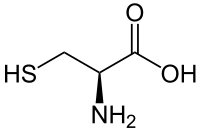
Why it is interesting: Polyurethane-protein hybrids are interesting novel materials which potentially have a number of unique properties unattainable with conventional synthetic polymers. In a previous case discussed in this blog an NCO-ended polyurethane prepolymer was reacted with a peptide in water to make a PU-peptide dispersion.  This type of grafting, however, is not very specific because the isocyanate will react mostly with the free amino groups of lysine, which is usually  ‘abundant’ in a typical peptide. According to this invention the grafting can be made very specific by first end-capping the NCO prepolymer with maleimide groups and dispersing in water. The dispersion is then reacted with a peptide solution at pH7. In these circumstances the maleimide will react selectively with the free thiol group of cysteine, of which usually very few are present in a typical peptide because most thiol groups are engaged in S-S disulfide bridges.  Preferably a peptide consisting of 10-200 amino acids is used, with preferably only one free thiol group. By selective grafting the properties of the peptide can be conserved.  The PU-peptide dispersions are claimed to be especially useful for metal adhesives.

L-cysteine

L-cysteine


  • Pages

  • Categories

  • Enter your email address to follow this blog and receive notifications of new posts by email.

    Join 259 other subscribers
  • Follow Innovation in PU on Twitter