Phosgene-Free Polyisocyanate with PDMS Backbone

Patent Title: MULTI-FUNCTIONAL CARBAMATE HAVING SOFT-SEGMENTS, POLYISOCYANATE OBTAINED VIA SUBSEQUENT NON-PHOSGENE SYNTHESIS METHODS, URETHANE PREPOLYMER AND ELASTOMERIC URETHANE HAVING SOFT-SEGMENTS DERIVED THEREFROM, AND PREPARATION METHOD THEREOF

 Number/Link: US20180186918

Applicant/Assignee:  Great Eastern Resins Industrial

Publication date: 5 July 2018

Gist”: Biscarbamate with PDMS softblock backbone is heat-cracked into diisocyanates

Why it is interesting: The invention relates to isocyanate-capped “softblock” siloxanyl prepared without using phosgene and polyurethanes derived therefrom. The invention is accomplished by reacting relatively high MW polydimethylsiloxanediamines with diphenylcarbonate.  The resulting biscarbamate is heated under reduced pressure to produce the diisocyanate and to remove the phenol by-product.  The isocyanates can be reacted with polyols and/or chain extenders to produce highly hydrophobic polyurethanes with low surface tension and good chemical resistance.
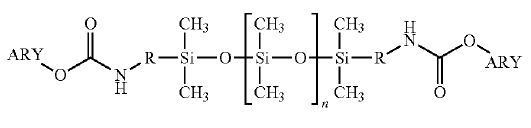
biscarbamate

Biscarbamate with PDMS backbone


Aliphatic Polyisocyanurate Composites

Patent Title: METHOD FOR PRODUCING A POLYISOCYANURATE COMPOSITE MATERIAL

 Number/Link: WO 2017/191216  (German)

Applicant/Assignee:  Covestro

Publication date: 9 November 2017

Gist”: Partially trimerized aliphatic diisocyanates are mixed with glass fiber and reacted using a trimerization catalyst

Why it is interesting: Conventional fiber-reinforced composites based on unsaturated polyesters, epoxies, polyurethane and the like are not weather-stable and need to be coated for outdoor use. Weather stable polyisocyanurate composites are known (WO2007/096216 – Huntsman) but are based on aromatic diisocyanates and show high reactivity and short ‘pot life’. According to this invention, PIR composites with improved reaction profile and weatherability can be prepared from partially trimerized aliphatic diisocyanates with a diisocyanate monomer content of less than 20% (w/w). In the examples commercially available HDI and IPDI trimer is used together with short glass fiber and a potassium acetate/PEG 400 blend as catalyst cured at a temperature of 160 to 180°C.

Isophorone diisocyanate (IPDI)


Modified Polyisocyanurates

Patent Title: MODIFIED POLYISOCYANURA TE PLASTIC AND METHOD FOR PRODUCTION THEREOF

 Number/Link: WO2017/182108 WO2017/182109  WO2017/182110  (German)  

Applicant/Assignee:  Covestro

Publication date: 26-october-2017

Gist”: Partially trimerized diisocyanates are modified with monofunctional isocyanate-reactive compounds before complete trimerization

Why it is interesting: This series of applications relates to transparent polyisocyanurate coatings with controlled hydrophilicty, hydrophobicity, high scratch resitance etc. According to the invention trimers of diisocanates are reacted with a sub-stoichiometric amount of monofunctional hydrophobic, hydrophilic or siloxane-containing compounds, and then completely trimerized. In the examples HDI-trimer (prepared by partially trimerzing HDI and removing the rest of the monomer by thin film distillation) is reacted with e.g. methoxyPEG 500, dodecanol, perfluoroheptanol and N-(3-trimethoxyxilylpropyl)foramide and then trimerized using potassium acetate as catalyst.  The materials can e.g. be used as anti-fog coatings on optical lenses or anti-fingerprint coatings on cell phones.

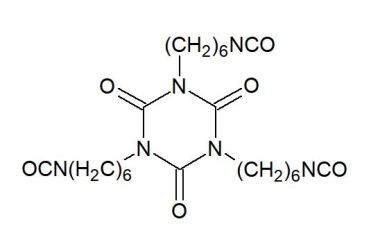
HDI-isocyanurate

  • Pages

  • Categories

  • Enter your email address to follow this blog and receive notifications of new posts by email.

    Join 259 other subscribers
  • Follow Innovation in PU on Twitter