Classic PU Patent of the Month: Upjohn’s “Isoplast®” (1981)

Title: Polyurethane prepared by reaction of an organic polyisocyanate, a chain extender and an isocyanate-reactive material of m.w. 500-20,000 characterized by the use of only 2-25 percent by weight of the latter material

 Number/Link: US4376834

Applicant/Assignee: Upjohn

Publication date: 15-03-1983

Gist”: Very high hardblock TPU from MDI and chain extenders.

Why it is interesting: “Isoplast” is a so-called engineering thermoplastic useful in niche applications where high impact strength and high chemical resistance are required. The material can be clear or reinforced and can also be used in fiber-reinforced composites.  Currently the trademark is owned by Lubrizol who acquired it from Dow who in turn bought it from Upjohn in the 1980s.  Isoplast is made from 4,4′ MDI and a mixture of chain extenders selected from MEG,DEG, neopentyl glycol, 1,4-cyclohexanedimethanol etc. The choice of chain extenders controls the crystallinity/glassiness of the polymer.  A few percent of high mole weight polyol may be added to improve impact resistance. A very interesting material with interesting melt-flow characteristics because of its depolymerization and repolymerization behaviour during processing.

Screw from reinforced Isoplast

Screw from reinforced Isoplast

A New Type of Ultra-Soft Thermoplastic Polyurethanes

Title: THERMOPLASTIC POLYURETHANES WITH CRYSTALLINE CHAIN ENDS

 Number/Link: WO2014/070426

Applicant/Assignee: Lubrizol

Publication date: 8-05-2014

Gist”: Easily processable, plasticizer-free ultra-soft TPU can be produced by incorporating a crystallizing polyolefin chain stopper.

Why it is interesting: It is well known that TPU with a shore hardness below about 65A is hard to produce and process because of its stickiness and low solidification/crystallization rate. According to the invention this problem can be solved by using a crystalline chain stopper in addition to the polyol, chain extender and di-isocyanate. The chain stopper is (preferably) a c20 to c70 polyolefin mono-alcohol. Apart from improving processability at low hardness, the incoproration of the olefin chain stopper also improves compatibility of the TPU with olefin thermoplastics.  The chain stopper can also be grafted with e.g. a vinyl alkoxysilane to make a hybrid crosslinkable TPU.  An interesting idea with many potential advantages and interesting effects.

Lubrizol logo

Lubrizol logo

Crosslinking TPU with Isocyanates.

Title: POLYURETHANE ON THE BASIS OF SOFT THERMOPLASTIC POLYURETHANE

 Number/Link: US2014/0094571

Applicant/Assignee: BASF

Publication date: 3-04-2014 (priority PCT/DE)

Gist”: A soft TPU is crosslinked using isocyanate dissolved in another TPU.

Why it is interesting: Crosslinking thermoplastic polyurethane parts to improve certain mechanical- and creep properties is known. In this case the crosslinking agent is an isocyanate with a functionality larger than 2, preferably an MDI prepolymer.  The isocyanate is dissolved in another TPU by melt blending in a twin-screw extruder at a temperature below 160°C and pelletizing. Pellets of a soft, polyester-based, TPU with a hardblock content less than 5% are mixed with the isocyanate-containing pellets, injection moulded and post-cured to crosslink the moulded part.

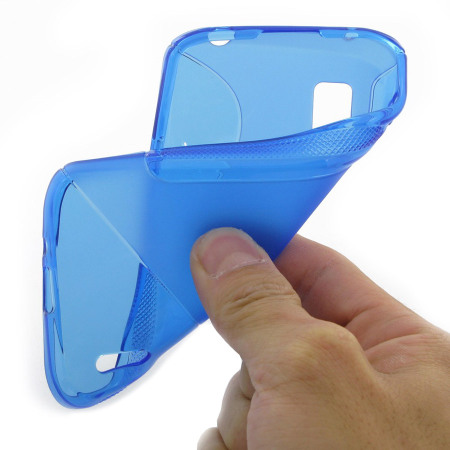
A TPU phone case.

TPU phone case.

  • Pages

  • Categories

  • Enter your email address to follow this blog and receive notifications of new posts by email.

    Join 259 other subscribers
  • Follow Innovation in PU on Twitter