Prepregs from Glass Fiber and Reactive Polyurethane Powder

Title: PREPREGS AND MOLDINGS PRODUCED THEREFROM

 Number/Link: US2014065911

Applicant/Assignee: Evonik

Publication date: 6-03-2014

Gist”: A reactive polyurethane powder is prepared from a mixture of a  solid polyester polyol and a solid dimerised IPDI and subsequently used to make glass fiber prepregs.

Why it is interesting:  A polyurethane powder is made from (pref.) a mixture of  a solid (at room temperature) polyster polyol and a solid, blocked isocyanate.  The isocyanate is preferably an “internally” blocked IPDI.  Internally blocked meaning that the isocyanate contains uretidinedione groups.  The powder is scattered over a fibrous support and heated to over melting temperature but below curing temperature to make the prepreg.  Prepregs made with PU powder instead of the conventional resins have the advantage of being non-sticky, non-toxic and of having a very high storage stability (45 days in the examples).

Prepreg production with reactive PU powder

Prepreg production with reactive PU powder

Hybrid Polyurethane-Epoxy Pultrusion System

Title: REINFORCED PULTRUDED POLYURETHANE AND PRODUCTION THEREOF

 Number/Link: US2013/0309924

Applicant/Assignee: Bayer

Publication date: 21-11-2013 (priority PCT/DE)

Gist”: A pultrusion matrix material is formulated from of an immiscible polyol blend together with one or more epoxides and MDI

Why it is interesting: Pultrusion matrix systems need a decent pot-life and, after curing, a high glass transition temperature and modulus. According to the invention this can be achieved by using an immiscible polyol mixture prepared from a) a relatively high MW PO polyol (e.g. PPG4000) and b) a blend of low MW polyols and chain extenders/crosslinkers, where the amount of a) is about 10-30% on the total polyol. This polyol system together with an epoxide (e.g. bisphenol A or the triglycidylether of trimethylolpropane) an  isocyanate (e.g polymeric MDI) and optional additives results in a system useful for a pultrusion process. The examples show a pot-life of about 30 minutes and a Tg of about 150°C. The immiscible high MW PO polyol probably forms a seperate phase, thus increasing the Tg of the hard phase.

Diagram of the Putrusion Process (Wikipedia)

Diagram of the Putrusion Process (Wikipedia)

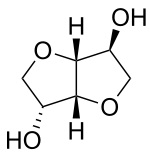
Polyurethane Prepregs prepared with Isosorbide

Title: STORAGE-STABLE POLYURETHANE-PREPREGS AND FIBRE COMPOSITE COMPONENTS PRODUCED THEREFROM

 Number/Link: WO2013/139704

Applicant/Assignee: Bayer

Publication date: 26-09-2013

Gist”: Polyurethane matrix materials for prepregs with very good storage stability are prepared from an NCO prepolymer together with isosorbide and delayed action catalysts.

Why it is interesting: Resins for “prepregs” (pre-impregnated fibre composites) need to have a low viscosity upon impregnation, a good storage stability and a fast ‘curing’ reaction preferably at a relatively low temperature.  According to this invention all these properties can be met by using a 8-16% NCO prepolymer made from a polyester polyol and  MDI, together with a dianhydrohexitol (preferably isosorbide) as chain extender and a delayed action catalyst (e.g. a blocked amine) which is activated between 50 and 100°C. The resulting prepregs have a storage stability at room temperature of several weeks. Final Tg is said to be 130°C, which is not very high but should suffice for many applications.

Isosorbide

Isosorbide

  • Pages

  • Categories

  • Enter your email address to follow this blog and receive notifications of new posts by email.

    Join 259 other subscribers
  • Follow Innovation in PU on Twitter