Sulfur Containing Polyurethane Elastomers for Tires and “Tweels”

Title: Polyurethane

 Number/Link: US2013/0287982

Applicant/Assignee: Michelin

Publication date: 31-10-2013  (priority PCT/FR)

Gist”: Use of dithiodiols or dithiodiamines in polyurethane elastomer formulations for improved adhesion to metal.

Why it is interesting: The current invention relates to polyurethane elastomers containing a chain extender mixture consisting of a conventional chain extender (e.g. butandiol) and 1-30% (of the total chain extender) of an S-S bridge containing diol or diamine like 2,2′-dithiodiethanol or 4,4′-dithiodianiline. The resulting polyurethane reportedly shows an increased bonding strength  to metal, which can be even more enhanced by adding elemental sulfur and conventional sulfur-containing rubber-curing accelerators like dithiocarbamates, thiurams, thiazoles etc. (as well known in the art of rubber vulcanization). The resulting polyurethanes are useful for the production of metal strand-reinforced composites like tires and ‘tweels’ (tweel=tire+wheel  see http://michelintweel.com/index.html).

Michelin "tweel"

Michelin “tweel”

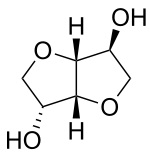
Polyurethane Prepregs prepared with Isosorbide

Title: STORAGE-STABLE POLYURETHANE-PREPREGS AND FIBRE COMPOSITE COMPONENTS PRODUCED THEREFROM

 Number/Link: WO2013/139704

Applicant/Assignee: Bayer

Publication date: 26-09-2013

Gist”: Polyurethane matrix materials for prepregs with very good storage stability are prepared from an NCO prepolymer together with isosorbide and delayed action catalysts.

Why it is interesting: Resins for “prepregs” (pre-impregnated fibre composites) need to have a low viscosity upon impregnation, a good storage stability and a fast ‘curing’ reaction preferably at a relatively low temperature.  According to this invention all these properties can be met by using a 8-16% NCO prepolymer made from a polyester polyol and  MDI, together with a dianhydrohexitol (preferably isosorbide) as chain extender and a delayed action catalyst (e.g. a blocked amine) which is activated between 50 and 100°C. The resulting prepregs have a storage stability at room temperature of several weeks. Final Tg is said to be 130°C, which is not very high but should suffice for many applications.

Isosorbide

Isosorbide

  • Pages

  • Categories

  • Enter your email address to follow this blog and receive notifications of new posts by email.

    Join 259 other subscribers
  • Follow Innovation in PU on Twitter