Improved Nanoporous Insulation Materials

Title: AEROGEL-CONTAINING POLYURETHANE COMPOSITE MATERIAL

 Number/Link: WO2013182506 (German)

Applicant/Assignee: BASF

Publication date: 12-12-2013

Gist”: An aqueous dispersion based on an isocyanate and an isocyanate-reactive vinyl polymer is used to bind aerogel particles into an insulation material.

Why it is interesting: Binding (silica) aerogel (or xerogel or cryogel) particles into insulation panels using aqueous polyurethane binders is known.  See e.g. my previous posts on the subject here, here and here. According to this invention both the insulation and processing properties of existing systems can be improved by using an aqueous dispersion of a vinyl polymer containing isocyanate-reactive side groups, together with an emulsifiable isocyanate. The polyvinyl is preferably water-soluble, the side groups being -OH, -SH, -NH2 or -COOH,  a (preferred) example being poyvinylamine with a molecular weight from 10,000 to 500,000. The isocyanate used is preferably a modified HDI or IPDI.  In the examples materials are shown with densities of about 120 kg/m³ and a thermal conductivity of about 16 mW/m.K.
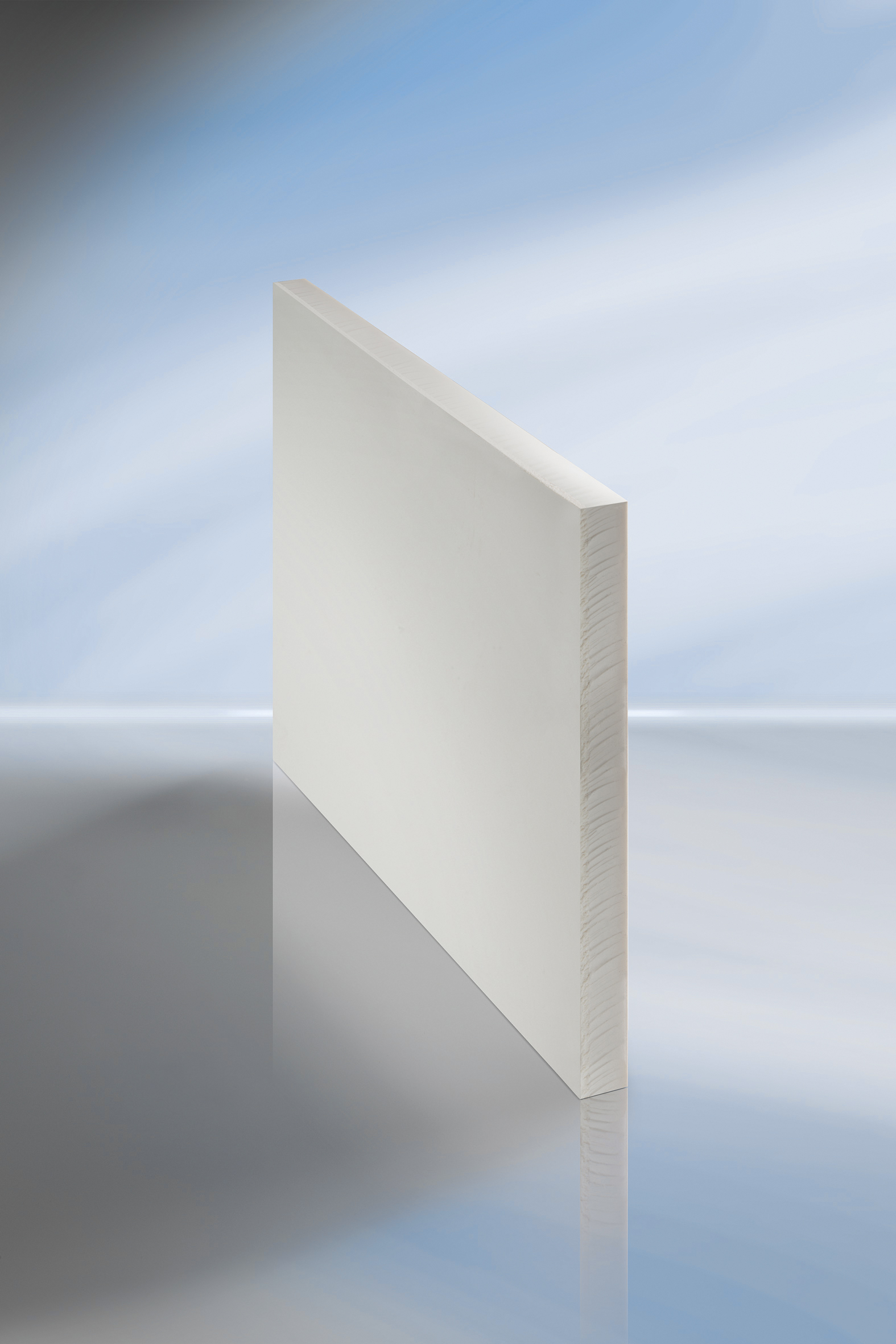
SLENTITE (TM) aerogel-PU insulation panel by BASF

SLENTITE (TM) aerogel-PU insulation panel by BASF

Nanoporous Insulation

Title: INORGANIC NANOPOROUS PARTICLES WITH WATER DISPERSIBLE POLYURETHANE BINDER

 Number/Link: US2013091682

Applicant/Assignee: Dow

Publication date: 18-04-2013  (priority 2012- PCT/CN)

Gist”:  Flexible nanoporous insulation article made by binding aerogel particles with water-based polyurethane binder.

Why it is interesting: Nanoporous  materials are a big trend in insulation technology. Because monolithic aerogel parts are difficult to make and difficult to use, much research focuses on the use of nanoporous (aerogel, xerogel…) particles instead. This invention uses uncoated silica aerogel particles together with an aqueous PU binder.  The particles are sufficiently hydrophobic to prevent water ingress in the pores. The PU binder is based on aliphatic isocyanate and contains dimethylolpropionic acid to make it water-dispersible. The resulting material contains about 95% aerogel particles and has a density of about 100 kg/m3.

Insulating Elastomer-Aerogel Composites

Title: INSULATING MATERIAL COMPRISING AN ELASTOMER IMPREGNATED WITH AEROGEL-BASE

 Number/Link:  US2013022769

Applicant/Assignee: UNIV MEMPHIS

Publication date: 24-01-2013

Gist”: Elastomeric material containing aerogel ‘bodies’, useful for heat insulation.

Why it is interesting:  The elastomeric matrix material can be any kind of thermoset or thermoplastic rubber, including polyurethanes but RTV silicones are preferred. The aerogels can be organic, inorganic or hybrid, but are preferably polyurea-crosslinked silicas of any geometrical shape,  preferably 1-5mm in size with an aerogel:polymer ratio of 15:100 to 200:100 (w/w). Both insulation and mechanical properties compare favourably to ASPEN aerogel blankets. Useful for insulation of cryogenic fuel tanks a.o.

Space shuttle with PU insulated cryogenic fuel tank.

Space shuttle with PU insulated cryogenic fuel tank. (Wikimedia)

  • Pages

  • Categories

  • Enter your email address to follow this blog and receive notifications of new posts by email.

    Join 259 other subscribers
  • Follow Innovation in PU on Twitter