Photocrosslinkable Polyurethane Coatings and Adhesives

Patent Title: PHOTORESPONSIVE POLYURETHANES

 Number/Link: WO2018/039453

Applicant/Assignee:  Univ of Akron

Publication date: 1-March-2018

Gist”: PU coatings or adhesives with built-in coumarin or phenacyl groups 

Why it is interesting: According to this invention, polyurethane coating- and adhesive systems with two ‘levels of strength’ can be made by incorporating photoresponsive groups like coumarin into the PU backbone.  The coumarin groups will dimerize when irradiated with UV light of about 340nm and can be cleaved again with light of about 250nm. Alkoxyphenacyl groups can also be built into the PU backbone, allowing photocleavage with UV light of 250-350nm. The use of coumarin in (self-healing) coatings is not new and has been discussed before in this blog, so I doubt that this is patentable.
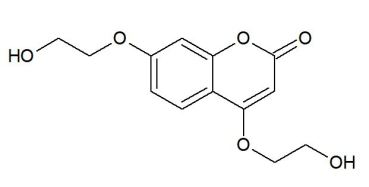
coumarin monomer

Hydroxy functional coumarin monomer

Fingerprint Resistant Coatings

Patent Title: COATINGS COMBINING OIL-ABSORBING AND OIL-REPELLING COMPONENTS FOR INCREASED SMUDGE RESISTANCE

 Number/Link: WO2018/031356

Applicant/Assignee:  HRL Laboratories

Publication date: 15 February 2018

Gist”: Phase separated polyurethanes with oleophilic dispersed phase and oleophobic continuous phase (or vice versa) behave as anti-smudge materials.

Why it is interesting: Anti-smudge coatings are of great interest for smartphones and other touch screen devices and are currently made from oleophobic materials, i.e. materials showing a small contact angle vs. oils. According to this invention improved anti-smudge properties can be achieved by using a material having discrete inclusions in a continuous matrix. The matrix material needs to be oleophilic, while the inclusions are oleophobic (or vice versa) and the inclusions need to be smaller than 50nm so not to scatter visible light.  A coating like this can be prepared from a segmented polyurethane comprising (e.g.) a polybutadiene soft phase and a perfluoro/isocyanate/TMP hard phase. It is said that the oleophobic phase will repel the oil while the oleophilic phase will absorb it, leaving a smudge-free surface.
Question remains what happens when the oily phase gets saturated..

smudgecoating

Schematic representation of the invention

Polyurethanes from Alpha Glucan

Patent Title: POLYURETHANE POLYMERS COMPRISING POLYSACCHARIDES

 Number/Link: WO2018/017789

Applicant/Assignee:  Du Pont

Publication date: 25 january 2018

Gist”: Polyurethanes containing poly alpha 1,3-glucan

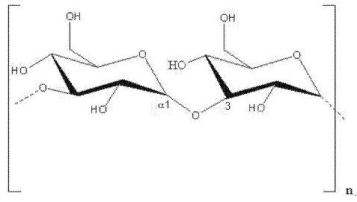
Why it is interesting: The invention is related to the preparation of different types of polyurethanes comprising poly alpha 1,3-glucan, which is a polymeric D-glucose having alpha 1,3 glycosidic bonds (as opposed to most natural glucose polymers which show α or β 1,4 glycoside linkages). Alpha 1,3 glucan can be prepared by enzymatic polymerization using sucrose and a glycosyltransferase. The glucan can be mixed with polyols and reacted with isocyanates to prepare polyurethanes.  Many examples are given ranging from PUDs, films, flexible foams to TPUs.

glucan

Poly alpha 1,3-glucan


  • Pages

  • Categories

  • Enter your email address to follow this blog and receive notifications of new posts by email.

    Join 259 other subscribers
  • Follow Innovation in PU on Twitter