Viscoelastic TDI “Hot Cure” Foams

Title: POLYURETHANE FOAM

 Number/Link: WO2013/108582 (Japanese)

Applicant/Assignee: SMP TECHNOLOGIES

Publication date: 25-07-2013

“Gist”: A (semi-) flexible foam with a Tg of around body temperature is prepared from a mixture of PO polyols and TDI.

Why it is interesting: a The viscoelastic foams of this invention are prepared from a mixture of popyoxypropylene diols and triols with molecular weights varying between 200 and 3000 (up to 5 different polyols in the examples) together with TDI 80:20, water and conventional additives. Because of the all-PO polyols the foams have to be post-cured at high temperature (‘hot cure’).  The foams have a damping (tan δ) of over 0.4 between 0 and 40°C (measured at 1Hz in the examples) and between 0.1 and 100Hz (measured at 25ºC) as shown in the graphs below. (Note that because of the time-temperature superposition principle the second graph is actually redundant.) The foams are supposedly useful ‘to be worn on the body’ – I suppose they mean liners for helmets, shoes, pads, sports gear and the like.
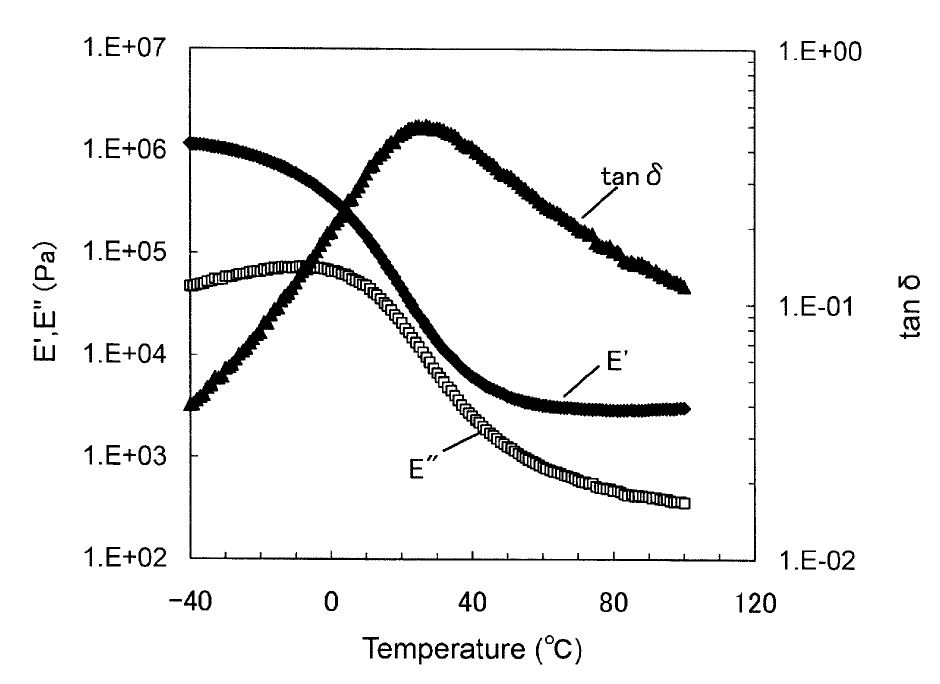
Storage- and Loss modulus and damping vs temperature at 1Hz

Storage- and Loss modulus and damping vs temperature at 1Hz

loss tangent freq

Storage- and loss modulus and damping vs frequency at 25°C
Self-Healing Polyurethanes, Polyureas and Polyimides

Title: SELF-HEALING POLYMER MATERIALS FOR WIRE INSULATION, POLYIMIDES, FLAT SURFACES, AND INFLATABLE STRUCTURES

 Number/Link: WO2012174325

Applicant/Assignee: NASA

Publication date: 20-12-2012

Gist”: A low molecular weight polyurethane or polyurea material, prepared by reacting IPDI and a polysiloxane diol or diamine in such a way that it flows at about 23°C, shows self-healing properties. Other ’embodiments’ of the invention are concerned with self-healing polyimides containing microcapsules comprising polyimide oligomers (“polyamic acid”).

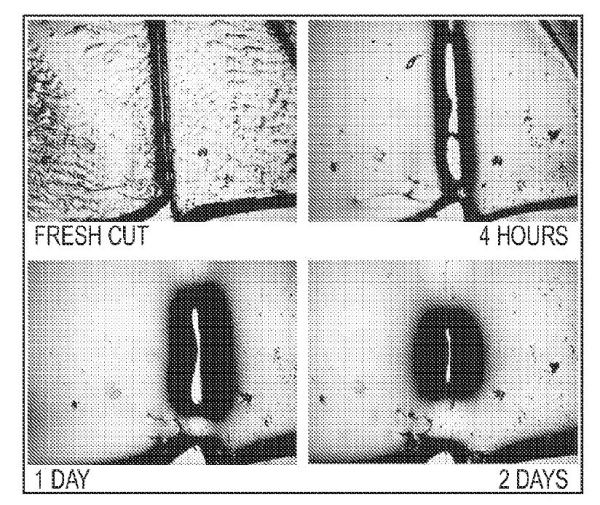
Why it is interesting: Films of the self-healing PU with a thickness up to 5mm will flow together again after being cut. The material can be laminated between 2 structural layers and used for cable and wire encapsulation e.g.
This is an interesting but very confusing and hard-to-read patent application describing at least 2 different inventions (“non-unity”) and one would expect it to be split-up.

selfhealing

Self-Healing Polymer Film

  • Pages

  • Categories

  • Enter your email address to follow this blog and receive notifications of new posts by email.

    Join 259 other subscribers
  • Follow Innovation in PU on Twitter