Preventing Ostwald Ripening in Rigid PU Foams

Title: PRODUCTION OF FINE CELL FOAMS USING A CELL AGING INHIBITOR

Number/Link: WO2017093058  (German)

Applicant/Assignee: Evonik

Publication Date: 8 June 2017

“Gist”: Perfluorinated hydrocabons reduce Ostwald ripening in PU foam formulations

Why it is interesting: Polymeric foams form by nucleation and growth of gass bubbles in the reacting mixture followed by (or simultaneous with) ageing of the bubbles through coalesence and Ostwald ripening, i.e. the growth of larger bubbles at the expense of smaller bubbles. Ostwald ripening ultimately results in fewer and larger cells, which has a negative effect on the thermal insulation properties of rigid foams. According to this invention the ripening effect can be prevented or reduced by incorporating in the foam formulation an “Ostwald hydrophobe”, i.e. a highly hydrophobic liquid which is largely immiscible with the reacting mixture. Examples of such liquids are perfluorinated hydrocabons with a boiling point of less than 150°C, e.g. perfluoropentane, perfluorocyclohexane and perfluoroisohexene (used in the examples).
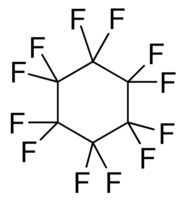
Perfluorocyclohexane
 

Aerogels from Isocyanates and Epoxies

Patent Title: ORGANIC AEROGELS BASED ON ISOCYANATE AND CYCLIC ETHER POLYMER NETWORKS

 Number/Link: WO2017016755

Applicant/Assignee: Henkel

Publication date: 2-feb-2017

Gist”: Isocyanate and epoxy are reacted in solvent and supercritically dried

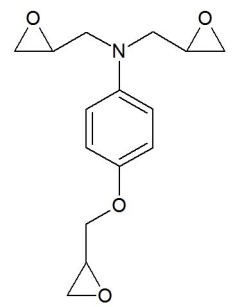
Why it is interesting: While most ‘conventional’ aerogels are based on silica, organic aerogels, especially isocyanate-based aerogels, are also well known: polyurethane-, polyurea-, polyamide-, polyimide-, polycarbodiimide- and polyisocyanurate aerogels have all been reported. This invention adds another type of aerogel based on the reaction of isocyanates and cyclic ethers, esp. oxetanes and oxiranes. The isocyanate with a functionality of (pref.) 2 to 3, (e.g. 4,4′-MDI or methylidynetri-p-phenyletriisocyanate) is reacted with a cyclic ether  of (pref.) functionality of 2 to 3, (e.g. N,N-diglycidyl-4-glycidyloxianiline) in a suitable solvent (e.g. DMAc). After washing, the gel is dried with supercritical carbon dioxide. The materials are useful for thermal insulation and are said to have better mechanical properties compared to other organic aerogels.

N,N-Diglycidyl-4-glycidyloxyaniline

N,N-Diglycidyl-4-glycidyloxyaniline


Spray Foam with Increased Reactivity

Patent Title: POLYOL PREMIX COMPOSITION FOR RIGID POLYURETHANE FOAMS

 Number/Link: WO2016/162362

Applicant/Assignee: Covestro

Publication date: 13-10-2016

Gist”: Addition of dicarboxilic acid reduces cream time in amine catalyzed foams

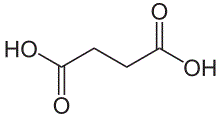
Why it is interesting: A short cream time has advantages for rigid PU spray foam because it can reduce dripping of the material after application.  According to this invention the cream time of an amine-catalyzed, HFC-blown spray foam composition can -surprisingly-be reduced by addition of a dicarboxilic acid, preferably succinic or glutaric acid. The diacids are used in a ratio of about 2 equivalents acid to 1 equivalent of (free) amine. In the examples a clear reduction of cream time is shown compared to compositions with no diacid, a mono-acid or less than the required amount of diacid. However, all examples also contain some trimerization catalyst (2-hydroxypropyl trimethylammonium formate) next to the tert-amine catalyst (N,N-dimethylcyclohexylamine). It would be interesting to see an example without the trimerization catalyst i.m.o.

Succinic acid.

Succinic acid


  • Pages

  • Categories

  • Enter your email address to follow this blog and receive notifications of new posts by email.

    Join 259 other subscribers
  • Follow Innovation in PU on Twitter