Controlling the Tg of Viscoelastic Flexible Foams

Title: ADDITIVE FOR ADJUSTING THE GLASS TRANSITION TEMPERATURE OF VISCO-ELASTIC POLYURETHANE SOFT FOAMS

 Number/Link: WO2013/131710

Applicant/Assignee: Evonik

Publication date: 12-09-2013 (German)

Gist”: Use of the di-salt of malic acid to fine-tune the Tg of visco flex foams.

Why it is interesting: The comfort properties of viscoelastic (“memory”) foams are to a large extend controlled by the glass transition temperature of the softblock, which in turn is controlled by NCO index, softblock molecular weight, crosslink density etc. Changing these parameters can be complex however because other properties -like airflow- are affected as well. This invention teaches the surprising effect of the di-sodium-salt of malic acid (hydroxybutanedioic acid) on the Tg of these foams. Apparently a small amount of the compound has a large effect on the Tg and can therefore be used to adjust the Tg without affecting other properties to a large extend.  E.g. about 0.1 php of the salt drops the Tg with 5.5°C, by comparison 0.1 php butanol lowers the Tg only by 0.3°C.

Malic Acid

Malic Acid

Low Viscosity Systems for Fibre-Reinforced PU Composites

Title: 2K POLYURETHANE SYSTEMS WITH PHASE SEPARATION – AND-  2K POLYURETHANE SYSTEMS WITH A HIGH GLASS-TRANSITION TEMPERATURE

 Number/Link: WO2013/127732 and WO2013/127734

Applicant/Assignee: Henkel

Publication date: 6-09-2013

Gist”: Low-viscosity, high-potlife 2-component systems useful for the production of composites are prepared from a polyol and isocyanate component characterised only in that polyol and iso are immiscible (case 1) or that the di-iso contains an amount of uretonimine (case 2).

Why it is interesting: These are two rather strange cases.  The claims are very wide and the only ‘inventive step’ for the WO-32 case is that iso and polyol are chosen such that they are incompatible and phase separate after mixing as evidenced by the mixture becoming turbid.  The inventive step in the WO-34 case is that the isocyanate is based on 2,4′ and 4,4′ MDI of which 3-25% (of the NCO) has been converted to uretonimine. Advantages mentioned are low viscosity, long potlife (open time) and a high Tg after crosslinking.  In the examples a polyol/iso mixture is shown with an NCO index of 120, resp 150 without any catalyst or another additives. The ‘surprising effect’ in this invention is not immediatly clear to me and judging from the number of “X”-es in the search report the claims will most likely not get granted as such.

Carbon Fibre Composite

Carbon Fibre Composite

Viscoelastic TDI “Hot Cure” Foams

Title: POLYURETHANE FOAM

 Number/Link: WO2013/108582 (Japanese)

Applicant/Assignee: SMP TECHNOLOGIES

Publication date: 25-07-2013

“Gist”: A (semi-) flexible foam with a Tg of around body temperature is prepared from a mixture of PO polyols and TDI.

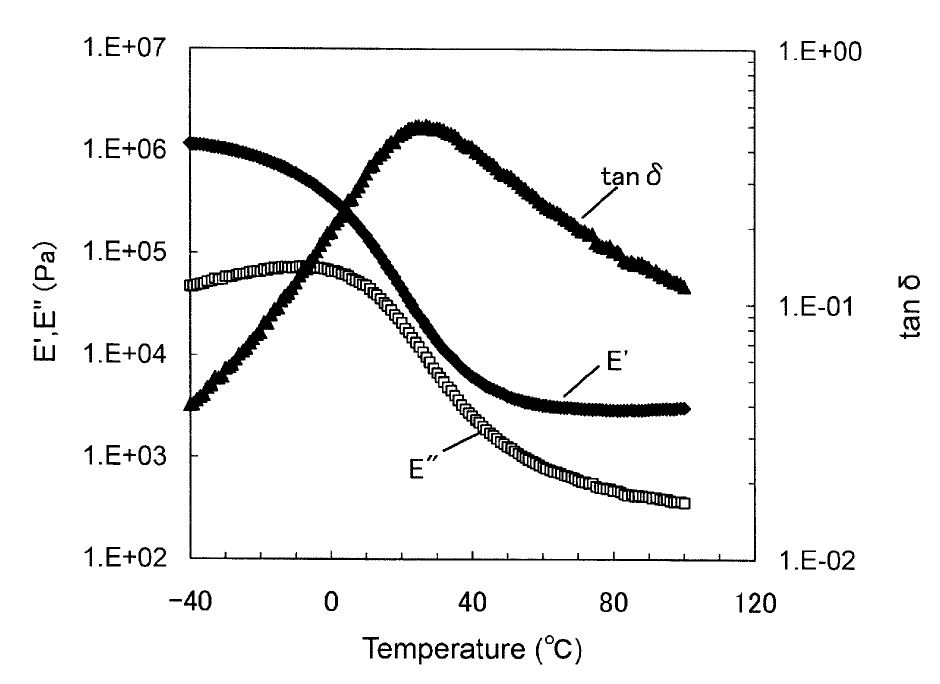
Why it is interesting: a The viscoelastic foams of this invention are prepared from a mixture of popyoxypropylene diols and triols with molecular weights varying between 200 and 3000 (up to 5 different polyols in the examples) together with TDI 80:20, water and conventional additives. Because of the all-PO polyols the foams have to be post-cured at high temperature (‘hot cure’).  The foams have a damping (tan δ) of over 0.4 between 0 and 40°C (measured at 1Hz in the examples) and between 0.1 and 100Hz (measured at 25ºC) as shown in the graphs below. (Note that because of the time-temperature superposition principle the second graph is actually redundant.) The foams are supposedly useful ‘to be worn on the body’ – I suppose they mean liners for helmets, shoes, pads, sports gear and the like.

Storage- and Loss modulus and damping vs temperature at 1Hz

Storage- and Loss modulus and damping vs temperature at 1Hz

loss tangent freq

Storage- and loss modulus and damping vs frequency at 25°C

  • Pages

  • Categories

  • Enter your email address to follow this blog and receive notifications of new posts by email.

    Join 259 other subscribers
  • Follow Innovation in PU on Twitter