Viscoelastic TDI “Hot Cure” Foams

Title: POLYURETHANE FOAM

 Number/Link: WO2013/108582 (Japanese)

Applicant/Assignee: SMP TECHNOLOGIES

Publication date: 25-07-2013

“Gist”: A (semi-) flexible foam with a Tg of around body temperature is prepared from a mixture of PO polyols and TDI.

Why it is interesting: a The viscoelastic foams of this invention are prepared from a mixture of popyoxypropylene diols and triols with molecular weights varying between 200 and 3000 (up to 5 different polyols in the examples) together with TDI 80:20, water and conventional additives. Because of the all-PO polyols the foams have to be post-cured at high temperature (‘hot cure’).  The foams have a damping (tan δ) of over 0.4 between 0 and 40°C (measured at 1Hz in the examples) and between 0.1 and 100Hz (measured at 25ºC) as shown in the graphs below. (Note that because of the time-temperature superposition principle the second graph is actually redundant.) The foams are supposedly useful ‘to be worn on the body’ – I suppose they mean liners for helmets, shoes, pads, sports gear and the like.
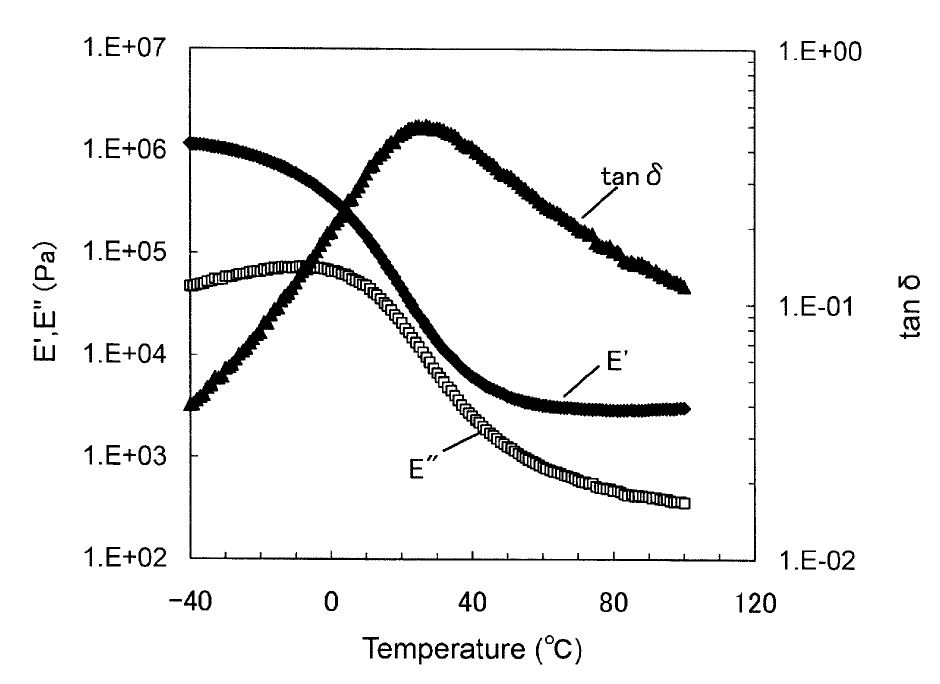
Storage- and Loss modulus and damping vs temperature at 1Hz

Storage- and Loss modulus and damping vs temperature at 1Hz

loss tangent freq

Storage- and loss modulus and damping vs frequency at 25°C

Improved Viscoelastic Flexible Foams (“Memory Foams”)

Title: USE OF POLY(BUTYLENE OXIDE) POLYOL TO IMPROVE DURABILITY OF MDI-POLYURETHANE FOAMS

Patent Number & Link:  US2013178548    (related case US2013178550 )   

Applicant/Assignee: Dow

Publication date: 11-07-2013 (priority PCT/US)

Gist”: Use of a high molecular weight butyleneoxide monol to improve the compression set of viscoelastic foams.

Why it is interesting: Viscoelastic or “memory” flexible foams are currently popular for use in matresses and pillows. Much research and development has been done on these materials and the patent situation is a true minefield. Usually a mixture of EO-rich and PO-rich polyols of different molecular weights is used to control the glass transition temperature (Tg) of the softblock, wich in turn controls the energy absorption (and thus the resilience) of the foam. In this invention a butyleneoxide monol of high MW is used in addition to a mixture of EO-rich and PO-rich polyols. The BO-monol is used in an amount of 2-10% on the polyol  and supposedly improves compression set while retaining the open cell character (air flow) of the foam.
The related case (US2013/178550) is similar but uses a high MW PO polyol with a functionality between 1 and 4 instead of the BO monol.  It is not immediately clear to me whether this latter case is a real invention or is just plugging a hole in the minefield..

A viscoelastic flexible foam

A viscoelastic flexible foam

Flexible Polyurethane Foams for Thinner Car Seats

Title: CHEMICAL COMPOSITION FOR OBTAINING POLYURETHANE

 Number/Link: WO2013/050639 (Spanish)

Applicant/Assignee: CENTRO TECNOLÓGICO DE GRUPO COPO,

Publication date: 10-04-2012

Gist”: Use of 1,5-pentanediol in flexible foam formulations results in foams with correct comfort properties to allow for thinner car seats.

Why it is interesting: About 2 pphp of 1,5 pentanediol is used together with a  mixture of MDI monomers and a  conventional flexible foam formulation to produce a 55kg/m3 foam with supposedly the correct comfort properties (hardness, hystersis loss, vibration damping  etc.) for a thinner car seat.  While the use of chain extenders is rare in flexible foams, it may very well make sense in somewhat higher-density systems. The first claim of this application however covers much more than flexible foam and will most probably not get granted as such.

  • Pages

  • Categories

  • Enter your email address to follow this blog and receive notifications of new posts by email.

    Join 259 other subscribers
  • Follow Innovation in PU on Twitter