Bio-Based Acoustic Polyurethane Foam

Patent Title: POLYURETHANE MATERIALS FORMED FROM EPOXIDIZED PLANT OILS

 Number/Link: US2017/0081460

Applicant/Assignee: IBM

Publication date: 23-mar-2017

Gist”: Natural oils are converted into isocyanate-functional polyols and then polymerized

Why it is interesting: Epoxidized vegetable oils are hydrolized and saponified using NaOH, resulting in a mixture of acid-ended polyols. The acid groups are then converted into azides using diphenylphosphoryl azide, which then rearrange into isocyanate groups (Curtius rearrangement).  The isocyanate-ended polyols can be polymerized and further crosslinked using di-isocyanates. The materials are said to be useful as components for acoustic foams, used e.g. in mainframe computers.
This is the second IBM PU patent discussed in this blog. However, I doubt if they have an actual chemistry lab since their examples are “prophetic” rather than real.

IBM

Reaction scheme according to the invention
TPU with Reduced Blooming

Patent Title: POLYOLS WITH REDUCED CYCLIC OLIGOMER CONTENT AND THERMOPLASTIC POLYURETHANE COMPOSITIONS THEREOF

 Number/Link: WO2017040505

Applicant/Assignee: Lubrizol

Publication date: 9-mar-2017

Gist”: Enzymes are used to remove cyclo-oligomers from polyster polyols

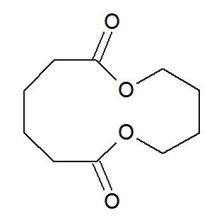
Why it is interesting: It is known that the “blooming” of polyester TPUs (i.e. the fomation of a white surface haze) is caused by the migration of cyclic polyester oligomers to the surface of the TPU. Conventionally these unreactive cyclo-oligomers are removed by e.g extraction, or their formation is prevented by careful choice of diol and diacid as mentioned before in this blog. According to this invention the cyclic polyesters can be removed by treating the polyol with an enzyme. Enzymes of the lipase or cutinase type are immobilized by attachement to an inert and insoluble material and then heated together with the polyol at 70 to 90ºC to ‘cut’ the polyester rings. After treatment of the polyol the immobilized enzyme can be filtrated.

A cyclic diester

TPU from Gem-Dialkyl Cyclooctene

Patent Title: TELECHELIC PREPOLYMERS AND REACTION PRODUCTS THEREOF

 Number/Link: WO 2017/023506

Applicant/Assignee: University of Minnesota

Publication date: 9-feb-2017

Gist”:  Diols are made by ROM polymerization of gem-dialkyl cyclooctene together with a symmetrical diol as chain transfer agent

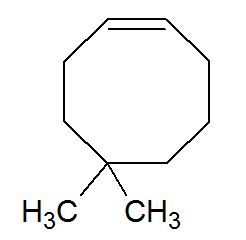
Why it is interesting: According to this application, thermoplastic polyurethanes containing geminal dialkyl groups have far superior thermal stability, oxidative-, hydrolytic- and barrier properties as compared to TPUs containing conventional soft segments. Diols containing gem-dialkyl groups are prepared by ring-opening metathesis polymerization (ROMP) of a gem-dialkyl cyclooctene with a suitable catalyst and in the presence of a symmetrical aliphatic olefin chain transfer agent having functional end groups. Examples are 5,5-dimethylcyclooct-1-ene and 1,8-oct-4-ene diol as the chain transfer agent.  The resulting diol is then reacted with (e.g.) 4.4′-MDI to prepare the TPU.

5,5-dimethylcyclooct-1-ene

5,5-dimethylcyclooct-1-ene

  • Pages

  • Categories

  • Enter your email address to follow this blog and receive notifications of new posts by email.

    Join 259 other subscribers
  • Follow Innovation in PU on Twitter