High Resiliency Polyurethane Foams

Title: HIGH RESILIENCY POLYURETHANE FOAMS MADE WITH HIGH FUNCTIONALITY, HIGH EQUIVALENT WEIGHT POLYOLS WITH MAINLY SECONDARY HYDROXYL GROUPS

Number/Link: WO2017/062150

Applicant/Assignee: Dow

Publication Date: 13 April 2017

“Gist”: Use of high functionality polyols increases the resilience of flex foams

Why it is interesting:  According to this invention the resilience of flexible PU foams can be increased by using, as part of the polyol composition, a random EO/PO polyether polyol which has an equivalent weight of at least 1500, a functionality of  at least 5, a secondary hydroxyl group content of at least 70%, an unsaturation value of at most 0.01 meq/g and an EO content between 5 and 30%.  In the examples, sorbitol initiated polyols are used in both MDI and TDI-based systems, resulting in ball rebound values of up to 60% at densities of about 30 kg/m³.  As I have shown in the past (US5521226) the same (or arguably an even stronger) effect on resilience can be obtained with other high functionality polyols, indicating that the unsaturation value, primary OH content, EO content and equivalent weight are probably not relevant to the resilience increase.
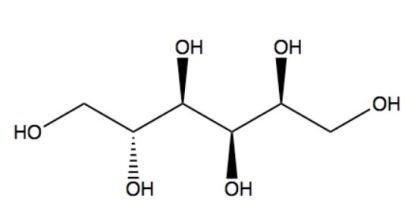
Sorbitol

Bio-Based Acoustic Polyurethane Foam

Patent Title: POLYURETHANE MATERIALS FORMED FROM EPOXIDIZED PLANT OILS

 Number/Link: US2017/0081460

Applicant/Assignee: IBM

Publication date: 23-mar-2017

Gist”: Natural oils are converted into isocyanate-functional polyols and then polymerized

Why it is interesting: Epoxidized vegetable oils are hydrolized and saponified using NaOH, resulting in a mixture of acid-ended polyols. The acid groups are then converted into azides using diphenylphosphoryl azide, which then rearrange into isocyanate groups (Curtius rearrangement).  The isocyanate-ended polyols can be polymerized and further crosslinked using di-isocyanates. The materials are said to be useful as components for acoustic foams, used e.g. in mainframe computers.
This is the second IBM PU patent discussed in this blog. However, I doubt if they have an actual chemistry lab since their examples are “prophetic” rather than real.

IBM

Reaction scheme according to the invention

Flexible PU Foams Containing Latent Aldehydes

Patent Title: IMPROVEMENTS RELATING TO POLYURETHANES

 Number/Link: WO2017/001543

Applicant/Assignee: Shell

Publication date: 5 january 2017

Gist”: Flex foams from polyether polyols containing latent aldehydes show improved compression set

Why it is interesting: Aldehydes are a by-product of the alkylene oxide production. These aldehydes need to be removed before the alkylene oxide can be used in the manufacture of polyether polyols because even minor amounts of these impurities are considered undesirable and detrimental for polyol and foam properties. According to this invention, omitting the extra purification step of the alkylene oxide results in polyols with a certain amount of free- and latent aldehydes.  (‘latent aldehyde’ being an aldehyde incorporated in the polyether polyol with a labile bond). After removal of the free aldehyde, the polyols with (pref) >150ppm latent aldehydes (mostly propionaldehyde and acetaldehyde) can be used in the preparation of flexible foam with improved wet and dry compression set properties. While the examples indeed show some (but not a dramatic) improvement of compression set, no mention is made of eventual release of the aldehydes in the atmosphere, which (in my opinion) is a much bigger problem than compression set.

Propionaldehyde

Propionaldehyde

  • Pages

  • Categories

  • Enter your email address to follow this blog and receive notifications of new posts by email.

    Join 259 other subscribers
  • Follow Innovation in PU on Twitter