Polymer Polyols Based on Castor Oil

Title: GRAFT POLYOL AND METHOD OF FORMING THE SAME

 Number/Link: WO2013/039907

Applicant/Assignee: BASF

Publication date: 21-03-2013

Gist”: Castor oil containing up to about 60% w/w modified SAN particles.

Why it is interesting: Castor oil is the only (commonly) occuring natural oil polyol (NOP).  Other natural oils need modifications which introduce isocyanate-reactive groups,  increasing their viscosity and therefore making them less useful to turn into “grafted” or polymer polyols.  In this invention styrene and acrylonitrile are copolymerised in castor oil together with a chain transfer agent and an ethylenically unsaturated ‘macromer polyol’. The macromer polyol is preferably a sorbitol-started EO/PO polyol with a molecular weight of about 6000 which is subsequently reacted with an unsaturated alifatic isocyanate. The macromer polyol sterically stabilizes the SAN particles and allows for high solid contents (up to 60% in the examples) at a reasonable viscosity. Polymer polyols are especially useful in flexible foam formulations.

Main Component of Castor Oil
Main Component of Castor Oil

Making a Better NOP-based Flexible Foam

Title: Additives For Improving Natural Oil Based Polyurethane Foam Peformance

 Number/Link: US2013/0065978

Applicant/Assignee: Air Products

Publication date: 14-03-2013

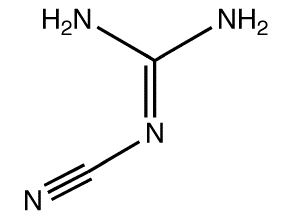
Gist”: Incorporating a small amount of cyanoguanidine into a NOP-based flexible foam improves airflow and humid ageing.

Why it is interesting: Now that natural oil polyols (NOPs) are becoming mainstream in flexible polyurethane foams (at least in the patent literature), it is to be expected that specific catalysts, surfactants and other additives will be developed for these systems.  Air Products claims to improve air flow and humid ageing properties of NOP-based foams by adding small amounts ( about 0.05 parts per 100 polyol) of solutions (in e.g. DMSO) of guanidine or its derivatives like cyanoguanidine or guanidinehydrochloride salt  to the formulation.  While it is not immediatly clear why this should work, the effect seems to be real.

2-cyanoguanidine

2-cyanoguanidine

Viscoelastic Polyurethane Foam with Porous Struts

Title: CELLULAR STRUCTURES AND VISCOELASTIC POLYURETHANE FOAMS

 Number/Link: US2013035413

Applicant/Assignee: DOW GLOBAL TECHNOLOGIES

Publication date: 7-02-2013

Gist”: The use of high equivalent weight polybutylenoxide monol together with a polyol mixture and TDI to produce a viscoelastic  foam with greatly improved airflow.

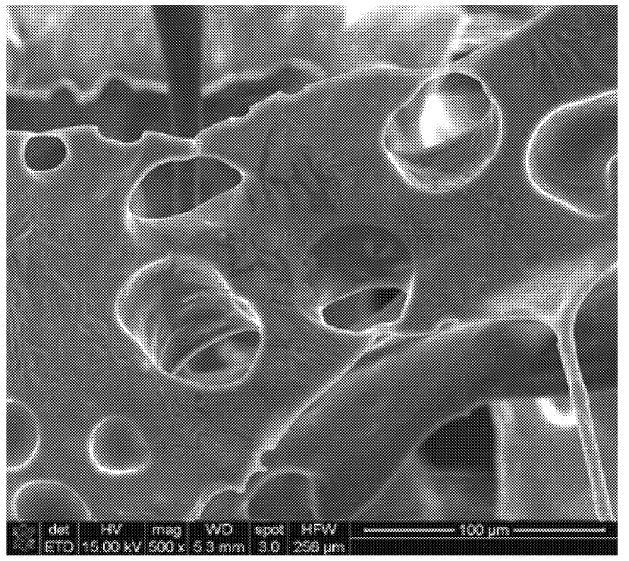
Why it is interesting: Most viscoelastic (or “memory”) foams are used in bedding and often have the disadvantage of building up heat and moisture during use, resulting in the loss of viscoelastic properties and deterioration in comfort. Improving the airflow through the foam should reduce this effect. Dow now appears to have cracked the airflow problem by using  a polybutylene oxide monol (preferred) with and eq.wt. of about 4000, together with a conventional blend of high EO and high PO polyols and TDI80 (in the examples).  Air flow indeed seems to be greatly improved and even the cell struts appear to be perforated!  Great stuff.

Foams cells showing porous struts

Foams cells showing porous struts

  • Pages

  • Categories

  • Enter your email address to follow this blog and receive notifications of new posts by email.

    Join 259 other subscribers
  • Follow Innovation in PU on Twitter