Can NOPs Rejuvenate Hot Cure Moulding?

Title: POLYOLS SUITABLE FOR HOT MOLDED FOAM PRODUCTION WITH HIGH RENEWABLE RESOURCE CONTENT

 Number/Link: US2013/210951

Applicant/Assignee: Bayer

Publication date: 15-08-2013 (priority PCT)

Gist”: Castor oil based polyols designed for hot cure flexible foam allow for higher renewable content.

Why it is interesting: In the recent years there has been a growing use of renewable-resource based polyols in flexible foam production. However, because the current moulded flexible foam industry is dominated by the so-called “cold cure” process which typically needs highly reactive polyols, the maximum amount of renewables is usually limited to about 10% of the polyol. Bayer have now developed a natural oil based polyol specifically for hot cure moulding. The polyol of the invention is based on castor oil, EO, PO and a DMC catalyst such that the total amount of EO is 20 to 30% and the total amount of primary OH is between 35-45%.  When used in a hot cure moulding process the polyol allows for at least 30% (on the polyol) of renewables with foams having properties similar to conventional hot cure foams.

Major Component of Castor Oil
Major Component of Castor Oil

Reducing aldehyde emissions from flexible foams

Title: POLYURETHANE FOAMS WITH DECREASED ALDEHYDE EMISSIONS, A PROCESS FOR PREPARING THESE FOAMS AND A METHOD FOR DECREASING ALDEHYDE EMISSIONS IN POLYURETHANE FOAMS

 Number/Link: WO2013116092

Applicant/Assignee: Bayer

Publication date: 8-08-2013

Gist”: Use of small amounts of hexamethylenediisocyanate trimer or small amounts of “PHD” polyols result in reduced aldehyde emissions from flex foams.

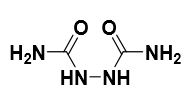
Why it is interesting: Reduction of VOC emissions and especially emissions of formaldehyde and acetaldehyde are an important issue for the polyurethane flexible foam industry, especially for bedding and automotive applications. This invention teaches two “tricks” to help solve the problem.  To a (preferably) TDI-based flex foam formulation which comprises at least one SAN or PIPA filled polyol, 0.5-3 pbw of trimerized hexamethylene diisocyanate is added on 100 pbw of the isocyanate.  Alternatively 2-3 pbw of PHD polyol is added on 100 pbw of the iso-reactive component. In the art “PHD polyol” usually stands for a polyurea ‘filled’ polyol (polyharnstoff dispersion), but in this case it stands for polyhydrazodicarnbonamide filled polyols. These PHD polyols are prepared by reacting a hydrazine with an isocyanate (pref TDI80) in a base polyol, so they are actually a subset of ‘conventional’ PHD dispersions.  The patent application is a bit confusing in this respect.

Hydroazodicarbonamide

Hydrazodicarbonamide

Improved Cellopening System for Flexible Foams

Title: Process For Producing Flexible Polyurethane Foam Using Natural Oil Polyols

Patent Number & Link: US2013/197114

Applicant/Assignee: Air Products

Publication date: 1-08-2013

Gist”: Use of 2-cyanoacetamide as cellopener together with a dipolar aprotic liquid as “cellopening aide” in moulded flexible foams.

Why it is interesting: The use of compounds with an active (acidic) methylene group like 2-cyanoacetamide as cellopener for flexible foam is known (US6136876) but has some disadvantages like low solubility in polyol and low reproducibility when dissolved in water. The use of these cellopeners together with dipolar aprotic solvents like dimethylsulfoxide (DMSO) or glycols like PEG200 supposedly solves these problems and allows for the use of a lower amount of the cellopener.  In the examples 0.03 pphp of cyanoacetamide is used together with 0.12pphp of DMSO. Strangely claim 1 expressly states the use of at least one NOP (natural oil based polyol) while this does not seem relevant to the invention.

2-cyanoacetamide

2-cyanoacetamide

  • Pages

  • Categories

  • Enter your email address to follow this blog and receive notifications of new posts by email.

    Join 259 other subscribers