Reducing aldehyde emissions from flexible foams

Title: POLYURETHANE FOAMS WITH DECREASED ALDEHYDE EMISSIONS, A PROCESS FOR PREPARING THESE FOAMS AND A METHOD FOR DECREASING ALDEHYDE EMISSIONS IN POLYURETHANE FOAMS

 Number/Link: WO2013116092

Applicant/Assignee: Bayer

Publication date: 8-08-2013

Gist”: Use of small amounts of hexamethylenediisocyanate trimer or small amounts of “PHD” polyols result in reduced aldehyde emissions from flex foams.

Why it is interesting: Reduction of VOC emissions and especially emissions of formaldehyde and acetaldehyde are an important issue for the polyurethane flexible foam industry, especially for bedding and automotive applications. This invention teaches two “tricks” to help solve the problem.  To a (preferably) TDI-based flex foam formulation which comprises at least one SAN or PIPA filled polyol, 0.5-3 pbw of trimerized hexamethylene diisocyanate is added on 100 pbw of the isocyanate.  Alternatively 2-3 pbw of PHD polyol is added on 100 pbw of the iso-reactive component. In the art “PHD polyol” usually stands for a polyurea ‘filled’ polyol (polyharnstoff dispersion), but in this case it stands for polyhydrazodicarnbonamide filled polyols. These PHD polyols are prepared by reacting a hydrazine with an isocyanate (pref TDI80) in a base polyol, so they are actually a subset of ‘conventional’ PHD dispersions.  The patent application is a bit confusing in this respect.
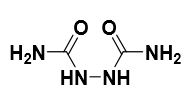
Hydroazodicarbonamide

Hydrazodicarbonamide

Improved Viscoelastic Flexible Foams (“Memory Foams”)

Title: USE OF POLY(BUTYLENE OXIDE) POLYOL TO IMPROVE DURABILITY OF MDI-POLYURETHANE FOAMS

Patent Number & Link:  US2013178548    (related case US2013178550 )   

Applicant/Assignee: Dow

Publication date: 11-07-2013 (priority PCT/US)

Gist”: Use of a high molecular weight butyleneoxide monol to improve the compression set of viscoelastic foams.

Why it is interesting: Viscoelastic or “memory” flexible foams are currently popular for use in matresses and pillows. Much research and development has been done on these materials and the patent situation is a true minefield. Usually a mixture of EO-rich and PO-rich polyols of different molecular weights is used to control the glass transition temperature (Tg) of the softblock, wich in turn controls the energy absorption (and thus the resilience) of the foam. In this invention a butyleneoxide monol of high MW is used in addition to a mixture of EO-rich and PO-rich polyols. The BO-monol is used in an amount of 2-10% on the polyol  and supposedly improves compression set while retaining the open cell character (air flow) of the foam.
The related case (US2013/178550) is similar but uses a high MW PO polyol with a functionality between 1 and 4 instead of the BO monol.  It is not immediately clear to me whether this latter case is a real invention or is just plugging a hole in the minefield..

A viscoelastic flexible foam

A viscoelastic flexible foam

  • Pages

  • Categories

  • Enter your email address to follow this blog and receive notifications of new posts by email.

    Join 259 other subscribers
  • Follow Innovation in PU on Twitter