Hybrid Hotmelt Adhesive with Low Free Isocyanate

Title: POLYURETHANE HOT-MELT ADHESIVE HAVING A LOW CONTENT OF DIISOCYANATE MONOMERS AND GOOD CROSS-LINKING SPEED

 Number/Link: WO2015/135833 (German)

Applicant/Assignee: Sika

Publication date: 17-09-2015

Gist”: Use of mercaptosilane to reduce free monomeric diisocyanate

Why it is interesting: Reduction of the amount of free monomeric diisocyanate in adhesives, coatings, OCF systems etc. remains a hot topic in industrial polyurethane research, mostly because of changing legislation. For example, in the EU the amount of free MDI needs to be below 1% in order to avoid “R-40” (suspect carcinogen) labeling. A number of strategies to reduce free isocyanate have been tried in the past (and mentioned in this blog). Examples are distillation, the use of asymmetric diisocyanates and the use of monols. According to this invention the amount of free monomeric isocyanate in a hotmelt formulation can be reduced by adding a mercaptosilane like e.g. mercaptopropyltrimethoxysilane.  The mercaptosilane is said to react preferentially with the monomeric isocyanate.  Only a relatively small amount of mercaptosilane is used such that the main curing mechanism is still the isocyanate-water reaction.
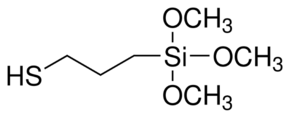
Mercaptopropyltrimethoxysilane

Mercaptopropyltrimethoxysilane


Cooperative Catalyst System for NIPU

Title: Catalyst for Non-Isocyanate Based Polyurethane

 Number/Link:US2015/247004

Applicant/Assignee: Dow; Univ. Northwestern

Publication date: 3-09-2015

Gist”: The cyclocarbonate-amine reaction is catalysed by a lewis acid/lewis base combination

Why it is interesting: It is well known that polyhydroxyurethanes can be produced from cyclic carbonates and amines.  These “nonisocyanate polyurethanes” can have advantages over conventional polyurethanes, e.g. as coatings with improved chemical resistance. The reactivity of (especially 5-ring)  cyclocarbonates is however much lower than that of isocyanates making the reaction much less practical.  According to this invention that problem can be solved by using a ‘cooperative’ catalyst system consisting of a lewis acid and an organic lewis base. In an example a difunctional cyclocarbonate-capped prepolymer is reacted with 1,3-cyclohexane-bis(methylamine) catalysed by a mixture of  lithium trifluoromethanesulfonate and triazabicyclodecene.
It has been noted before in this blog that Dow, as one of the major isocyanate producers, also appears to be interested in non-iso PU.

Triazabicyclodecene.

Triazabicyclodecene.

PU Rigid Foams with very Small Cell Size

Title: RIGID POLYURETHANE FOAM HAVING A SMALL CELL SIZE

 Number/Link: WO2015/109488

Applicant/Assignee: Dow

Publication date: 30-07-2015

Gist”: Rigid foams are blown with CO2 under pressure

Why it is interesting: It is known that the thermal conductivity of conventional rigid polyurethane foams can be most efficiently improved by reducing the conductivity contribution of the gas present in the foam cells. This, in turn, can be achieved by reducing the gas pressure, by using ‘heavy’ blowing agents or by reducing the average cell size.  The current application discloses rigid PU foams having cell sizes small enough to achieve a thermal conductivity of less than 16 mW/m.K without the need for a strong vacuum or special blowing agents. This is achieved by first saturating the polyol formulation with CO2 under pressure, then adding the isocyanate and increasing the pressure for a set amount of time and finally releasing the pressure to allow the material to expand. Examples are given using a pressure of 7 MPa at 40°C for 30 minutes to saturate the polyol, and a pressure of 10 MPa for up to about 10 minutes after addition of the isocyanate.  Foams with average cell sizes of 8 to 70 μm and porosities of up to 90% are obtained at densities of about 250 to about 300 kg/m³.  Oddly enough no thermal conductivity (λ) values are given.

Rigid polyurethane insulation foams (Wikimedia)

Rigid polyurethane insulation foams (Wikimedia)


  • Pages

  • Categories

  • Enter your email address to follow this blog and receive notifications of new posts by email.

    Join 259 other subscribers
  • Follow Innovation in PU on Twitter