Hybrid PU-Peptide PUDs

Patent Title: AQUEOUS PEPTIDE-FUNCTIONALIZED POLYURETHANE DISPERSIONS

 Number/Link: WO2016/135162

Applicant/Assignee: Henkel; Max-Panck Ges.

Publication date: 1-09-2016

Gist”: A maleimide-capped prepolymer is reacted with the -SH groups in a peptide

Why it is interesting: Polyurethane-protein hybrids are interesting novel materials which potentially have a number of unique properties unattainable with conventional synthetic polymers. In a previous case discussed in this blog an NCO-ended polyurethane prepolymer was reacted with a peptide in water to make a PU-peptide dispersion.  This type of grafting, however, is not very specific because the isocyanate will react mostly with the free amino groups of lysine, which is usually  ‘abundant’ in a typical peptide. According to this invention the grafting can be made very specific by first end-capping the NCO prepolymer with maleimide groups and dispersing in water. The dispersion is then reacted with a peptide solution at pH7. In these circumstances the maleimide will react selectively with the free thiol group of cysteine, of which usually very few are present in a typical peptide because most thiol groups are engaged in S-S disulfide bridges.  Preferably a peptide consisting of 10-200 amino acids is used, with preferably only one free thiol group. By selective grafting the properties of the peptide can be conserved.  The PU-peptide dispersions are claimed to be especially useful for metal adhesives.
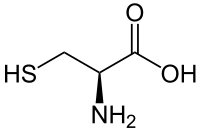
L-cysteine
L-cysteine


PET-Lignin Polyols

Patent Title: HIGH RECYCLE CONTENT POLYOLS FROM THERMOPLASTIC POLYESTERS AND LIGNIN OR TANNIN

 Number/Link: WO2016/118411

Applicant/Assignee: Resinate Materials Group

Publication date: 28-07-2016

Gist”: PET is glycolized and then reacted with lignin or tannin

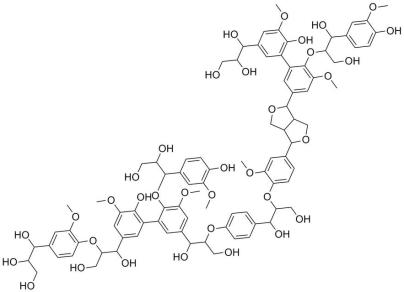
Why it is interesting: This application is about ‘sustainable’ aromatic polyester polyols partly based on recycled materials and partly on biorenewable materials. According to the invention the polyols can be prepared by first glycolizing (waste) PET and subsequently reacting the mixture with lignin at 110-210°C while removing volatile condensation products.  The resulting polyols (pref) show a OH value between 40 and 400 mg KOH/g, a fn of 2-2.2 and a viscosity at 25°C of 500 to 3000 cP. In the examples polyols with up to 25 wt% lignin are shown. The polyols are said to be useful e.g. in 2K PU coating compositions.

Part of a lignin structure

Part of a lignin structure

NOPs from GMOs

Patent Title: Low Polyunsaturated Fatty Acid Oils and Uses Thereof

 Number/Link: US20160194584

Applicant/Assignee: Solazyme

Publication date: 7-07-2016

Gist”: Natural oil polyols from genetically modified organisms

Why it is interesting: Natural oils usually contain significant (and variable) amounts of polyunsaturated fatty acids, i.e. fatty acids with more than one double bond in the backbone. Soybean oil for example contains up to 60% PUFAs that can easily engage in side reactions like autooxidation and polymerization, resulting in side products that contaminate the oil – and therefore the polyols derived from them.  According to this (299 page) application, oils containing >85% oleic acid and very low PUFA concentration can be made from certain genetically modified microalgae. Polyols derived from these oils by hydroxylation can be used to prepare polyurethane foams with reduced discolorouration, reduced odour, improved reproducibility and improved physical properties as compared to foams based on conventional NOPs.

Triglicerid with PUFA

Trigliceride with PUFA

  • Pages

  • Categories

  • Enter your email address to follow this blog and receive notifications of new posts by email.

    Join 259 other subscribers
  • Follow Innovation in PU on Twitter