TPU from PPE Diols

Title: THERMOPLASTIC POLYURETHANE AND ASSOCIATED METHOD AND ARTICLE

 Number/Link: WO2014/209934

Applicant/Assignee: Sabic

Publication date: 31-12-2014

Gist”: Thermoplastic Polyurethanes based on polyphenylene ether diols

Why it is interesting: This invention relates to thermoplastic polyurethanes prepared from hydroxyl ended polyphenylene ethers (PPE) and diisocyanates.  Optionally the PPE diols can be blended with ‘conventional’ polyether or polyester diols and chain extenders.  The resulting TPUs are reported to have increased chemical resistance and hydrophobicity. In the examples copolymers of 2,6-dimethylphenol and 2,2-bis(3,5-dimethyl-4-hydroxyphenyl)propane with molecular weight between about 1000 and 3000 are reacted (in solvent)with MDI or TDI using DBTDL as a catalyst. The resulting thermoplastic materials had a Tg of about 160 to 170°C.  While these could be interesting engineering thermoplastics, I guess they would be difficult to produce and difficult to process.

PPE diol used in the invention. Q5 and Q6 preferably methyl.
PPE diol used in the invention. Q5 and Q6 preferably methyl.

TPU with Crystalline Chain Ends

Title: ARTICLES MADE FROM THERMOPLASTIC POLYURETHANES WITH CRYSTALLINE CHAIN ENDS

 Number/Link: WO2014/189993

Applicant/Assignee: Lubrizol

Publication date: 27-11-2014

Gist”: TPU with improved processability by using crystallizing chain stoppers.

Why it is interesting: While thermoplastic polyurethanes are very interesting engineering materials with an attractive combination of properties, their main drawback is the often very narrow processing window. Especially soft TPUs are both difficult to produce and process. According to this invention TPUs, including soft TPUs, with greatly improved processing properties can be produced by incorporating crystallizing chain stoppers. In the examples straight chain hydrocarbon monols with 33 and 63 carbons are used as chain stoppers in an amount of about 1 to 10% w/w on the total composition.

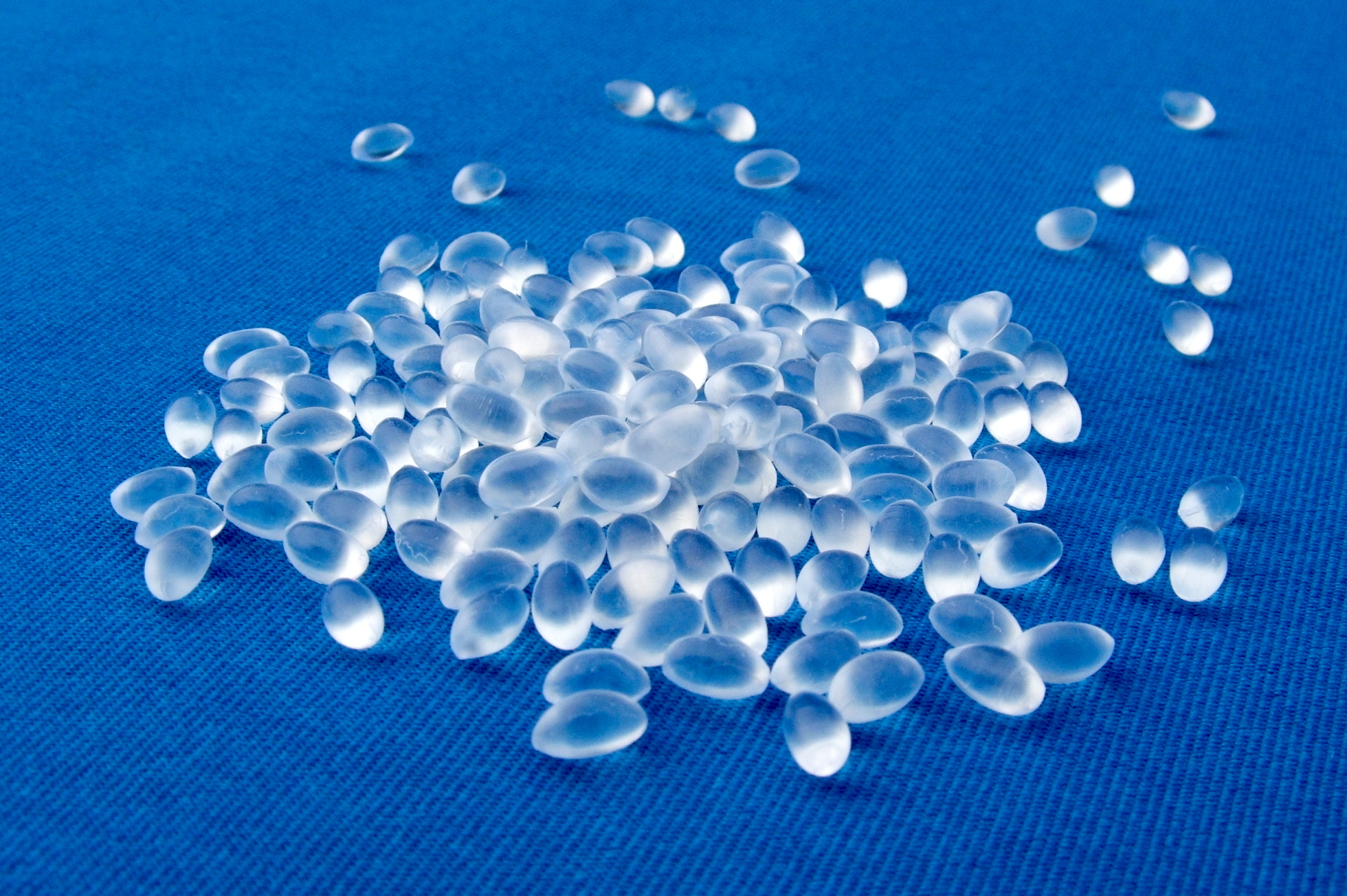
TPU pellets

TPU pellets

TPU from Low Free Monomeric Isocyanate Prepolymers

Title: THERMOPLASTIC POLYURETHANE FROM LOW FREE MONOMER PREPOLYMER

 Number/Link: WO2014/186111

Applicant/Assignee: Chemtura

Publication date: 20-11-2014

Gist”: TPUs with exceptional properties are produced from “full” prepolymers with a very low free monomeric isocyanate content.

Why it is interesting: According to this invention thermoplastic polyurethanes with improved processing characteristics and with exceptional mechanical-, fatigue- and ageing properties can be produced by reacting a ‘full’ prepolymer having a low ( less than 0.5% ) free monomeric isocyanate content with a low molecular weight chain extender. PPDI and MDI prepolymers with low free monomeric isocyanate can be prepared e.g. by distillation of the prepolymer in the presence of a inert solvent with a boiling point slightly lower than the monomeric diisocyanate present (see e.g. US2009/0076239). Products like this are commerically available. The reason for the exceptional properties is undoubtedly the result of a very regular microphase structure of these TPUs.

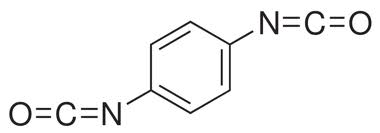
para-phenylenediisocyanate (PPDI)

para-phenylenediisocyanate (PPDI)

  • Pages

  • Categories

  • Enter your email address to follow this blog and receive notifications of new posts by email.

    Join 259 other subscribers
  • Follow Innovation in PU on Twitter