
Title: POLYURETHANE BASED ON RENEWABLE RAW MATERIALS
Number/Link: WO2015/000722
Applicant/Assignee: BASF
Publication date: 8-01-2015
“Gist”: Preparing TPU from polyester diols based on a blend of diacids reduces blooming
Why it is interesting: This application relates to polyester polyols prepared from a diol and a mixture of diacids of which “at least one is at least partly” produced from a renewable resource. When these polyester diols are reacted with a diisocyanate and a chain extender, the resulting TPU shows a reduced tendency to “bloom” (i.e. form a white exudate on the surface). In the examples TPUs based on polyester polyols prepared from 1,3-propanediol and either azaleic- or sebacid acid (all from renewable resources) show very strong blooming while a TPU based on a polyester polyol prepared from 1,3-propanediol and a 1:1 blend of azeleic- and sebacic acid shows very little blooming. While this an interesting effect, it is not clear to me why “at least one of the diacids needs to be at least partly” made from a renewable resource is claimed. The claim appears unrelated to the actual invention.
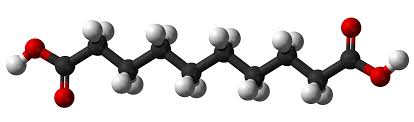
Sebacic Acid
 Innovation in Polyurethanes