Hybrid PU-PF Rigid Foams

Title: RIGID POLYURETHANE FOAM

 Number/Link: EP2591034A1

Applicant/Assignee: BASF

Publication date: 15-05-2013  (priority PCT/EP)

Gist”: Use of novolac polyols in rigid (spray) foams to improve reactivity and flammability properties.

Why it is interesting: ‘Novolacs’ are phenol-formaldehyde (PF) resins which are produced at a p:f ratio of  >1 (as opposed to ‘resols’ where this ratio is <1) Novolacs are therefore phenol (OH) ended and can be used together with isocyanates to prepare hybrid polyurethanes. In this case novolacs with a functionality of about 4-8 are used together with conventional rigid foam polyol(s) in which the novolacs are dissolved (after heating and opt. melting) in an amount of about 40%. Together with polymeric MDI, water and conventional additives rigid (spray) foams are produced with improved flammibility, smoke, scorching and reactivity properties.
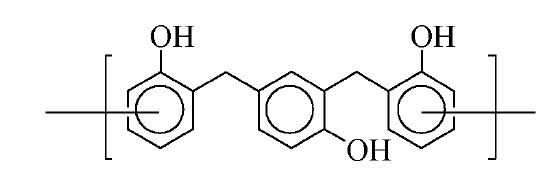
Novolac resin

Novolac resin

Nanoporous Insulation

Title: INORGANIC NANOPOROUS PARTICLES WITH WATER DISPERSIBLE POLYURETHANE BINDER

 Number/Link: US2013091682

Applicant/Assignee: Dow

Publication date: 18-04-2013  (priority 2012- PCT/CN)

Gist”:  Flexible nanoporous insulation article made by binding aerogel particles with water-based polyurethane binder.

Why it is interesting: Nanoporous  materials are a big trend in insulation technology. Because monolithic aerogel parts are difficult to make and difficult to use, much research focuses on the use of nanoporous (aerogel, xerogel…) particles instead. This invention uses uncoated silica aerogel particles together with an aqueous PU binder.  The particles are sufficiently hydrophobic to prevent water ingress in the pores. The PU binder is based on aliphatic isocyanate and contains dimethylolpropionic acid to make it water-dispersible. The resulting material contains about 95% aerogel particles and has a density of about 100 kg/m3.

Rigid Polyurethane Foam from Modified Polymer Polyols

Title: METHOD FOR PRODUCING RIGID POLYURETHANE FOAMS

 Number/Link: WO2013/024101  (German)

Applicant/Assignee: BASF

Publication date: 21-02-2013

Gist”: Polymer polyols comprising surface-active and reactive SAN particles for improved rigid foams.

Why it is interesting: In this invention polymer polyols are prepared by in-situ co-polymerisation of styrene, acrylonitrile (preferred) and a polyether siloxane surfactant comprising at least one  unsaturated group and at least one hydroxyl group. This will result in a polymer polyol (or “graft polyol”) comprising surface-modified particles, which, when used to prepare rigid foams, will end up predominantly (>50%) in the cell walls rather than in the cell struts. This is new and surprising. The rigid foams should show improved insulation properties and compressive strength.

surface active monomer used in the invention

surface active monomer used in the invention

  • Pages

  • Categories

  • Enter your email address to follow this blog and receive notifications of new posts by email.

    Join 259 other subscribers
  • Follow Innovation in PU on Twitter